The Great Filler Dissolving Obsession

The Short Answer

Hyaluronidase is an enzyme used to dissolve hyaluronic acid (HA) fillers such as Juvéderm and Restylane. It can be extremely useful for treating misplaced or excessive filler, persistent swelling and the blue-gray discoloration known as the Tyndall effect. But the presence of residual filler on ultrasound or MRI does not necessarily mean that every trace of it needs to be removed. The goal should be correction of the clinical problem—not simply elimination of an imaging finding. In many cases, selective hyaluronidase treatment followed by careful massage and reassessment can produce a better aesthetic result than repeatedly attempting to dissolve every detectable molecule of filler.

Hyaluronidase dissolves hyaluronic acid–based fillers by hydrolyzing the HA polymer — breaking it down so the body can clear it. Recent literature has challenged even the terminology of “dissolving” filler. Harris and Weiner argue that hyaluronidase may be better understood as modifying a complex filler-tissue system rather than predictably eradicating every molecule of HA. Importantly, clinical improvement may occur even when ultrasound or MRI continues to demonstrate residual filler.1

Key Takeaways

  • Hyaluronidase can selectively dissolve unwanted hyaluronic-acid filler.
  • Tyndall effect is a blue-gray discoloration that can occur when HA filler is placed too superficially.
  • Not every residual pocket of filler visible on ultrasound or MRI requires treatment.
  • Repeated attempts to eliminate every trace of filler may create additional swelling, tissue changes and dissatisfaction.
  • Clinical examination should determine whether detected filler is actually causing an aesthetic problem.
  • In selected cases, careful massage and molding after hyaluronidase can be an important part of correction.

Hyaluronic acid fillers such as Juvéderm and Restylane can produce beautiful results—and when they don’t, hyaluronidase can often correct the problem remarkably well.

But somewhere along the way, “dissolving unwanted filler” has evolved into something quite different: a quest to hunt down and eradicate every detectable trace of filler from the face.

And I think we need to talk about it.

Unless you have been living in a hermetically sealed cave for the past 20 years, you have probably heard of hyaluronic acid (HA) fillers such as Juvéderm and Restylane.

Hyaluronic acid itself is hardly an exotic substance. It is a naturally occurring sugar found throughout the human body—in our skin, connective tissues, joints and even our eyes. Its ability to attract and retain water is one reason HA fillers are so useful for restoring volume, softening contours and reshaping certain areas of the face.

Most of the time, when properly selected and properly injected, they work very well.

But not always.

When Good Filler Goes Bad

Hyaluronic acid is hydrophilic—it attracts water. That is generally useful, but in certain areas, particularly around the eyes, too much filler or filler placed at the wrong depth can create persistent puffiness or edema.

HA filler can also sometimes produce a characteristic bluish-gray discoloration, particularly when placed too superficially. This is commonly referred to as the Tyndall effect.

And frustratingly, these problems don’t necessarily announce themselves while you’re still sitting in the injector’s chair. Swelling, contour irregularities and unwanted fullness can become apparent days or even a week or two later.

Fortunately, HA fillers have one enormous advantage over many other injectable materials:

We have an eraser.

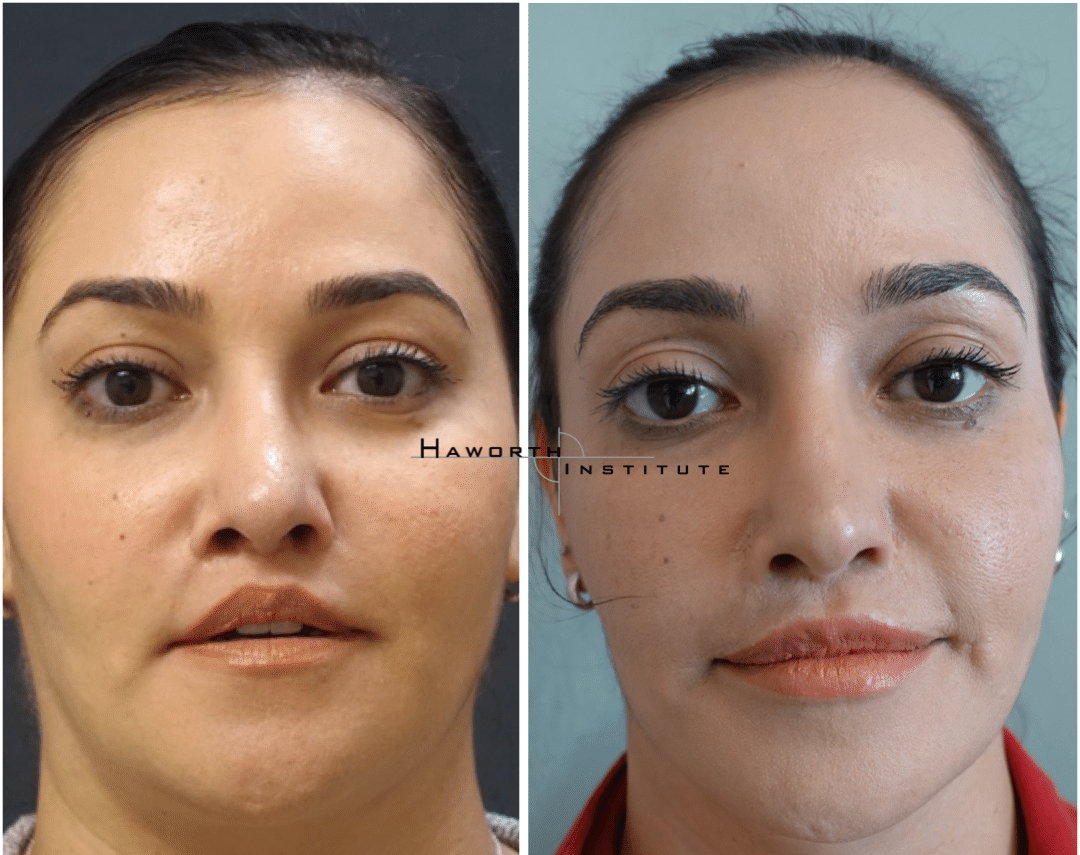
Tyndall effect before hyaluronidase
Before
Under-eye Tyndall effect / bag from hyaluronic acid filler (before hyaluronidase).
Improvement after hyaluronidase
After
After hyaluronidase with careful massage and molding.

Before and after treatment of the Tyndall effect. Improvement followed targeted hyaluronidase with careful massage and molding.

Hyaluronidase: The Filler Eraser

Hyaluronidase is an enzyme that breaks down hyaluronic acid. Commercial preparations include products such as Hylenex and Vitrase, among others.

I often describe hyaluronidase to my patients as a pencil eraser.

If I’ve performed a filler treatment and several days later notice a little excess fullness or an area that needs refinement, a carefully placed amount of hyaluronidase can often correct it quickly and effectively.

I also use hyaluronidase before certain facial surgical procedures when previously placed filler is obscuring the anatomy I actually need to evaluate or treat.

Used thoughtfully, it is an extraordinarily useful tool.

The trouble starts when the pencil eraser becomes a belt sander.

The New Obsession With Dissolving Everything

Increasingly, I see patients who don’t simply want an unattractive area of filler corrected.

They want every molecule of filler removed from their face.

Some arrive after months of repeated dissolving sessions. They have undergone ultrasounds, MRIs or other imaging studies searching for residual pockets of filler.

A scan identifies another tiny area.

That area gets injected with more hyaluronidase.

Another scan is obtained.

Something else is found.

And down the rabbit hole we go.

More appointments. More scans. More dissolving. More swelling. More anxiety. More money.

Yet when I actually look at the patient, there may be very little—or sometimes nothing—visibly wrong.

At some point, the pursuit itself becomes the problem.

Interestingly, this isn’t merely theoretical. A retrospective study of 157 treated orbits found that while 59% achieved a satisfactory result after hyaluronidase, 24% required additional treatment and 18% reported post-treatment facial changes such as hollowing—a phenomenon the authors termed “posthyaluronidase syndrome.” This does not prove that hyaluronidase permanently damages one’s native tissues, as some corners of social media would have you believe. But it does reinforce a rather basic aesthetic principle: more treatment is not necessarily better treatment.3

Hyaluronic Acid Is Not a Metastatic Disease

This is where some perspective is desperately needed.

Residual hyaluronic acid filler is not cancer. It is not a metastatic disease that must be hunted down and banished from every corner of the face.

The objective of aesthetic medicine is not to produce an MRI demonstrating absolute molecular purity.

The objective is to make the patient look better.

That distinction sounds ridiculously obvious.

Apparently, it isn’t.

Imaging can unquestionably be useful. Ultrasound, for example, can help identify the location and depth of previously injected material in selected situations. MRI may reveal material or tissue changes that aren’t obvious on examination.

But the existence of something on an image does not automatically mean that it is producing an aesthetic problem—or that treating it will improve the patient’s appearance.

Which brings me to the sophisticated diagnostic technology I use most frequently.

My Favorite Imaging Device: My Eyes

Patients sometimes ask:

“What makes you successful at dissolving difficult filler? Are you using MRI? Ultrasound? Some special imaging technology?”

Those technologies certainly have their place.

But my primary diagnostic instrument remains decidedly low-tech:

My eyes.

If I see abnormal puffiness, a blue-gray Tyndall effect, contour distortion or meaningful asymmetry that appears related to filler, I treat it.

If I don’t see a problem, I generally leave it alone.

And, perhaps more importantly, I encourage the patient to leave it alone too.

Because I’m treating a face, not an MRI.

An imaging study should help answer a clinical question. It should not automatically create a new clinical problem simply because it detected something.

Hyaluronidase Dissolves. Massage Sculpts.

This isn’t merely philosophical restraint. Published guidance on Tyndall effect specifically describes selective dissolution of the superficial offending HA layer without removing the entire filler deposit. The literature also recognizes massage following hyaluronidase as part of managing certain HA gels. In other words, the objective is correction—not molecular extermination.2

There is another element of successful filler correction that receives surprisingly little attention: massage and molding.

Hyaluronidase is not magic water.

You don’t simply inject a few drops, walk away and wait for perfection to occur.

When appropriate, careful manipulation of the treated area—from deeper tissues toward the surface—can be an important part of achieving a smooth, controlled correction.

In my experience, thoughtful massage and molding can sometimes be every bit as important as where the enzyme itself is placed.

The goal isn’t indiscriminate destruction of filler.

It is controlled correction.

That requires anatomy, judgment, examination and, yes, occasionally knowing when to stop.

Dissolve the Problem—Not the Patient’s Peace of Mind

There is nothing wrong with wanting poorly placed filler corrected. I do it regularly.

There is nothing wrong with using imaging when the clinical situation genuinely warrants it.

And there is certainly nothing wrong with hyaluronidase. It remains one of the great advantages of HA fillers precisely because it gives us a degree of reversibility that many aesthetic treatments simply don’t have.

But there is an enormous difference between correcting a visible problem and embarking upon an endless search for microscopic remnants of something simply because modern imaging technology is capable of finding them.

More information does not always mean more treatment.

Sometimes the most sophisticated decision a physician can make is to look at the patient and say:

“That looks good. Leave it alone.”

In aesthetic medicine, as in much of medicine, the simplest solution is often the best one.

And occasionally, the hardest procedure to perform is no procedure at all.

Selected Medical References

  1. Harris S, Weiner S. Reframing Hyaluronidase in Aesthetic Medicine: From “Dissolving Filler” to “Modifying Filler.” Aesthetic Surgery Journal. 2026;46(6):NP51–NP54. DOI: 10.1093/asj/sjag022
  2. Nonvascular Complications of Injectable Fillers—Prevention and Management. https://pmc.ncbi.nlm.nih.gov/articles/PMC7822713/
  3. The Posthyaluronidase Syndrome: Dosing Strategies for Hyaluronidase in the Dissolving of Facial Filler and Independent Predictors of Poor Outcomes. https://pubmed.ncbi.nlm.nih.gov/38655103/

Randal D. Haworth, MD, FACS
Board-Certified Plastic Surgeon | Beverly Hills
How Custom Chin Implants Are Transforming Facial Harmony — Here’s What Top Surgeons Won’t Tell You


The Art and Science of Chin Enhancement: Balancing Beauty, Restoring Proportion

As a plastic surgeon with a global clientele, I often say: chin enhancement may not be necessary—but in facial aesthetics, necessity and desire can merge beautifully. Let’s explore why.

Why the Chin Matters

From the front, the chin defines the proportions of the upper, middle, and lower facial thirds. A recessed chin can make the face appear wider, disrupt harmony, and cast vertical shadows from the mouth corners toward the jawline—subtle signs of “pseudo‑jowls” long before they appear.

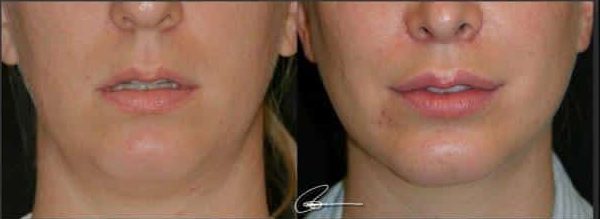
Before-and-after comparison of an anatomic extended chin implant showing reduced vertical shadow wings between the lower lip and chin, improving lower face harmony.

Anatomic Extended Chin Implant — Before & After:
The “shadow wings” that extended from the corners of the lower lip toward the chin have been significantly reduced, restoring smoother, more harmonious lower facial contours.The patient also underwent an upper lip lift
.

From the profile, a properly aligned chin should fall along a vertical plumb line with the nose. A weak chin can contribute to submental skin laxity and even a flaccid lower lip that exposes the lower teeth.

Before-and-after images of chin implant surgery correcting a recessed chin, lifting a forward-hanging lower lip, and tightening loose submental skin.

Recessed Chin Correction with Chin Implant — Before & After:
Marked improvement in chin projection, resolution of flaccid forward-hanging lower lip, and tightening of loose submental skin after chin augmentation.
 

Enhanced Insights from Recent Trends

  • Rising demand for chin implants in 2025: Surgeons are seeing increasing popularity for chin implants due to their ability to refine face shape and define the jawline with minimal downtime .
  • Custom implants using CAD/3D‑printing: Personalized implants designed via CAD and 3D modeling offer unmatched precision and harmonious results  .
  • Preference for natural aesthetics: Patients increasingly favor subtle, authentic enhancements over overly dramatic looks—often referred to as the shift from Kardashian‑style to more natural facial harmony  .
  • Advantages of implants vs. fillers: Implants offer more dramatic and permanent results, especially for those ready for lasting change. Fillers remain a great trial option or for those seeking modest, temporary enhancement .

Refined Surgical Options

  1. Dermal and Fat Fillers

    • Temporary fillers (like hyaluronic acid or calcium hydroxyapatite) or permanent options (such as Bellafill or autologous fat) offer non‑surgical chin enhancement, ideal for previewing outcomes  or as a relatively simple, non-invasive methods for mild to moderate issues Jaw fillers .

  2. Sliding Genioplasty (Advancement Osteotomy)

    A versatile technique moving the chin bone itself for structural change. Though powerful, it carries risks like step‑offs, lower lip laxity, and disruption of the mentalis muscle—hence my caution toward this approach. Sliding genioplasty

  3. Chin Implants (My Preferred Method)

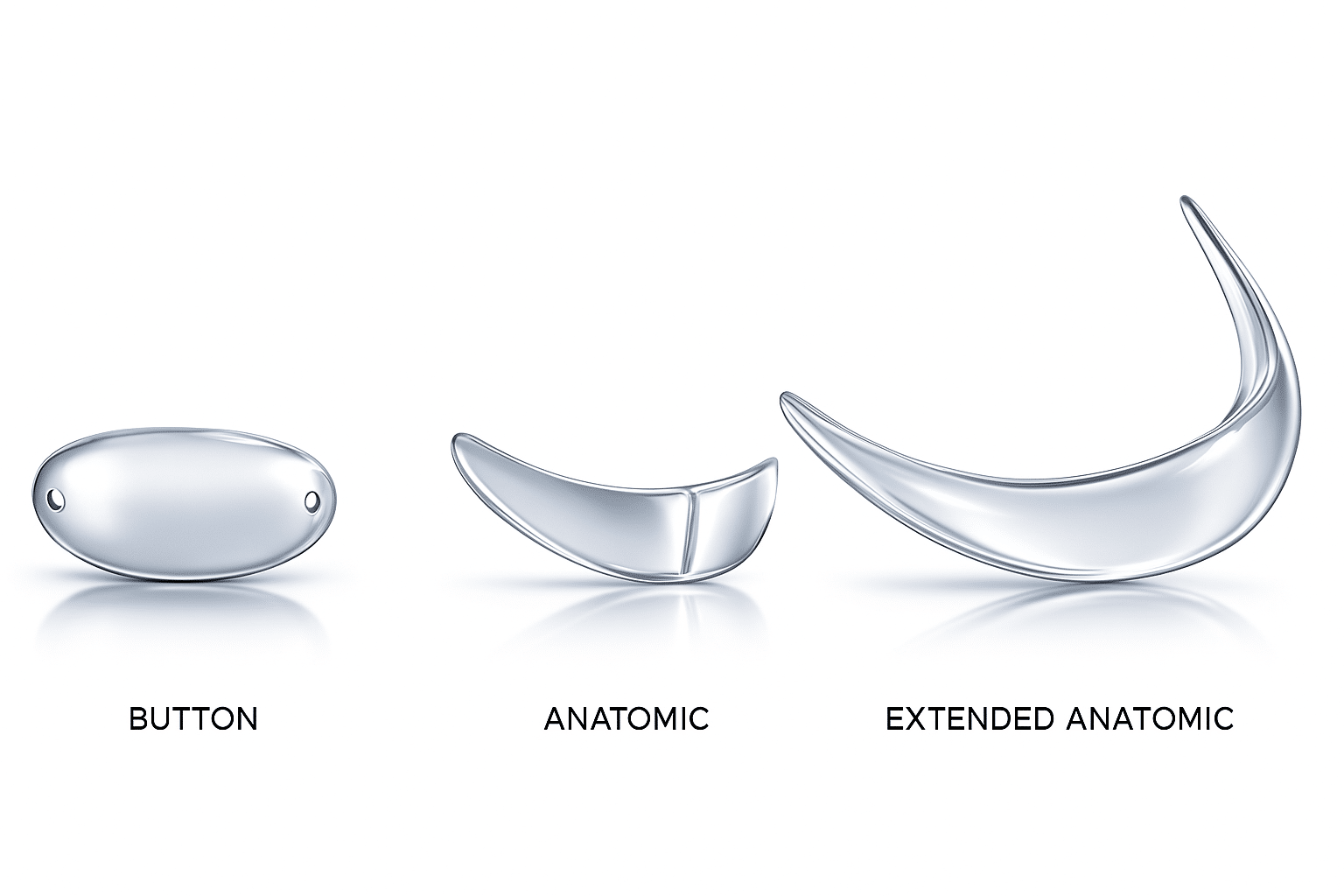
    • I favor solid silicone implants that I sculpt for personalized fit—whether a button style or an extended “boomerang” design to restore jawline flow. Their placement can even lengthen the lower face and improve posture of submental tissue. I personally customize the implant to both size and shape to not only account for underlying asymmetry of the bony mandible (on which it will sit) but also the asymmetrical overlying soft tissue (which will form the roof of the pocket). Pre-fabricated Chin implants only taken into account asymmetry of the bone and not of the soft tissue. Chin augmentation
    • Modern implants offer long-lasting, customizable results, minimal visible scarring, and enhanced facial proportions  
    • With proper case selection and surgical technique, complications are rare, and implants remain a go-to for enduring aesthetic refinement.

Custom chin implants in three styles—Button, Anatomic, and Extended Anatomic (Boomerang)—displayed side by side on a white background, used for tailored jawline contouring and improved facial proportions.

Comparison of three custom chin implant designs—Button, Anatomic, and Extended Anatomic (Boomerang)—crafted for personalized jawline contouring and enhanced facial harmony.

Beyond Aesthetics: Function and Form

A well-executed chin augmentation doesn’t just create a stronger jawline—it can smooth shadowing, lift a flaccid lower lip, and tighten loose submental skin. Done thoughtfully, it transforms the lower face into a more confident, balanced, and aesthetically cohesive whole. In the end, a well-proportioned chin plays an integral role geometry, balance, and how you carry yourself in the world. Whether you’re chasing a sharper jawline, banishing those telltale shadows, or simply giving your lower lip the nudge it’s been begging for, chin enhancement can be the quiet hero of facial aesthetics. 

Randal D. Haworth, MD, FACS / Board-Certified Plastic Surgeon | Beverly Hills

The “Neonatal Deformity” is the Upper Lip Lift’s Unwanted Offspring

To think that when Dr. Randal Haworth started his practice over 30 years ago, he was one of only a handful of leading plastic surgeons who specialized in lip reshaping surgery. Now, as one of the world’s most renowned lip lift experts, he has witnessed how upper lip lifts have exploded in popularity thanks to the influence of social media on the young and old alike. However, as with any trend, unintended consequences may arise such as the “neonatal deformity,” which originates from the congenital Apostrophe Lip. I first described this latter labial morphology in a chapter I authored for “Aesthetic Surgery of the Facial Skeleton”, a textbook edited by Dr. Steven Baker in 2019.

What Is an Apostrophe Lip?

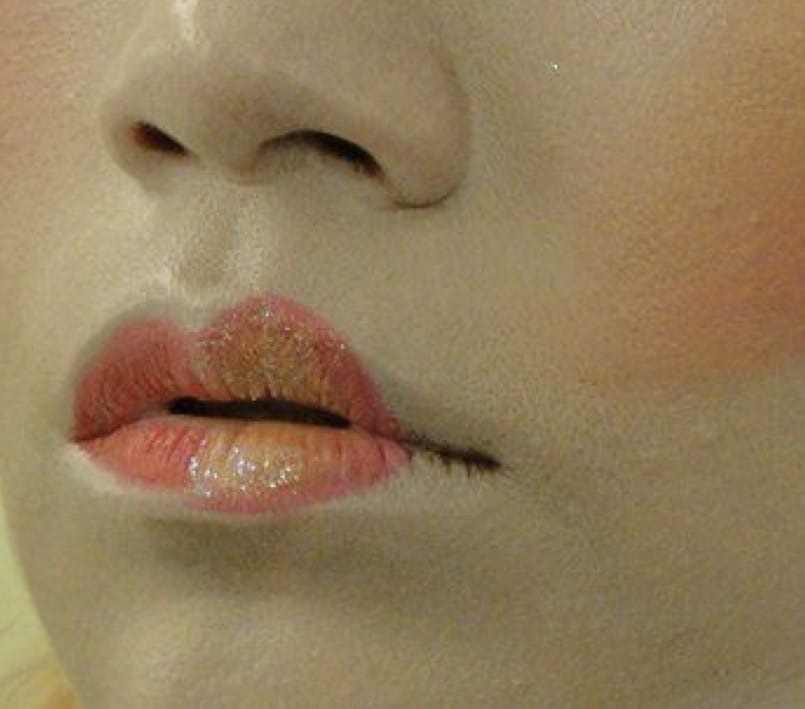
You might not recognize the name, but you’ve likely seen the effect: the pink vermilion (the visible part of the lip) is full and prominent only in the center, while the outer thirds taper off or even disappear. This narrowing gives the mouth a stylized, doll-like appearance reminiscent of Kabuki makeup, where the lips are intentionally painted small and central.

While deliberate in performance art, this effect is aesthetically unflattering when unintentional—and unfortunately, upper lip lifts performed without addressing corner anatomy often exaggerate this deformity.

Kabuki performance artist's lips
Kabuki-style makeup mimicking an Apostrophe lip — note the abrupt loss of vermilion toward the corners, creating a slit-like mouth.

Kabuki lips
Another example of a stylized Kabuki “rosebud” mouth, often unintentionally replicated by improper upper lip lifts.

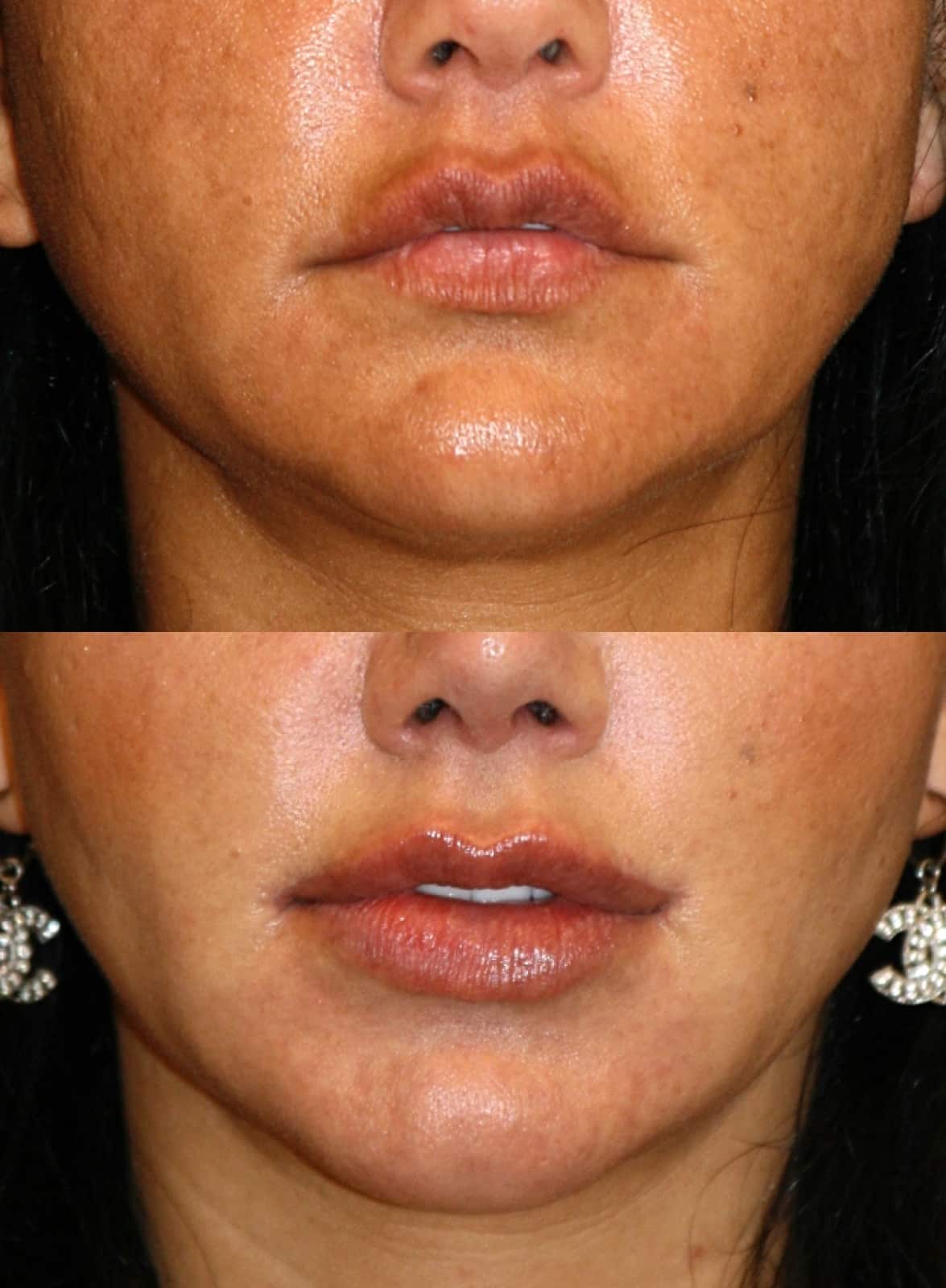
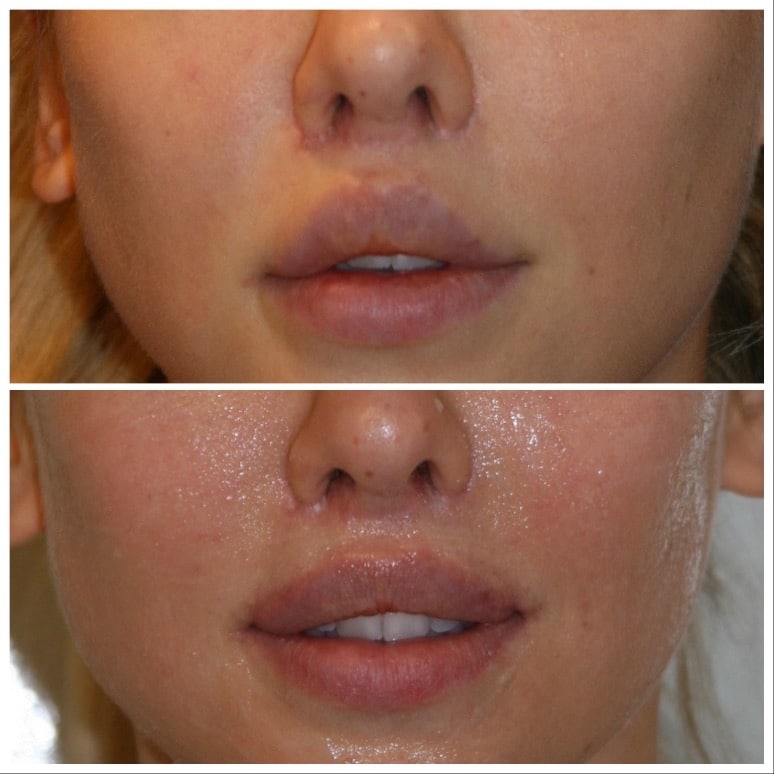
Overfilled lips due to both patient and practitioner perception drift
Before and after correction of an apostrophe lip using a medialized corner lip lift. This patient had chronic filler injections that exacerbated the deformity, narrowing the vermilion into a slit-like central zone.

How an Upper Lip Lift Can Create A Neonatal Lip

Lips of a Neonate
The neonatal deformity gets its name from the naturally recessed corners and centralized vermilion seen in newborns—charming in infants, but unflattering in adults.

Regardless of type, if an upper lip lift is performed without taking into account the oral commissures and lateral upper vermilion, a preexisting apostrophe lip can be exacerbated. The slope from the Cupid’s bow to the oral commissure (mouth corners) becomes unnaturally steep. The outer pink vermilion rolls inward or disappears entirely, leading to a pinched, slit-like appearance akin to that of a newborn. In essence, a neonatal deformity. Patients from around the world have come to me distressed by this outcome, often feeling disfigured and despondent.

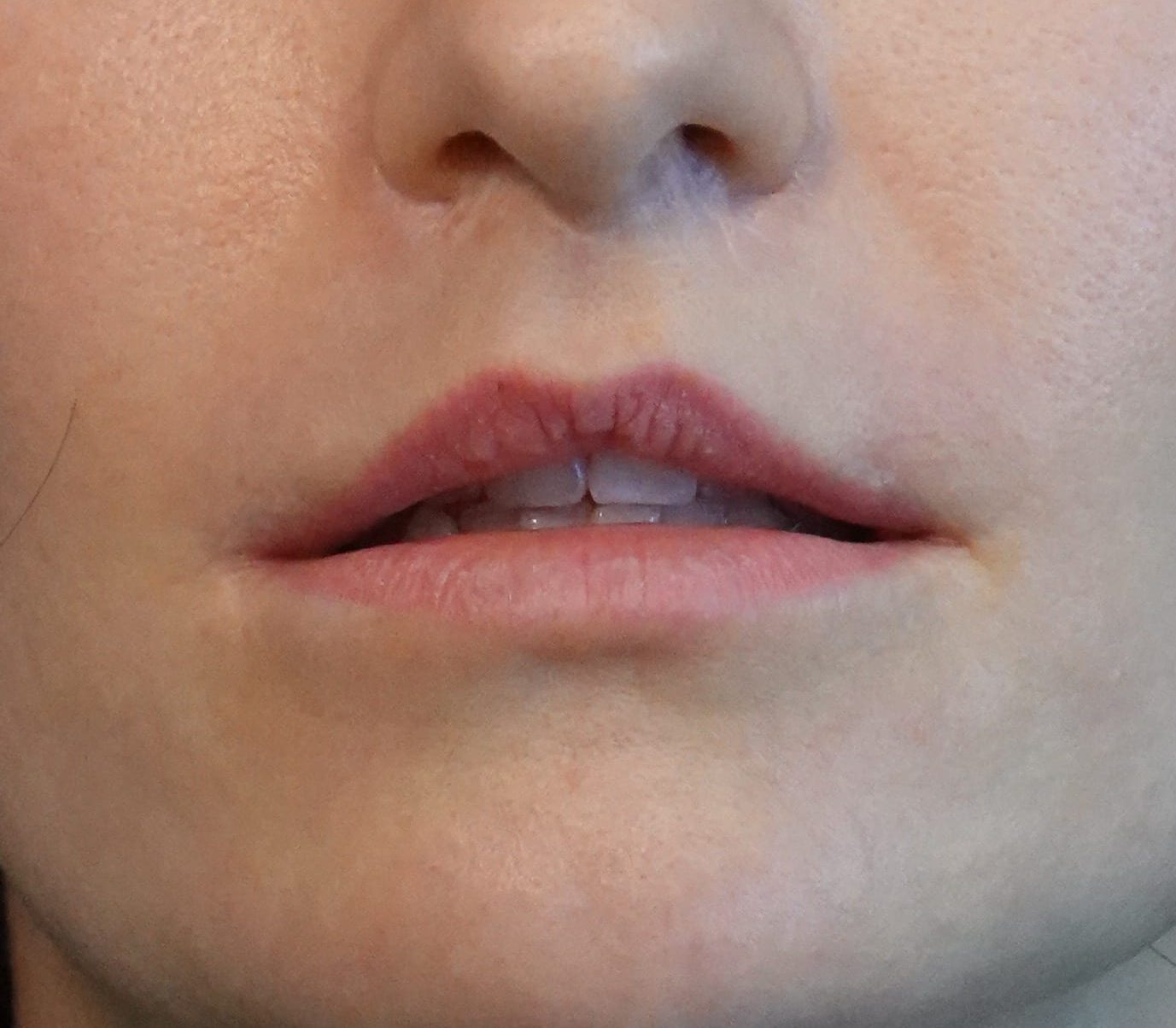
Classic Neonatal deformity
Classic Neonatal lip deformity after an upper lip lift without regards to the oral commissures
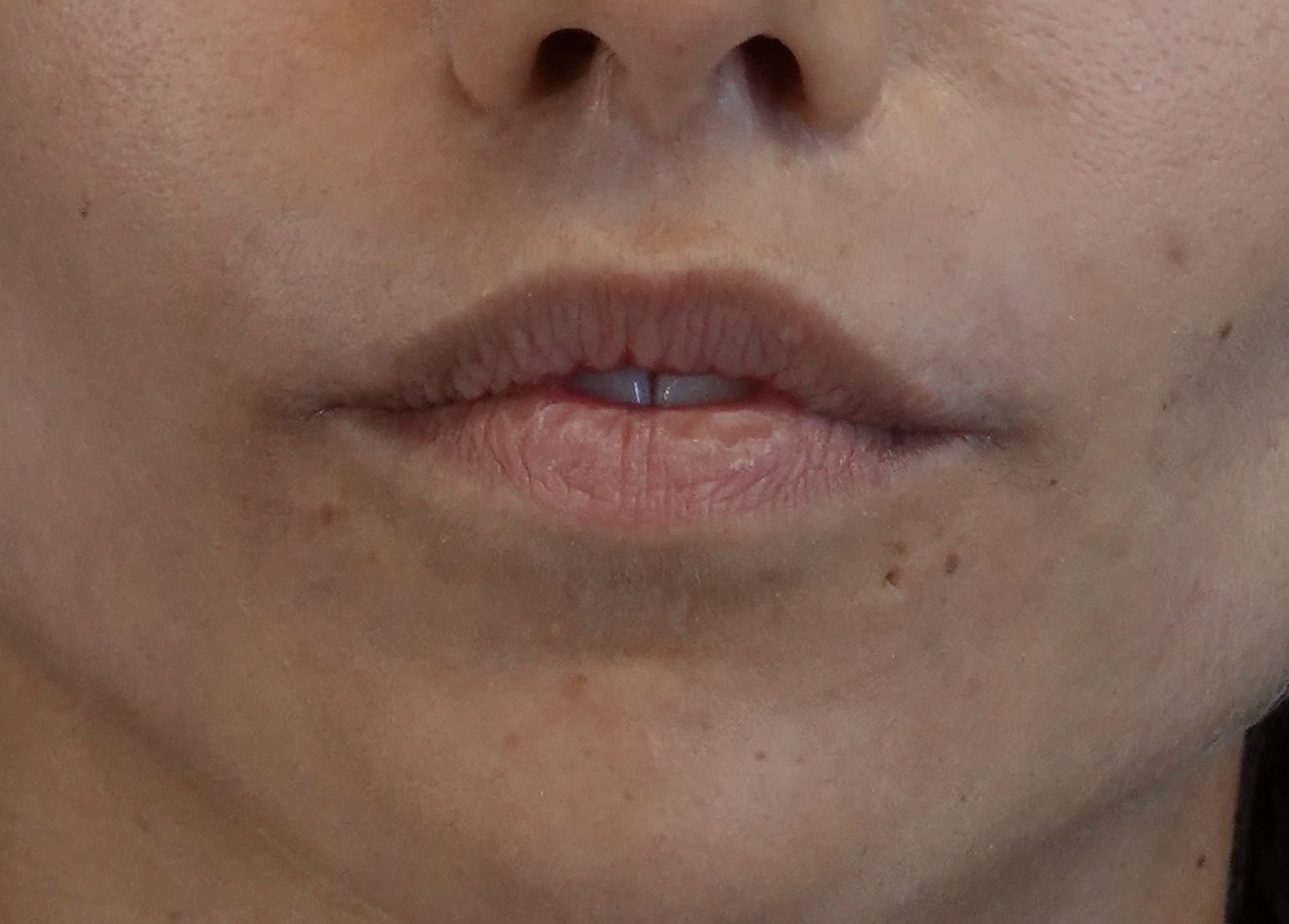
A moderate neonatal lip deformity
A moderate neonatal lip deformity after an upper lip lift and an inadequate traditional corner lip lift

The Medialized Corner Lip Lift: A Powerful Solution

Enter the medialized corner lip lift—a precise, elegant surgical solution I’ve refined over the years to correct these issues. It not only repositions the corners of the mouth upward but also:

  • Restores lost vermilion by rolling it outward, eliminating that paradoxically tightlipped “rosebud” look.
  • Corrects asymmetry, which is present in the majority of mouths.
  • Improves the marionette folds (those stubborn lines running from the corners of the mouth downward) that facelifts often miss.
  • Softens the harsh slope from Cupid’s bow to oral commissure, restoring a balanced, natural curvature.

This is a high-precision procedure involving design and execution tolerances as fine as a quarter millimeter. But when done correctly, the results are not only restorative—they are transformative.

Neonatal lip deformity stemming from past upper lip lift.
This patient required a direct revision of her previous upper lip lift to correct pleating at the nasal base and a medialized corner lip lift to correct the neonatal deformity. A lower V–Y plasty was also performed.
Asymmetrical, neonatal, deformity after upper lip lift and simultaneous rhinoplasty
Another case of asymmetrical neonatal lip deformity after having undergone a previous upper lip lift simultaneous with a rhinoplasty. Dr. Randal Haworth corrected this with a medialized corner lip lift along with medical dermabrasion of her upper lip lift and nasal base/past rhinoplasty scars.. The vermilion was central and collapsed at the corners.

Final Thoughts

If you’ve undergone an upper lip lift and are unhappy with the corner distortion or feel like your lip looks smaller or more “pursed” than before—know that you’re not alone. These issues are more common than many realize, but they are entirely correctable.

Performed under local anesthesia, the medialized corner lip lift offers a sophisticated solution to restore harmony and confidence to your face.

Randal D. Haworth, MD, FACS / Board-Certified Plastic Surgeon | Beverly Hills
 

Plastic Surgery-The Male Factor

Man running
Exercise is hard work

For the last eight years or so, I, as one of the foremost cosmetic injection experts in Beverly Hills, have noticed an increasing number of men seeking aesthetic improvement outside of diet and exercise. However, I see this growth as less a trend and more of a real shift in the industry.

This growth is spurred on by society’s reliance on visual rather than written communication and its unabashed obsession with youth and beauty over old-fashioned wisdom and experience. The eruption of social media, including Instagram and the like, has only heightened the problem. It has awakened our once dormant  narcissism into the self-perpetuating collective contagion that it is today. 

Consequently, there is less social stigma for men to seek out ways to better their appearance in this highly competitive world. In 2018, more aesthetic technologies are finally delivering on their promises to reduce wrinkles, firm faces, reverse atrophy and sculpt bodies without hair. The armamentarium used includes Botox, Jeuveau( or #Newtox), Juvederm, Vollure, Restylane, Radiesse,Voluma, Bellafill, IP, laser hair removal and other lasers to treat brown discoloration, and red patches. Men are not only seeking out ways to keep themselves looking young and competitive but also non-surgical ways to actually enhance their features; these include filler/liquid nosejobs (rhinoplasties), cheek and chin augmentations and jawline defining and even laser induced fat burning with SculpSure..

All done with the expert hands of a board certified plastic surgeon or his personally trained expert nurse injectors (such as Katherine Braun, R.N. helming The Haworth Institute’s own medispa, Self-Centered Aesthetics™), results which are both significant and, most importantly, natural.  This is ideal for men wanting their appearance to be on point in order to compliment their skill set at work.

No cutting, no stitches, less recovery, less expense- what’s there not to like for those men who simply want to look good with minimal expense and time? 

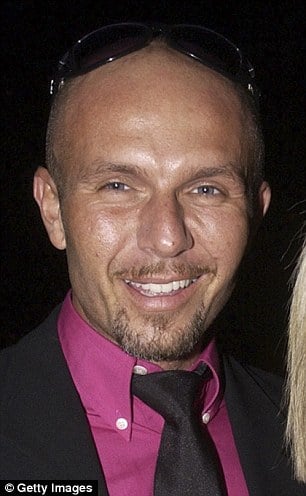
‘How many facelifts has he had?’ Fans accuse Alex Perry of having MORE plastic surgery – as he looks noticeably puffy on The Kyle and Jackie O Show

Fashion designer Alex Perry has made no secret of the fact he relies on fillers and Botox to achieve his unique appearance.

And during an interview with The Kyle and Jackie O Show on Monday, the 56-year-old raised eyebrows when he displayed a noticeably puffy visage.

After in-studio footage was shared to Instagram, KIIS FM listeners soon began accusing Alex of overdoing the cosmetic work and having one too many ‘facelifts’.

‘How many facelifts has he had?’ Fans have accused Alex Perry of having more plastic surgery, after he looked noticeably puffy during a radio interview on Monday (right). Left: Alex in 2018

‘How many facelifts has he had?’ one fan asked, prompting another to comment: ‘He looks like an old sock.’

It comes after a leading plastic surgeon accused the fashionista of ‘excessive’ use of anti-wrinkle injections last year. 

Dr. Randal Haworth observed that Alex looks remarkably different in before and after photos and may have taken things too far. 

The Beverly Hills-based surgeon also claimed that Alex’s face now looks rather ‘crowded’ as a result of ‘too much’ filler.


That’s gotta hurt! After footage of Alex’s interview with The Kyle and Jackie O Show was shared to Instagram, fans soon began accusing him of having one too many ‘facelifts’

Candid: Alex (pictured on Kyle and Jackie O) has made no secret of the fact he relies on fillers and Botox to achieve his unique appearance

‘There is no denying that Mr. Perry has undergone significant change to his countenance,’ Dr. Haworth said at the time.

‘Compared to his younger self, his face is now “crowded”, making his eyes appear smaller and closer set.

‘Most likely, a generous recipe of injected filler and more than a drizzle of Botox in and around his forehead, brows and temples contributed to this look.’

‘Compared to his younger self, his face is now crowded’: Last year, plastic surgeon Dr. Randal Haworth criticised Alex’s ‘excessive’ use of Botox and fillers. Pictured left: Alex in March 2002, and right:in September 2017

‘Additionally, his mid-face (the area between his lower eyes and upper lip) has been amply plumped to attain the “apple cheek”, a feature I feel is best left flatter in men,’ he added.

Dr. Haworth went on to say that it’s hard to determine whether Alex’s cosmetic work is permanent or temporary.

‘Hopefully the fillers used to obtain Mr. Perry’s current look are absorbable and therefore temporary,’ he said. ‘However, if fat was used (which is a permanent, living filler) his options, unfortunately, will be more limited.

Alex, whose celebrity fans include Rihanna and Kim Kardashian, told Yahoo Lifestyle in 2013 that he is not ashamed of using fillers and Botox.

‘There is nothing not real, there are a few fillers and there is a bit of Botox but that’s that. That’s normal, right?… It’s all real. It’s all real,’ he said.

In 2016, the Australia’s Next Top Model judge was criticised for his appearance by one of the show’s contestants, Kassidy Ure.

After Alex criticised one of her photos, she sniped back: ‘At least my lips are real!’ 


Unashamed: Alex, whose fans include Rihanna and Kim Kardashian, said in 2013 he is not ashamed of using fillers and Botox. Pictured left in March 2005

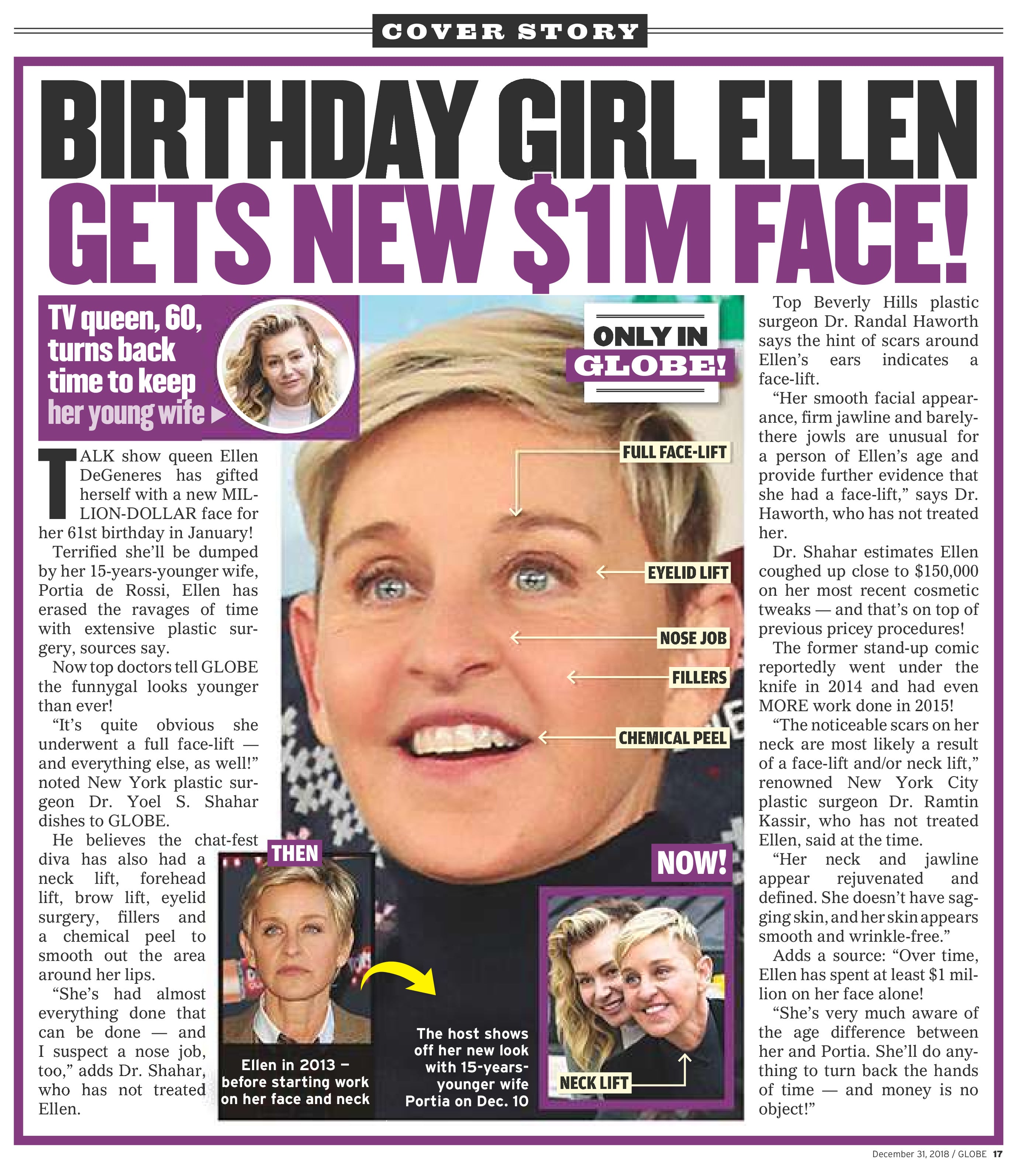
BIRTHDAY GIRL ELLEN GETS NEW $1M FACE

Birthday girl Ellen

Gets new $1m face!

Talk show queen Ellen Degeneres has gifted herself with a new million – dollar face for her 61st birthday in January. Terrified she ‘ll be dumped by her 15- years – younger wife Portia de Rossi , Ellen has erased the ravages of time with extensive plastic surgery , sources say .

Now top doctors tell Globe the Funny Gal looks younger than ever !

“It’s quite obvious she underwent a full face lift ___ and everything else , as well !” noted new York plastic surgeon  Dr. Yoel S. Shahar dishes to Globe .

He believes the chat-fest diva has also had a neck lift , forehead lift, brow lift, eyelid  surgery, fillers and a chemical peel to smooth out the area around her lips.

” She’s had almost everything done that can be done __ and  I suspect a nose  job, too , ” adds  Dr. Shahar, who has not treated Ellen .

Top Beverly Hills plastic surgeon Dr. Randal Haworth says the hint of scars around Ellen’s ears indicates a face-lift .

” Her smooth facial appearance firm firm jawline  and barely there jowls are unusual for a person of Ellen’s age and provide further evidence that she had a face-lift ” says Dr. Haworth, who has not treated her .

Dr. Shahar estimates Ellen coughed up close to 50000$ on her most recent cosmetic tweaks __ and that’s on top of previous pricey procedures !!

The former stand- up comic reportedly went under the knife in 2014 and had even more work done in 2015 !

“The noticeable scars on her neck are most likely a result of a face –lift and / or neck lift “

Renowned New York City plastic surgeon Dr. Ramtin Kassir , who has not treated Ellen , said at the time. ” Her neck and jawline appear rejuvenated and defined. She doesn’t  have sagging skin  and her skin appears smooth and wrinkle-free “.

Adds  a source: “Over time , Ellen has spent at least 1$ million on her face alone !

” She ‘s very much aware of the age difference between her and Portia. She’ll do anything to turn back the hands of time – and money is no object!”

DailyMail – Nov 5, 2018 – Ian Thorpe

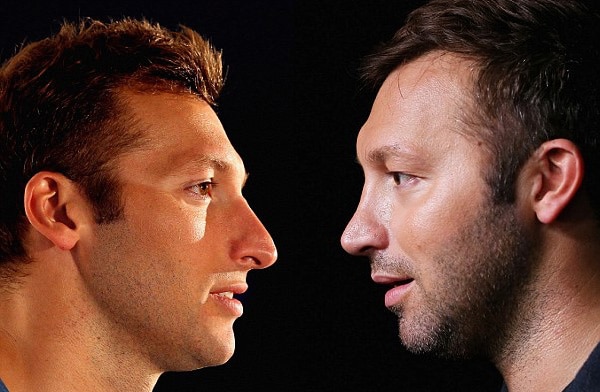
As one of Australia’s most recognizable Olympians, Ian Thorpe turned heads when he seemed to debut a new nose last week. While the 36-year-old has yet to comment on his ‘new’ look, celebrity plastic surgeon Dr Randal Haworth believes it’s clear that the star has gone under the knife. ‘It is clear as day that Mr. Thorpe had a rhinoplasty,’ Dr Haworth exclusively to Daily Mail Australia on Tuesday. Dr Haworth went on to explain what he thinks are tell-tale signs Ian has had a rhinoplasty. ‘The dorsal hump of his bridge has been significantly lowered so that his tip now over projects from his face,’ he claimed. He also perceived that Ian’s nose displays ‘an obvious inverted V deformity’ on its bridge and a ‘step off from the nasal bones onto the cartilage portions below.’ ‘Usually, this is associated with some breathing obstruction in his nose and is more often than not caused by a rhinoplasty performed through a ‘closed’ technique,’ he said, adding: ‘This is where a plastic surgeon performs the nose job solely through incisions confined to the inside the nose.’ Dr Haworth went on to reveal that an ‘open’ technique allows the surgeon better visualization and direction over both the shape of the nose and its use of breathing. Full Article

‘It’s clear as day he’s had a nose job’: Celebrity plastic surgeon exposes the clues that imply Ian Thorpe has gone under the knife

As one of Australia’s most recognizable Olympians, Ian Thorpe turned heads when he seemed to debut a new nose last week. While the 36-year-old has yet to comment on his ‘new’ look, celebrity plastic surgeon Dr Randal Haworth believes it’s clear that the star has gone under the knife.

‘It is clear as day that Mr. Thorpe had a rhinoplasty,’ Dr Haworth exclusively to Daily Mail Australia on Tuesday. Dr Haworth went on to explain what he thinks are tell-tale signs Ian has had a rhinoplasty. ‘The dorsal hump of his bridge has been significantly lowered so that his tip now over projects from his face,’ he claimed. He also perceived that Ian’s nose displays ‘an obvious inverted V deformity’ on its bridge and a ‘step off from the nasal bones onto the cartilage portions below.’

‘Usually, this is associated with some breathing obstruction in his nose and is more often than not caused by a rhinoplasty performed through a ‘closed’ technique,’ he said, adding: ‘This is where a plastic surgeon performs the nose job solely through incisions confined to the inside the nose.’ Dr Haworth went on to reveal that an ‘open’ technique allows the surgeon better visualization and direction over both the shape of the nose and its use of breathing.

Full Article

DailyMail – Nov 5, 2018 – Aisha Jade

A leading plastic surgeon assumes that Aisha Jade may have undergone a breast enlargement while chasing her Hollywood dreams. Dr Randal Haworth told Daily Mail Australia on Wednesday that the 26-year-old socialite appears to have had a ‘silicone gel implant placed under the muscle’. He explained: ‘I opine that she underwent a breast augmentation, most likely utilizing a cohesive silicone gel implant placed under the muscle. ‘I like the way it has provided proportional balance to her body.’ Dr Haworth added: ‘This type of result typically gives a woman added confidence both in and out of clothes.’ Aisha regularly shares bikini-clad photos of herself with her 342,000 Instagram followers but does to appear to have addressed her changing physique. Full Article

Aisha Jade may have undergone a breast enlargement after moving to LA, says a leading cosmetic surgeon

A leading plastic surgeon assumes that Aisha Jade may have undergone a breast enlargement while chasing her Hollywood dreams.

Dr Randal Haworth told Daily Mail Australia on Wednesday that the 26-year-old socialite appears to have had a ‘silicone gel implant placed under the muscle’. He explained: ‘I opine that she underwent a breast augmentation, most likely utilizing a cohesive silicone gel implant placed under the muscle. ‘I like the way it has provided proportional balance to her body.’

Dr Haworth added: ‘This type of result typically gives a woman added confidence both in and out of clothes.’

Aisha regularly shares bikini-clad photos of herself with her 342,000 Instagram followers but does to appear to have addressed her changing physique.


Full Article
Page 1 of 9
1 2 3 9