The Great Filler Dissolving Obsession

The Short Answer

Hyaluronidase is an enzyme used to dissolve hyaluronic acid (HA) fillers such as Juvéderm and Restylane. It can be extremely useful for treating misplaced or excessive filler, persistent swelling and the blue-gray discoloration known as the Tyndall effect. But the presence of residual filler on ultrasound or MRI does not necessarily mean that every trace of it needs to be removed. The goal should be correction of the clinical problem—not simply elimination of an imaging finding. In many cases, selective hyaluronidase treatment followed by careful massage and reassessment can produce a better aesthetic result than repeatedly attempting to dissolve every detectable molecule of filler.

Hyaluronidase dissolves hyaluronic acid–based fillers by hydrolyzing the HA polymer — breaking it down so the body can clear it. Recent literature has challenged even the terminology of “dissolving” filler. Harris and Weiner argue that hyaluronidase may be better understood as modifying a complex filler-tissue system rather than predictably eradicating every molecule of HA. Importantly, clinical improvement may occur even when ultrasound or MRI continues to demonstrate residual filler.1

Key Takeaways

  • Hyaluronidase can selectively dissolve unwanted hyaluronic-acid filler.
  • Tyndall effect is a blue-gray discoloration that can occur when HA filler is placed too superficially.
  • Not every residual pocket of filler visible on ultrasound or MRI requires treatment.
  • Repeated attempts to eliminate every trace of filler may create additional swelling, tissue changes and dissatisfaction.
  • Clinical examination should determine whether detected filler is actually causing an aesthetic problem.
  • In selected cases, careful massage and molding after hyaluronidase can be an important part of correction.

Hyaluronic acid fillers such as Juvéderm and Restylane can produce beautiful results—and when they don’t, hyaluronidase can often correct the problem remarkably well.

But somewhere along the way, “dissolving unwanted filler” has evolved into something quite different: a quest to hunt down and eradicate every detectable trace of filler from the face.

And I think we need to talk about it.

Unless you have been living in a hermetically sealed cave for the past 20 years, you have probably heard of hyaluronic acid (HA) fillers such as Juvéderm and Restylane.

Hyaluronic acid itself is hardly an exotic substance. It is a naturally occurring sugar found throughout the human body—in our skin, connective tissues, joints and even our eyes. Its ability to attract and retain water is one reason HA fillers are so useful for restoring volume, softening contours and reshaping certain areas of the face.

Most of the time, when properly selected and properly injected, they work very well.

But not always.

When Good Filler Goes Bad

Hyaluronic acid is hydrophilic—it attracts water. That is generally useful, but in certain areas, particularly around the eyes, too much filler or filler placed at the wrong depth can create persistent puffiness or edema.

HA filler can also sometimes produce a characteristic bluish-gray discoloration, particularly when placed too superficially. This is commonly referred to as the Tyndall effect.

And frustratingly, these problems don’t necessarily announce themselves while you’re still sitting in the injector’s chair. Swelling, contour irregularities and unwanted fullness can become apparent days or even a week or two later.

Fortunately, HA fillers have one enormous advantage over many other injectable materials:

We have an eraser.

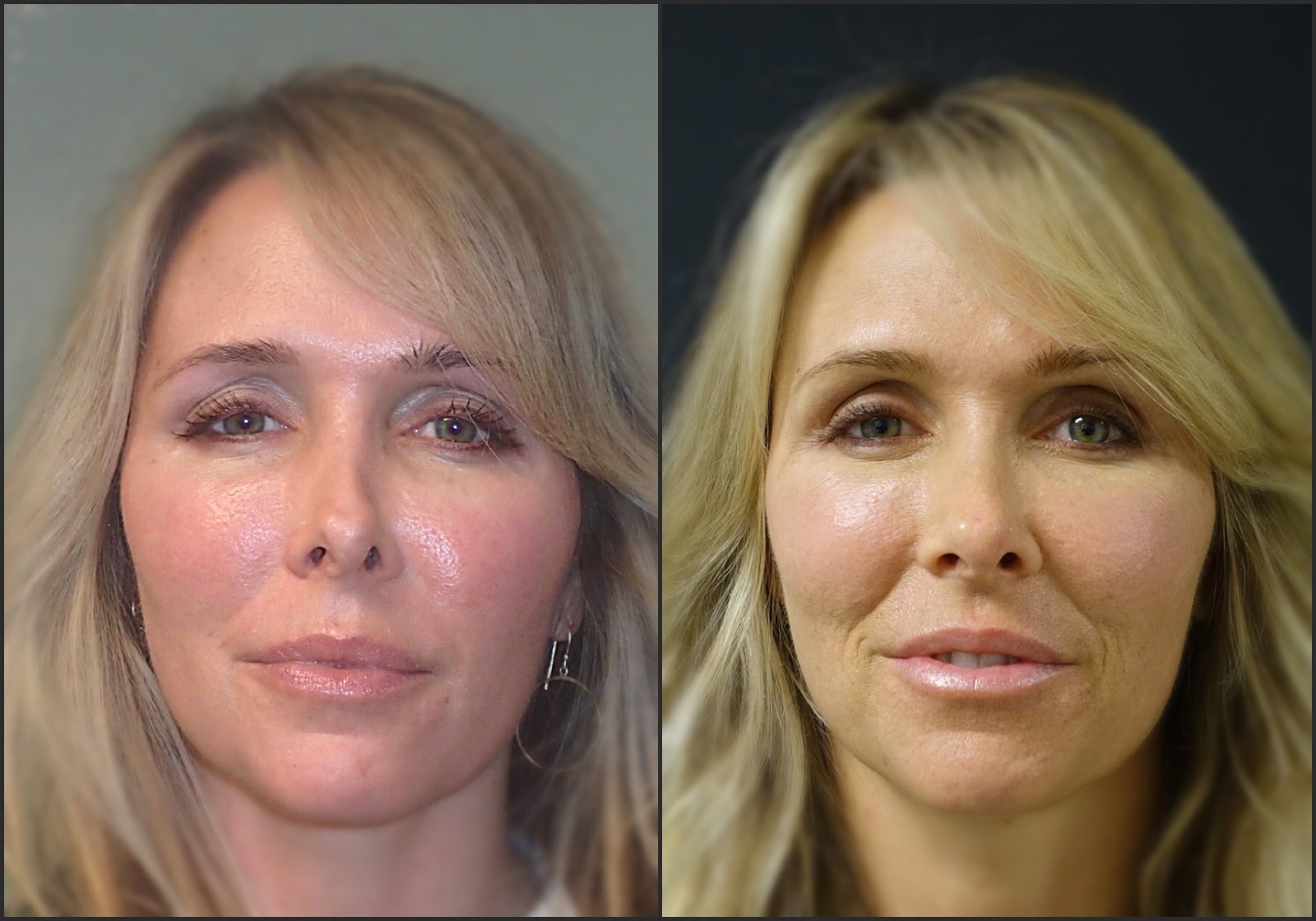
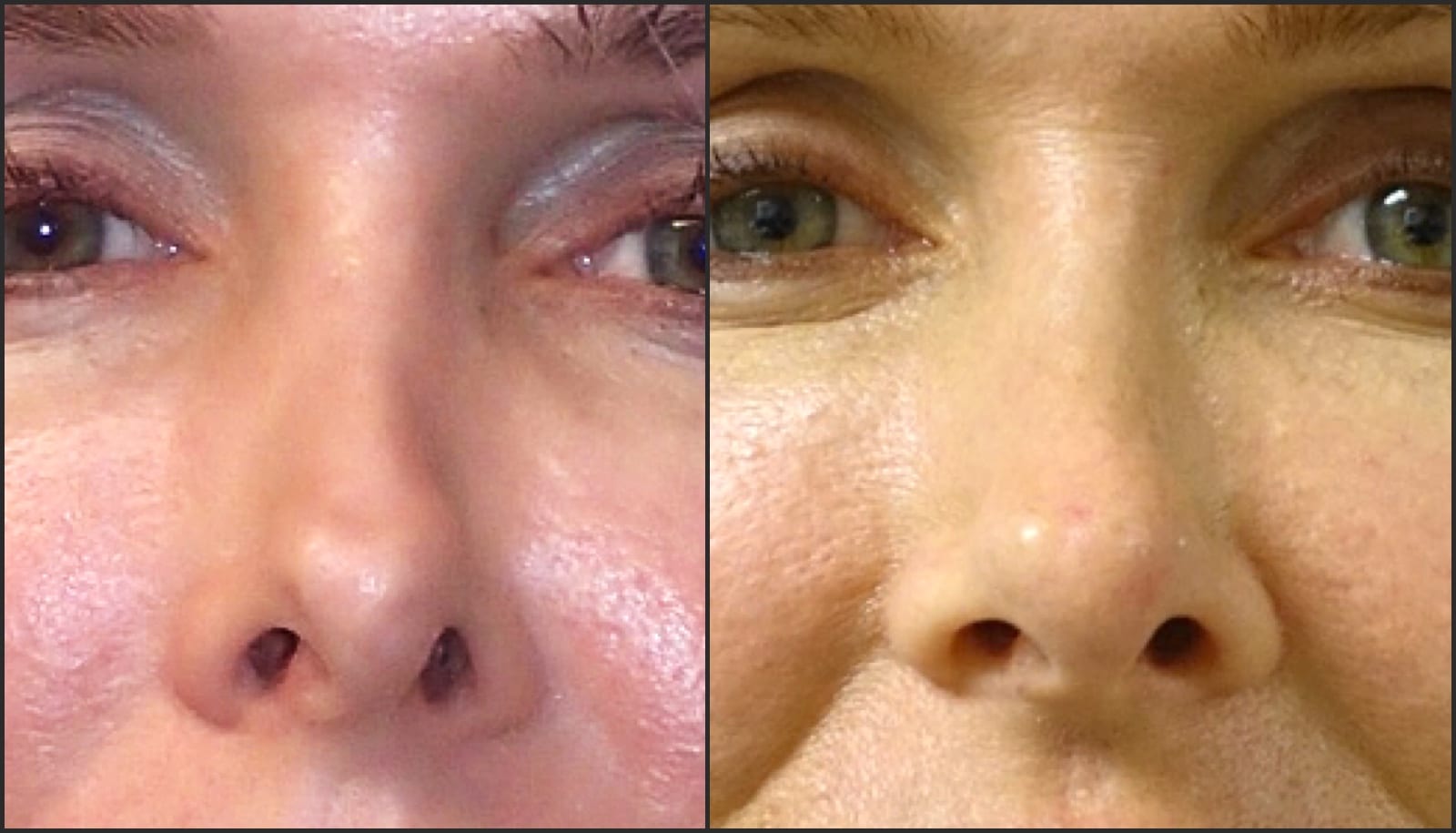
Tyndall effect before hyaluronidase
Before
Under-eye Tyndall effect / bag from hyaluronic acid filler (before hyaluronidase).
Improvement after hyaluronidase
After
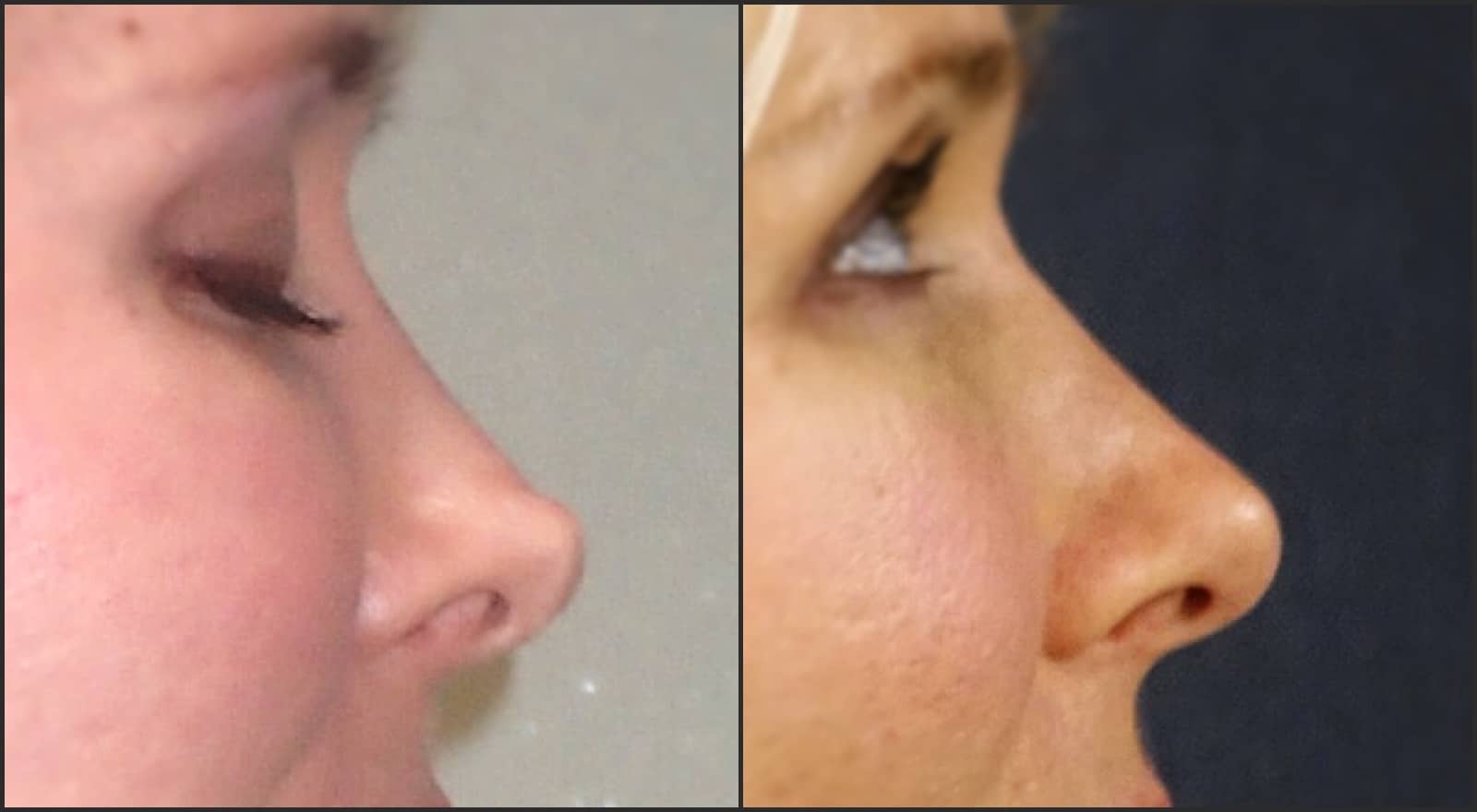
After hyaluronidase with careful massage and molding.

Before and after treatment of the Tyndall effect. Improvement followed targeted hyaluronidase with careful massage and molding.

Hyaluronidase: The Filler Eraser

Hyaluronidase is an enzyme that breaks down hyaluronic acid. Commercial preparations include products such as Hylenex and Vitrase, among others.

I often describe hyaluronidase to my patients as a pencil eraser.

If I’ve performed a filler treatment and several days later notice a little excess fullness or an area that needs refinement, a carefully placed amount of hyaluronidase can often correct it quickly and effectively.

I also use hyaluronidase before certain facial surgical procedures when previously placed filler is obscuring the anatomy I actually need to evaluate or treat.

Used thoughtfully, it is an extraordinarily useful tool.

The trouble starts when the pencil eraser becomes a belt sander.

The New Obsession With Dissolving Everything

Increasingly, I see patients who don’t simply want an unattractive area of filler corrected.

They want every molecule of filler removed from their face.

Some arrive after months of repeated dissolving sessions. They have undergone ultrasounds, MRIs or other imaging studies searching for residual pockets of filler.

A scan identifies another tiny area.

That area gets injected with more hyaluronidase.

Another scan is obtained.

Something else is found.

And down the rabbit hole we go.

More appointments. More scans. More dissolving. More swelling. More anxiety. More money.

Yet when I actually look at the patient, there may be very little—or sometimes nothing—visibly wrong.

At some point, the pursuit itself becomes the problem.

Interestingly, this isn’t merely theoretical. A retrospective study of 157 treated orbits found that while 59% achieved a satisfactory result after hyaluronidase, 24% required additional treatment and 18% reported post-treatment facial changes such as hollowing—a phenomenon the authors termed “posthyaluronidase syndrome.” This does not prove that hyaluronidase permanently damages one’s native tissues, as some corners of social media would have you believe. But it does reinforce a rather basic aesthetic principle: more treatment is not necessarily better treatment.3

Hyaluronic Acid Is Not a Metastatic Disease

This is where some perspective is desperately needed.

Residual hyaluronic acid filler is not cancer. It is not a metastatic disease that must be hunted down and banished from every corner of the face.

The objective of aesthetic medicine is not to produce an MRI demonstrating absolute molecular purity.

The objective is to make the patient look better.

That distinction sounds ridiculously obvious.

Apparently, it isn’t.

Imaging can unquestionably be useful. Ultrasound, for example, can help identify the location and depth of previously injected material in selected situations. MRI may reveal material or tissue changes that aren’t obvious on examination.

But the existence of something on an image does not automatically mean that it is producing an aesthetic problem—or that treating it will improve the patient’s appearance.

Which brings me to the sophisticated diagnostic technology I use most frequently.

My Favorite Imaging Device: My Eyes

Patients sometimes ask:

“What makes you successful at dissolving difficult filler? Are you using MRI? Ultrasound? Some special imaging technology?”

Those technologies certainly have their place.

But my primary diagnostic instrument remains decidedly low-tech:

My eyes.

If I see abnormal puffiness, a blue-gray Tyndall effect, contour distortion or meaningful asymmetry that appears related to filler, I treat it.

If I don’t see a problem, I generally leave it alone.

And, perhaps more importantly, I encourage the patient to leave it alone too.

Because I’m treating a face, not an MRI.

An imaging study should help answer a clinical question. It should not automatically create a new clinical problem simply because it detected something.

Hyaluronidase Dissolves. Massage Sculpts.

This isn’t merely philosophical restraint. Published guidance on Tyndall effect specifically describes selective dissolution of the superficial offending HA layer without removing the entire filler deposit. The literature also recognizes massage following hyaluronidase as part of managing certain HA gels. In other words, the objective is correction—not molecular extermination.2

There is another element of successful filler correction that receives surprisingly little attention: massage and molding.

Hyaluronidase is not magic water.

You don’t simply inject a few drops, walk away and wait for perfection to occur.

When appropriate, careful manipulation of the treated area—from deeper tissues toward the surface—can be an important part of achieving a smooth, controlled correction.

In my experience, thoughtful massage and molding can sometimes be every bit as important as where the enzyme itself is placed.

The goal isn’t indiscriminate destruction of filler.

It is controlled correction.

That requires anatomy, judgment, examination and, yes, occasionally knowing when to stop.

Dissolve the Problem—Not the Patient’s Peace of Mind

There is nothing wrong with wanting poorly placed filler corrected. I do it regularly.

There is nothing wrong with using imaging when the clinical situation genuinely warrants it.

And there is certainly nothing wrong with hyaluronidase. It remains one of the great advantages of HA fillers precisely because it gives us a degree of reversibility that many aesthetic treatments simply don’t have.

But there is an enormous difference between correcting a visible problem and embarking upon an endless search for microscopic remnants of something simply because modern imaging technology is capable of finding them.

More information does not always mean more treatment.

Sometimes the most sophisticated decision a physician can make is to look at the patient and say:

“That looks good. Leave it alone.”

In aesthetic medicine, as in much of medicine, the simplest solution is often the best one.

And occasionally, the hardest procedure to perform is no procedure at all.

Selected Medical References

  1. Harris S, Weiner S. Reframing Hyaluronidase in Aesthetic Medicine: From “Dissolving Filler” to “Modifying Filler.” Aesthetic Surgery Journal. 2026;46(6):NP51–NP54. DOI: 10.1093/asj/sjag022
  2. Nonvascular Complications of Injectable Fillers—Prevention and Management. https://pmc.ncbi.nlm.nih.gov/articles/PMC7822713/
  3. The Posthyaluronidase Syndrome: Dosing Strategies for Hyaluronidase in the Dissolving of Facial Filler and Independent Predictors of Poor Outcomes. https://pubmed.ncbi.nlm.nih.gov/38655103/

Randal D. Haworth, MD, FACS
Board-Certified Plastic Surgeon | Beverly Hills
Hot Lips, Cold Sores

 Stress, weather, chemicals and injury to the lip can all awaken the virus in your body. But needle punctures can be particularly triggering for cold sores.   As one of the Beverly Hills top lip injector of fillers, Plastic Surgeon Dr Randal Haworth does see the occasional cold sore erupt 1-2 days after a treatment. It is for that reason, Dr Haworth recommends antiviral prophylaxis is select cases.

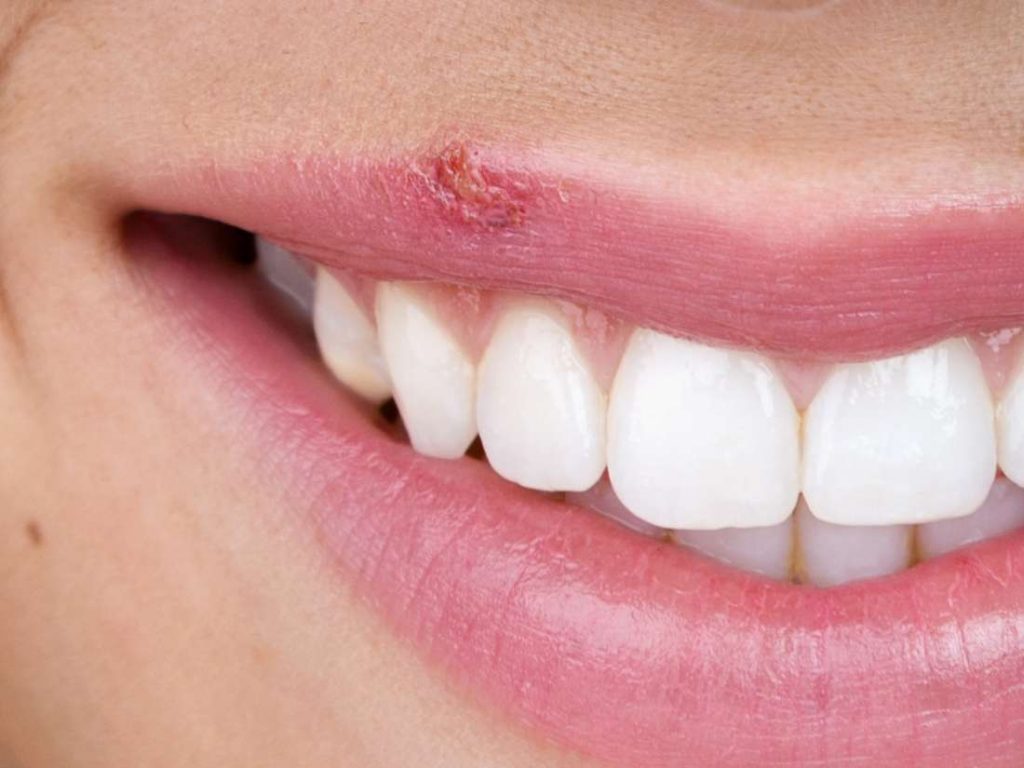
Cold sore herpes Simplex Type I of the lips
Cold sore herpes Simplex Type I which can occur after any lip procedure.

Of course, you can be prone to cold sores, get a lip filler and have no sign of an outbreak. But it’s good practice to be precautious and minimize the risk.

Dr Haworth notes that any cosmetic procedure which causes stress to your skin has the potential to stimulate cold sore recurrence. Cold sores are a prevalent affliction and are generally due to herpes virus (HSV) type one particular (generally oral herpes), with the minority (10%) being due to HSV type 2 (usually genital).

Many main infections of HSV-1 are asymptomatic, while recurrent infections can present as fever blisters at the vermillion border. Although cold sores may well not cause any long-term skin damage, they do possess the potential to cause scarring at the contaminated area.

Roughly two-thirds of a global population under 55 are infected with HSV-1. Primary illness develops in childhood through non-sexual contact usually, for example by sharing utensils or towels, but it is regularly assumed to be solely caused by kissing. If symptoms do present with primary infection, they take place two to 20 days after direct exposure.

Aesthetic procedures such as for example lasers, injectables, microneedling and chemical peeling often require limited or deliberate, manipulated trauma to skin, which includes the potential to trigger cold sore recurrence. Dr Haworth, the world’s foremost lip reshaping expert (including upper lip and corner lip lifts) will even warn his patients that his signature lip enhancements can trigger a herpes simplex outbreak. When a fever blister shows up after an aesthetic treatment, it could be devastating for the individual due to distress, pain and potential skin damage of a cosmetically very sensitive area. You will find a particular likelihood of scarring after ablative types of procedures (lasers, peels).

Cold sore prophylaxis can be recommended in the subsequent circumstances:

-More than three spontaneous occurrences every yea
-Previous eruption at any time, as a result of a procedure
-Lip augmentation and HSV eruption regardless of date or time
-Facial resurfacing procedures; anything that breaches skin carrier, and especially medium or deep peels, facial skin lasabrasion, microneedling and microdermabrasion

Immunocompromised patients

Prophylaxis Dr Haworth recommends includes predosing with Valtrex 500mg daily for 2 days to continue for 3 after the procedure. He’ll substitute 1000 mg daily in particularly susceptible individuals.

Randal Haworth MD, FACS

Married At First Sight’s Jessika Power looks like a human Barbie doll as she poses in racy lingerie… after splashing out $25,000 on cosmetic treatments

She recently confessed to spending $25,000 in a cosmetic surgery binge.

And Married At First Sight’s Jessika Power looked like a human Barbie doll in a video shared to Instagram on Tuesday night.

The 27-year-old flaunted her plump lips and hourglass figure in throwback footage from her recent NW magazine photo shoot.


Plastic fantastic! Married At First Sight’s Jessika Power looked like a human Barbie doll in a video shared to Instagram on Tuesday night

Posing in the makeup chair, the platinum blonde bombshell cast a sultry gaze at the camera before revealing her lacy white lingerie. 

On Monday, Jessika confirmed she had spent $25,000 on a new set of veneers, two rounds of dental work, cheek and lip fillers, Botox and a brow lift.

After undergoing the cosmetic procedures in quick succession, she looks almost unrecognisable today compared to photos taken just a few years ago.


Showing off: Posing in the makeup chair, the platinum blonde bombshell cast a sultry gaze at the camera before revealing her lacy white lingerie

Transformed: On Monday, Jessika confirmed she had spent $25,000 on a new set of veneers, cheek and lip fillers, Botox and a brow lift. Pictured right: in April 2019, and left: in August 2017

She told NW magazine that relentless trolling about her appearance on MAFS left her feeling ‘shaken to the core’. 

‘I’m a confident girl, but having thousands of people criticise me each day has shaken me to the core. I felt like I had heaps wrong with me afterwards,’ she said.

The Perth-born model added that she felt insecure about her looks partly because of the man she was previosuly dating: Daniel Webb.


‘I felt like I had heaps wrong with me’: Jessika told NW magazine that constant trolling about her appearance during MAFS made her feel ugly and insecure

‘Dan’s exes were all beautiful, including a Playboy bunny. I looked at pictures of her, then looked at myself and thought, “I look boring”,’ she confessed.

‘He would get Botox done on his forehead too and I felt I had to keep up with him.’

While Jessika is clearly pleased with her new look, not everybody is impressed.

My, how you’ve changed! Jessika was no stranger to cosmetic procedures before her debut on MAFS, having already undergone lip fillers. Pictured left: in 2017, and right: in 2018

Earlier this week, Beverly Hills-based plastic surgeon Dr. Randal Haworth said that Jessika’s excessively filled pout ‘resembles a baboon’s bottom in heat’.

‘Instead of enhancing facial sensuality, overly plumped lips tend to do the opposite and even age the face in a strange way,’ Dr. Haworth told Daily Mail Australia.

‘Jessika’s exaggerated lips only serve to distract from her natural beauty.’


She’s not finished yet! As for Jessika’s next procedures, she revealed that a non-surgical nose job and lipo-sculpture on her thighs and buttocks are next on the list. Pictured in April 2019

Born to be wild! Tammy Hembrow looks unrecognisable in a newly unearthed hip-hop music video from 2014 – which shows the fitness model smoking and drinking

efore making a name for herself on Instagram, Tammy Hembrow starred in an outrageous hip-hop music video.

A newly-unearthed YouTube video shows the now 24-year-old letting lose in the clip for underground Aussie hip-hop band Mr Hill & Rahjconkas’ 2014 single, Non Stop.

The video was uploaded in April 2014, and five years later, Tammy is virtually unrecognisable from her former self.

Now and then: Before making a name for herself on Instagram Tammy Hembrow was starring in rap music videos. Pictured left in a 2014 music video, and right on Monday
Compared to her current appearance, Tammy’s face appeared to be much fresher, bearing classic girl-next-door good looks.

Her lips appear smaller, her face is less full, and her nose looks much different.

Even Tammy’s hair is a different hue, having once been a golden blonde compared to the platinum she’s known for now.


Wild child: In the music video, Tammy can be seen puffing on a cigarette while swigging back drinks

Natural beauty: Compared to her current appearance, Tammy’s face appeared much more natural looking, bearing classic girl-next-door good looks

In an interview with Daily Mail Australia in August 2018, Beverly Hills plastic surgeon Dr Randal Haworth claimed Tammy may have undergone a nose job, liposuction and dermal fillers to achieve her bombshell look. 

‘Based on what I presume to be filtered photos, she has undergone a striking transformation of not only her facial features but also of her facial shape,’ Dr Haworth claimed at the time.  

He added: ‘Specifically, her jawline is more defined into a “V-line”. I would even venture to say her chin has been shortened and narrowed compared to her teenage years.’


Golden girl: Even Tammy’s hair is a different hue, having once been a golden blonde compared to the platinum she’s known for now

Helping hand: In an interview with Daily Mail Australia in August 2018, Beverly Hills plastic surgeon Dr Randal Haworth claimed Tammy may have undergone a nose job, liposuction and dermal fillers to achieve her bombshell look

Dr Haworth also believes her V-line chin could have been achieved through either ‘liposuction or bony chin modification’.

He also acknowledged that ‘losing her “baby fat” may have been a contributing factor’ to the visible changes in Tammy’s jawline.  

Furthermore, Dr Haworth claimed that Tammy may have undergone a rhinoplasty to fine-tune her look, saying: ‘A subtle, balanced rhinoplasty to narrow her nasal bones and refine her tip may have been carried out.’


Finger licking good: At one stage in the music video, she’s seen seductively licking the screen of her iPhone

Sharing is caring: Another scene from the music video shows a girl squirting a liquid out of her own mouth and into Tammy’s open mouth

‘Based on what I presume to be filtered photos, she has undergone a striking transformation of not only her facial features but also of her facial shape,’ Dr Haworth told Daily Mail Australia

He also suggested that Tammy’s cheekbones look more sculpted and angled upwards in recent photos, while her eye-hollows appear less apparent.

Both of these changes are likely to have been carried out with a filler such as Voluma or Restylane Lyft, or even achieved via fat transfer. 

According to Dr Haworth, Tammy’s lips have also almost certainly been enhanced due to their ‘overly plumped’ appearance.


Giving cheek: Dr Haworth has also suggested that Tammy’s cheekbones look more sculpted and angled upwards in recent photos, while her eye-hollows appear less apparent

Drink up: The hard partying music video shows Tammy having drinks poured directly into her open mouth

He claimed: ‘Like Kylie Jenner, Tammy has been originally inspired by the Angelina Jolie lip variety. Paradoxically, lips oversized for a face can mature the visage beyond its years.’

In the music video, Tammy can be seen puffing on a cigarette while swigging back drinks.

At one stage, she’s seen licking the screen of her iPhone, before another girl squirts a liquid out of her mouth into Tammy’s open mouth.  


Lip service: According to Dr Haworth, Tammy’s lips have also almost certainly been enhanced due to their ‘overly plumped’ appearance

Leading Plastic Surgeon Discusses Biggest Loser star Michelle Bridges’ “enthusiastic use of fillers and Botox”

The Biggest Loser star Michelle Bridges has helped thousands of people with her fitness program.

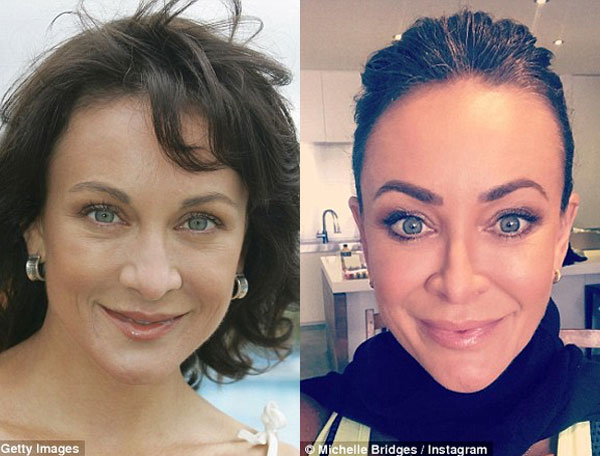
According to Beverly Hills-based plastic surgeon Dr. Randal Haworth, she may have undergone her own transformation.

‘It appears Michelle’s striking facial change came from an enthusiastic use of fillers and Botox. Unfortunately, the manner in which they were used tends to detract from her natural facial harmony rather than enhance it.’ said Dr. Haworth.

Dr. Haworth went on to describe the tell-tale signs of Michelle’s supposed cosmetic work.

Blair Thomas‘Her eyebrows are a tad too elevated into a pointed arch similar to Captain Spock, which is most likely the result of Botox. Ironically, this shape can be softened with a further small shot of Botox above each arch. I have a small suspicion Botox was also injected in and around her chin because her smile in recent pictures seems somewhat restricted and stiff,’ he explained.
Dr. Haworth also described how Michelle appears to have used a filler such as Juvéderm to plump her lips and under-eye hollows.

‘In certain angles, the filler seems to have accentuated her long upper lip which is a sign of aging. A tell-tale sign that filler was used to treat under-eye hollows is bulging below her lower eyes next to the nose. I can see Michelle has those when she is smiling in recent photographs.’

Original Article

Self-Centered Aesthetics™

Embracing Artistry

By Inga Hansen

Photography by Cory Sorensen

Plastic surgeon Randal Haworth, MD, is taking the next step in his career with the launch of a stylish, comprehensive aesthetic care facility.

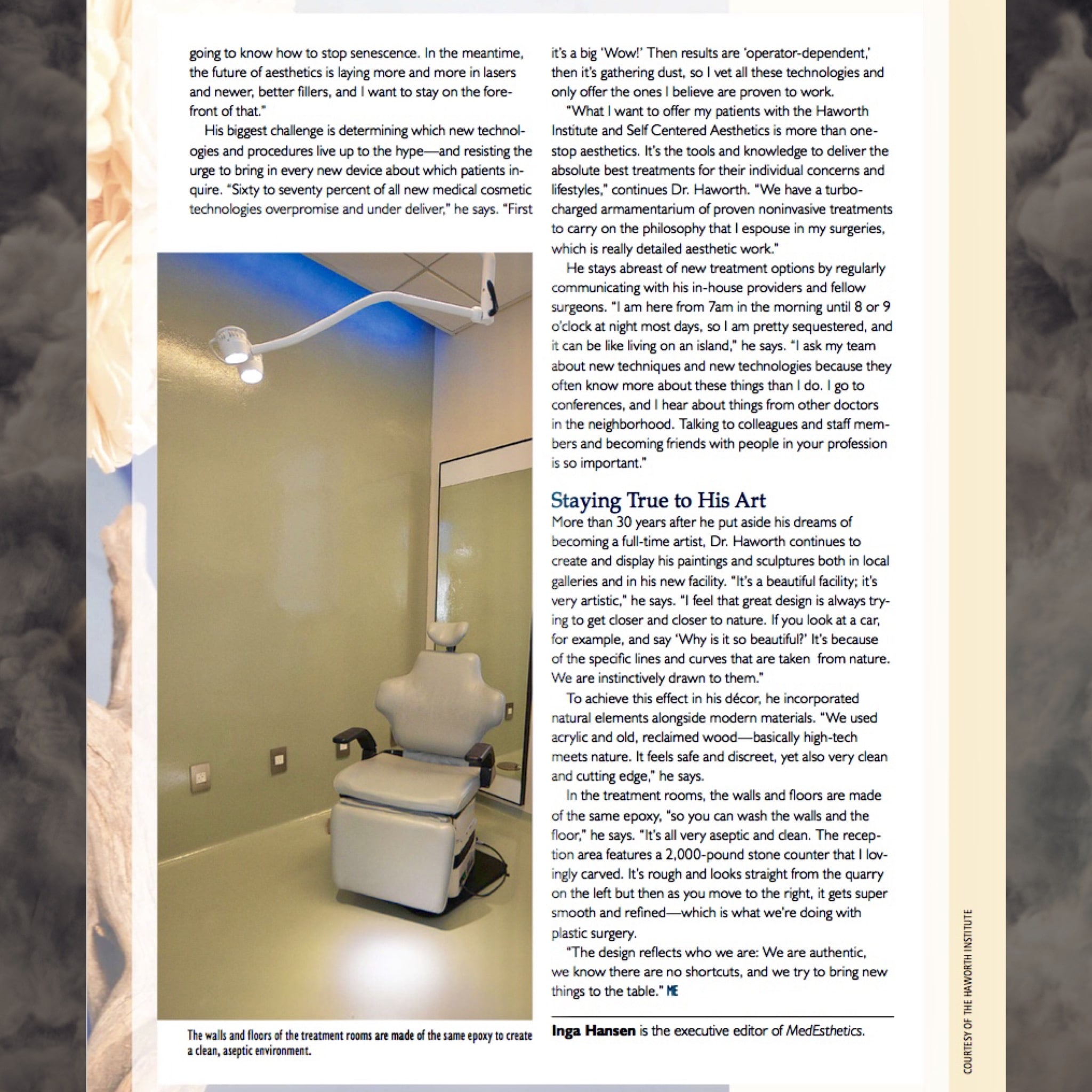
Randal Haworth, MD, made a name for himself in aesthetics in the early 2000s when he joined Fox television’s reality show, “The Swan.” On the program, he was part of a team of plastic surgeons, stylists and makeup artists who dramatically transformed participants’ appearances, Earlier this year, he transformed his own Beverly Hills, California-based practice when he moved to a new, custom-designed facility that incorporates a full range of aesthetic services—from facials and nutritional services to fillers, lasers and surgical procedures.

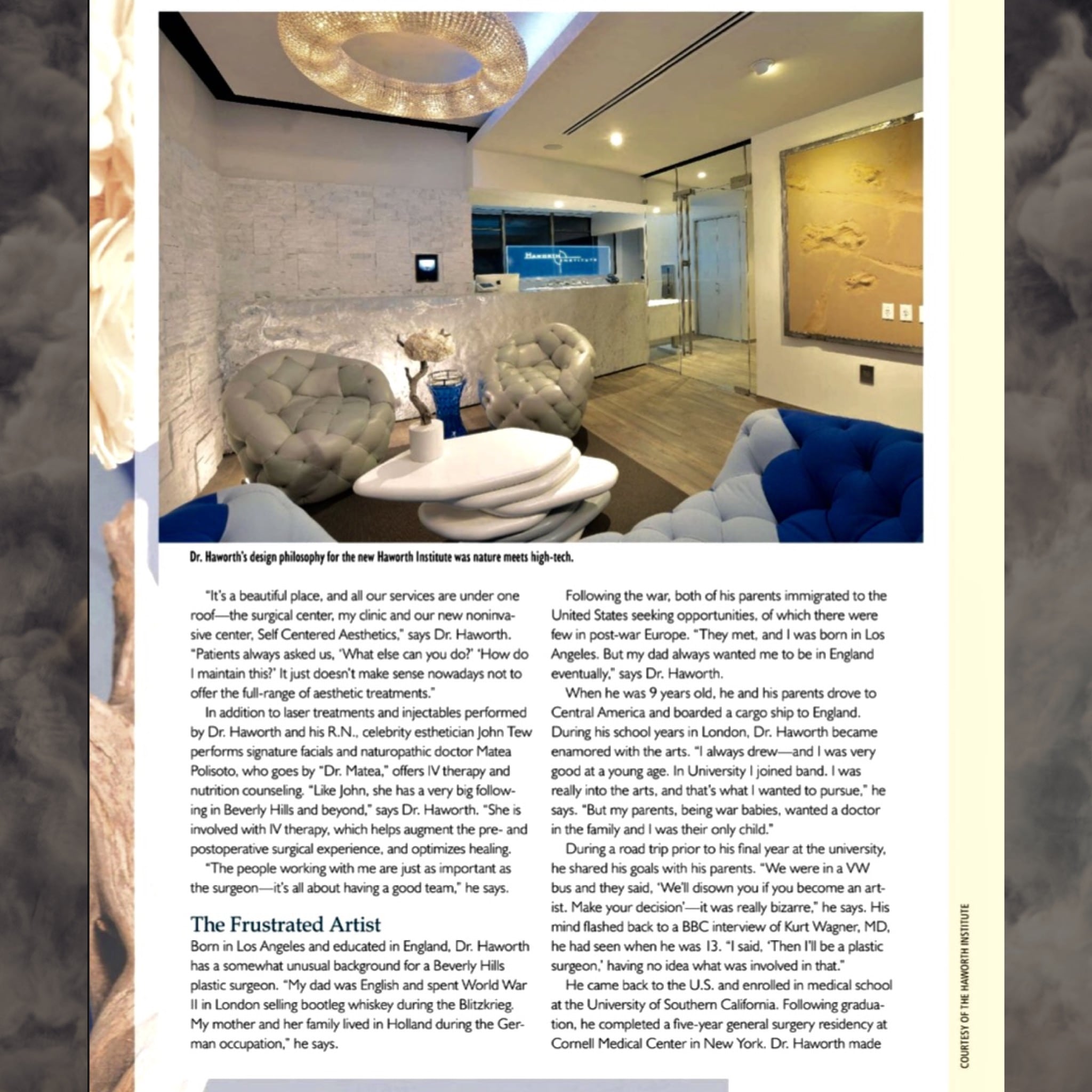
Dr. Haworth’s design philosophy for the new Haworth Institute was nature meets high-tech.

“It’s a beautiful place, and all our services are under one roof—the surgical center, my clinic and our new noninvasive center, Self Centered Aesthetics,” says Dr. Haworth. “Patients always asked us, ‘What else can you do?’ ‘How do I maintain this?’ It just doesn’t make sense nowadays not to offer the full-range of aesthetic treatments.”

In addition to laser treatments and injectables performed by Dr. Haworth and his R.N., celebrity esthetician John Tew performs signature facials and naturopathic doctor Matea Polisoto, who goes by “Dr. Matea,” offers IV therapy and nutrition counseling. “Like John, she has a very big following in Beverly Hills and beyond,” says Dr. Haworth. “She is involved with IV therapy, which helps augment the pre- and postoperative surgical experience, and optimizes healing.

“The people working with me are just as important as the surgeon—it’s all about having a team,” he says.

The Frustrated Artist

Born in Los Angeles and educated in England, Dr. Haworth has a somewhat unusual background for a Beverly Hills plastic surgeon. “My dad was English and spent World War Il in London selling bootleg whiskey during the Blitzkrieg. My mother and her family lived in Holland during the German occupation,” he says.

Following the war, both of his parents immigrated to the United States seeking opportunities, of which there were few in post-war Europe. “They met, and I was born in Los Angeles. But my dad always wanted me to be in England eventually,” says Dr. Haworth.

When he was 9 years old, he and his parents drove to Central America and boarded a cargo ship to England. During his school years in London, Dr. Haworth became enamored with the arts. “l always drew—and I was very good at a young age. In University I joined band. I was really into the arts, and that’s what I wanted to pursue,” he says. “But my parents, being war babies, wanted a doctor in the family and I was their only child.”

During a road trip prior to his final year at the university, he shared his goals with his parents. “We were in a VW bus and they said, ‘We’ll disown you if you become an artist. Make your decision’—it was really bizarre,” he says. His mind flashed back to a BBC interview of Kurt Wagner, MD, he had seen when he was 13. “l said, ‘Then I’ll be a plastic surgeon,’ having no idea what was involved in that.”

He came back to the U.S. and enrolled in medical school at the University of Southern California. Following graduation, he completed a five-year general surgery residency at Cornell Medical Center in New York. Dr. Haworth made his way back to the West coast for his plastic surgery residency at the University of California, Los Angeles.

“After my residency, I had no money so I was anxious to go into practice. I thought, well then I have to goto Beverly Hills because that’s where successful plastic surgeons go,” he says.

Another surgeon offered to rent him a space in his clinic’s kitchen, which was housed in one of the most desirable medical buildings in Beverly Hills. “He had a little pocket door in front of the kitchen so I stayed in there,” says Dr. Haworth. “During my clinic days, I would take his diplomas off the walls in the two little exam rooms and put mine up, and that’s how it started.

“l look back fondly on those days now, but it was horrible at the time. If I had two surgeries in a month, it was a great month.

Finding His Niche

During his UCLA residency, Dr. Haworth won a plastic surgery research prize for his lip surgeries, which provided a unique niche with which to build his practice, More than 20 years later, he has patients from all over the world who travel to the Haworth Institute for their lip surgeries.

“You can be the best doctor in the world, but if you don’t have marketing, no one will know about you,” he says. “So I leveraged that award and started getting known for lips, even though my favorite surgeries are noses, mid- facelifts and what I call hyperaesthetic surgeries where we change everything. The lips are what I was known for, and now I get jazzed by that because there’s really no competi- tion in the world for these surgeries.”

He offers upper, lower and corner lip lifting procedures as well fat transfer and F.A.T.M.A. (fat transfer & mucosal advancement). “l do many types of lip lifts because it is shape before volume; there are many things that fillers alone cannot do,” he says.

Embracing and Investigating New Technologies

Despite the limitations of traditional filling techniques, Dr. Haworth has embraced dermal fillers as effective tools to perfect his patients’ lips. In some cases the new, less invasive procedures are even surpassing what he can achieve in the O.R.

“Our mouths get wider as we age and our lower teeth become visible,” he says. “People will often just fill the lower lip horizontally, which won’t help with these concerns.”

In his surgical center, he performs lower lip V-Y plasty procedures to narrow the mouth, lift the bottom lip and pout out the middle third of the lower lip. But, due to the minimal improvement, he recently became interested in the idea of using vertical filler injections to lift and shape the lower lip.

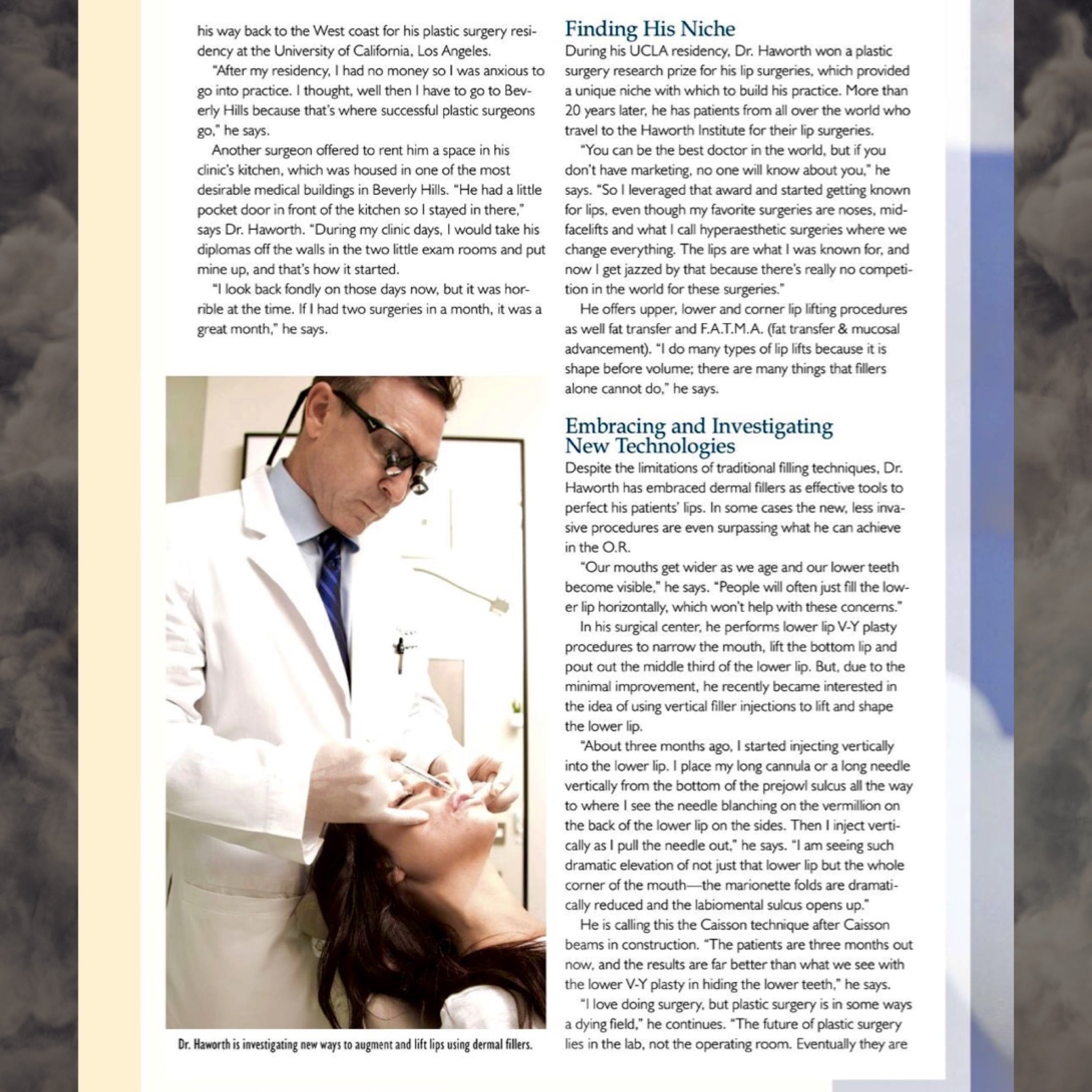
“About three months ago, I started injecting vertically into the lower lip. I place my long cannula or a long needle vertically from the bottom of the prejowl sulcus all the way to where I see the needle blanching on the vermillion on the back of the lower lip on the sides. Then I inject vertically as I pull the needle out,” he says. “l am seeing such dramatic elevation of not just the lower lip but the whole corner of the mouth—the marionette folds are dramatically reduced and the labiomental sulcus opens up.”

He is calling this the Caisson technique after Caisson beams in construction. “The patients are three months out now, and the results are far better than what we see with the lower V-Y plasty in hiding the lower teeth,” he says.

Dr. Haworth is investigating new ways to augment and lift lips using dermal fillers.

“l love doing surgery, but plastic surgery is in some ways a dying field,” he continues. “The future of plastic surgery lies in the lab, not the operating room. Eventually they are going to know how to stop senescence. In the meantime, the future of aesthetics is laying more and more in lasers and newer, better fillers, and I want to stay on the forefront of that.”

His biggest challenge is determining which new technologies and procedures live up to the hype—and resisting the urge to bring in every new device about which patients inquire. “Sixty to seventy percent of all new medical cosmetic technologies overpromise and under deliver,” he says. “First it’s a big ‘Wow!’ Then results are ‘operator-dependent,’ then it’s gathering dust, so I vet all these technologies and only offer the ones I believe are proven to work.

“What I want to offer my patients with the Haworth Institute and Self Centered Aesthetics is more than one-stop aesthetics, It’s the tools and knowledge to deliver the absolute best treatments for their individual concerns and lifestyles,” continues Dr. Haworth. “We have a turbocharged armamentarium of proven noninvasive treatments to carry on the philosophy that I espouse in my surgeries, which is really detailed aesthetic work.”

Self-Centered Aesthetics

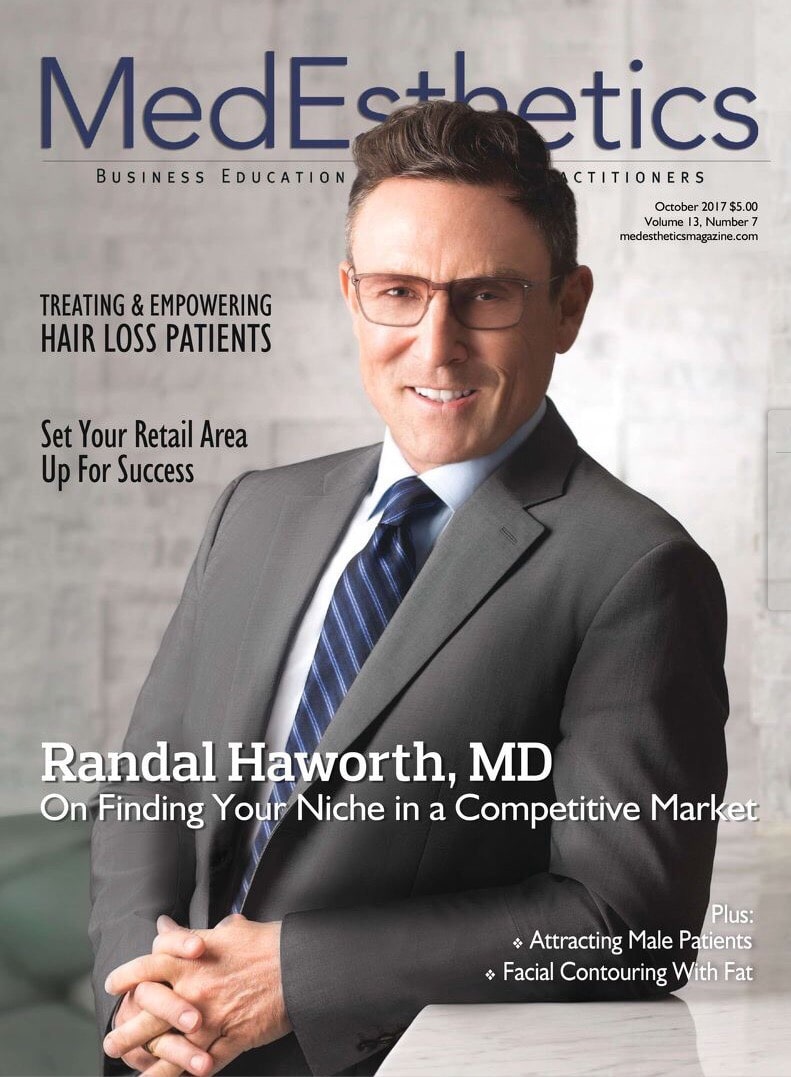
Recently, I was honored to be featured on the cover of the highly popular regarded trade magazine of the noninvasive aesthetic industry, MedEsthetics. Here is the article. We at Self-Centered Aesthetics ™are super excited to be off to such a great, auspicious start. We are aiming to deliver the best, state of the art noninvasive treatment to all patients, under one roof with my philosophy of beauty. Embracing Artistry By Inga Hansen Photography by Cory Sorensen Plastic surgeon Randal Haworth, MD, is taking the next step in his career with the launch of a stylish, comprehensive aesthetic care facility. Randal Haworth, MD, made a name for himself in aesthetics in the early 2000s when he joined Fox television’s reality show, “The Swan.” On the program, he was part of a team of plastic surgeons, stylists and makeup artists who dramatically transformed participants’ appearances, Earlier this year, he transformed his own Beverly Hills, California-based practice when he moved to a new, custom-designed facility that incorporates a full range of aesthetic services—from facials and nutritional services to fillers, lasers and surgical procedures. Dr. Haworth’s design philosophy for the new Haworth Institute was nature meets high-tech. “It’s a beautiful place, and all our services are under one roof—the surgical center, my clinic and our new noninvasive center, Self Centered Aesthetics,” says Dr. Haworth. “Patients always asked us, ‘What else can you do?’ ‘How do I maintain this?’ It just doesn’t make sense nowadays not to offer the full-range of aesthetic treatments.” In addition to laser treatments and injectables performed by Dr. Haworth and his R.N., celebrity esthetician John Tew performs signature facials and naturopathic doctor Matea Polisoto, who goes by “Dr. Matea,” offers IV therapy and nutrition counseling. “Like John, she has a very big following in Beverly Hills and beyond,” says Dr. Haworth. “She is involved with IV therapy, which helps augment the pre- and postoperative surgical experience, and optimizes healing. “The people working with me are just as important as the surgeon—it’s all about having a team,” he says. The Frustrated Artist Born in Los Angeles and educated in England, Dr. Haworth has a somewhat unusual background for a Beverly Hills plastic surgeon. “My dad was English and spent World War Il in London selling bootleg whiskey during the Blitzkrieg. My mother and her family lived in Holland during the German occupation,” he says. Following the war, both of his parents immigrated to the United States seeking opportunities, of which there were few in post-war Europe. “They met, and I was born in Los Angeles. But my dad always wanted me to be in England eventually,” says Dr. Haworth. When he was 9 years old, he and his parents drove to Central America and boarded a cargo ship to England. During his school years in London, Dr. Haworth became enamored with the arts. “l always drew—and I was very good at a young age. In University I joined band. I was really into the arts, and that’s what I wanted to pursue,” he says. “But my parents, being war babies, wanted a doctor in the family and I was their only child.” During a road trip prior to his final year at the university, he shared his goals with his parents. “We were in a VW bus and they said, ‘We’ll disown you if you become an artist. Make your decision’—it was really bizarre,” he says. His mind flashed back to a BBC interview of Kurt Wagner, MD, he had seen when he was 13. “l said, ‘Then I’ll be a plastic surgeon,’ having no idea what was involved in that.” He came back to the U.S. and enrolled in medical school at the University of Southern California. Following graduation, he completed a five-year general surgery residency at Cornell Medical Center in New York. Dr. Haworth made his way back to the West coast for his plastic surgery residency at the University of California, Los Angeles. “After my residency, I had no money so I was anxious to go into practice. I thought, well then I have to goto Beverly Hills because that’s where successful plastic surgeons go,” he says. Another surgeon offered to rent him a space in his clinic’s kitchen, which was housed in one of the most desirable medical buildings in Beverly Hills. “He had a little pocket door in front of the kitchen so I stayed in there,” says Dr. Haworth. “During my clinic days, I would take his diplomas off the walls in the two little exam rooms and put mine up, and that’s how it started. “l look back fondly on those days now, but it was horrible at the time. If I had two surgeries in a month, it was a great month,” he says. Finding His Niche During his UCLA residency, Dr. Haworth won a plastic surgery research prize for his lip surgeries, which provided a unique niche with which to build his practice, More than 20 years later, he has patients from all over the world who travel to the Haworth Institute for their lip surgeries. “You can be the best doctor in the world, but if you don’t have marketing, no one will know about you,” he says. “So I leveraged that award and started getting known for lips, even though my favorite surgeries are noses, mid- facelifts and what I call hyperaesthetic surgeries where we change everything. The lips are what I was known for, and now I get jazzed by that because there’s really no competi- tion in the world for these surgeries.” He offers upper, lower and corner lip lifting procedures as well fat transfer and F.A.T.M.A. (fat transfer & mucosal advancement). “l do many types of lip lifts because it is shape before volume; there are many things that fillers alone cannot do,” he says. Embracing and Investigating New TechnologiesDespite the limitations of traditional filling techniques, Dr. Haworth has embraced dermal fillers as effective tools to perfect his patients’ lips. In some cases the new, less invasive procedures are even surpassing what he can achieve in the O.R.”Our mouths get wider as we age and our lower teeth become visible,” he says. “People will often just fill the lower lip horizontally, which won’t help with these concerns.”In his surgical center, he performs lower lip V-Y plasty procedures to narrow the mouth, lift the bottom lip and pout out the middle third of the lower lip. But, due to the minimal improvement, he recently became interested in the idea of using vertical filler injections to lift and shape the lower lip.”About three months ago, I started injecting vertically into the lower lip. I place my long cannula or a long needle vertically from the bottom of the prejowl sulcus all the way to where I see the needle blanching on the vermillion on the back of the lower lip on the sides. Then I inject vertically as I pull the needle out,” he says. “l am seeing such dramatic elevation of not just the lower lip but the whole corner of the mouth—the marionette folds are dramatically reduced and the labiomental sulcus opens up.”He is calling this the Caisson technique after Caisson beams in construction. “The patients are three months out now, and the results are far better than what we see with the lower V-Y plasty in hiding the lower teeth,” he says.Dr. Haworth is investigating new ways to augment and lift lips using dermal fillers.”l love doing surgery, but plastic surgery is in some ways a dying field,” he continues. “The future of plastic surgery lies in the lab, not the operating room. Eventually they are going to know how to stop senescence. In the meantime, the future of aesthetics is laying more and more in lasers and newer, better fillers, and I want to stay on the forefront of that.”His biggest challenge is determining which new technologies and procedures live up to the hype—and resisting the urge to bring in every new device about which patients inquire. “Sixty to seventy percent of all new medical cosmetic technologies overpromise and under deliver,” he says. “First, it’s a big ‘Wow!’ Then results are ‘operator-dependent,’ then it’s gathering dust, so I vet all these technologies and only offer the ones I believe are proven to work.”What I want to offer my patients with the Haworth Institute and Self Centered Aesthetics is more than one-stop aesthetics, It’s the tools and knowledge to deliver the absolute best treatments for their individual concerns and lifestyles,” continues Dr. Haworth. “We have a turbocharged armamentarium of proven noninvasive treatments to carry on the philosophy that I espouse in my surgeries, which is really detailed aesthetic work.”

Difference between Bad Surgery and Good with a Complication.

As trifling as it may seem to the layperson, aesthetic surgery is serious business. Apart from obvious cosmetic ramifications, the seriousness becomes understandable when one considers that the surgeon must first make a healthy patient temporarily unwell in order to make he or she look better in the end. It is for this very reason plastic surgeons have an added unique responsibility which surgeons of other specialties simply do not bear. Choosing to undergo elective surgery is a series of decisions made by both the surgeon and the patient. As with all aspects of medicine, nothing is absolute, it is about controlling probability.

In this day and age, patients increasingly view plastic surgery as nothing more than a haircut with a short recovery, let alone one with a complication. Even under the best of hands, a complication can arise for any number of reasons and if it does, acting as a team with your surgeon is crucial.  Whether following a facelift, rhinoplasty or any plastic surgery for that matter, almost all complications can be fixed in the end, even if multiple surgical revisions are needed.

It is normal for the layman to consider surgical results as either “good” or “bad”,  but those adjectives can be misleading and are certainly inadequate in revealing the true story behind the result.

“Good” surgery with a complication is not the same as “bad” surgery per se. In other words, complications do not all come from “bad” surgeons and indeed, “bad” surgeons may have  successfully completed an operation without encountering obvious complications. I think it fair to say most patients consider themselves as good people and if a complication happens to them, they will perceive themselves as victims of a bad surgery and by extension, a bad surgeon. So what is the difference between “bad” surgery and a “good” surgery with a complication?

Look at it this way… in any profession, there are the “good”, the “bad” and the “excellent”. For the sake of this discussion, let’s just oversimplify the comparison between “good” and the “bad”. Since plastic surgery is as much an art (or at least an artisanal craft) as it is a science, whereby results are measured both objectively and subjectively, it is not unreasonable to compare a plastic surgeon to any artist or craftsman, including sculptors, painters and woodworkers. Artists filter their talent and vision through years of experience to not only earn but continually solidify their reputation as either being “good” or “bad”. Moreover, good artists become respected by not just producing one “good” piece but doing so consistently, whereas the “bad” consistently create sub par results as judged by the median consensus.

However, all artists, whether good or bad, are limited by the quality of material with which they work. It is known that Michelangelo’s David has been deteriorating at a far more rapid pace than would be expected because of the poor quality of its marble composition. Bernini also broke a piece of marble in half through chiseling into an unexpected vein in the stone causing him to start all over with a brand-new block. Does that make him a bad artist? Hardly not.

In other words, complications happen and that’s why there are consents to protect not only the doctor but also the patient. Consents should ensure the patients are informed as to the shared risk both they and the surgeon take when undergoing surgery.

Many complications are avoidable. Both doctors and patients must do their part to optimize a certain outcome and minimize the risk of complications. Patients must avoid certain medications that may promote bleeding, cease all smoking for optimal circulation, follow instructions and take medications as prescribed. Otherwise, surgery may be self-sabotaged. On the other hand, surgeons must do their part in educating and performing the proper operation in the right patient with skill and dedication.

Other complications are unavoidable and just because they may be explainable in hindsight does not mean they were avoidable within the context they occurred. This is why it is paramount that patients disclose all of their medical history and follow their surgeon’s instructions to a T in order to minimize unexpected situations such as abnormal bleeding, poor wound healing, etc..

What spurred me to write this particular blog was a recent experience having performed a complex revision rhinoplasty on a dear friend of mine of 20 years. Unfortunately, this advanced detailed nasal reconstruction was exacerbated by unexpected physiological conditions including excessive bleeding and poor tissue characteristics. The next day, the patient presented with so much swelling underneath the pressure cast that it was being pushed off the face. The swelling was a hematoma which I immediately evacuated from under the skin (it was 4 1/2 mL, being the largest nasal hematoma encountered by either my colleagues or myself). Accompanying this was necrosis (death) of the columellar skin (the partition separating his left and right nostrils). This was particularly disappointing to say the least because the surgical results in terms of nasal shape, symmetry, tip definition and projection were otherwise excellent. Yet losing coverage over the columella would have serious ramifications.

Despite attempts to bring vascularized tissue using local intraoral flaps, my friend eventually needed the help of a certain specialist to bring fresh tissue to the columella below the nasal tip with a temporary forehead flap.

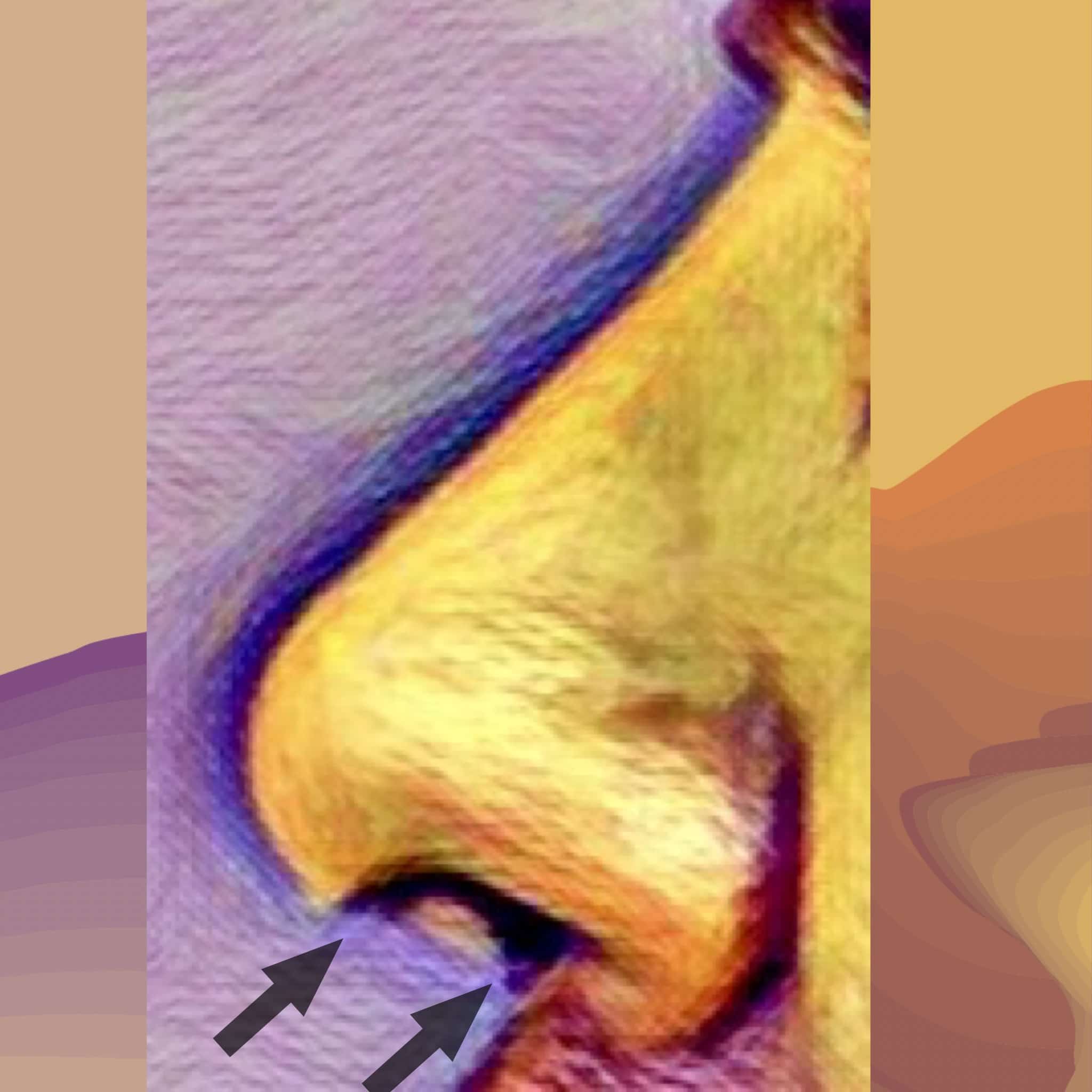
The arrows on the drawing illustrate that portion of the nasal skin (overlying the columella) that was necrotic. Replacement is required through vascularized tissue flaps

Albeit exceedingly rare, this 1.5 x 1.2 cm skin loss was enough to eradicate not only their trust in me as a surgeon but also our long term friendship. Most patients understandably experience a spectrum of emotions including panic, sadness, denial, anger and ultimately acceptance from a complication such as this. However, nothing could prepare me for the degree of ongoing vengeful anger and hostility the patient and their partner have directed towards me including threats to go to the press and ruin my reputation.

Anger is not only destructive but also lacks focus, therefore it can be especially counterproductive to both healing and a good result (not to mention friendship!). Premature castigations of blame fuel brash, illogical decisions which actually complicate the original complication.

Understanding the differences between “bad” and “good” surgery and “good” surgery with a complication can certainly help put things in perspective. When a patient concedes the net surgical aesthetic result, at least in terms of shape and symmetry, as good if not excellent, he or she is less likely to question, and more likely trust, their original choice of surgeon. Whether their breast lift incision opened or, as in this case, a small but strategic portion of nasal skin died, the affected patient will see the “bigger picture” and believe their surgeon will  do the right thing by having their best interests at heart. This same patient understands that they were not necessarily a victim or unjustifiably punished by “bad” surgery. Instead, they will accept things for what they are, learn patience and develop a sense of optimism to set themselves up for the best possible outcome in the future.

The majority of complications concern wound healing and minor infections. For these, possible antibiotics and the “tincture of time” for healing to occur are required. Other times, simple, clinical interventions such as laser treatment, injections, the occasional scar revision and creams are all that are needed.

Other complications require more invasive solutions. Depending on the type of complication, an expeditious trip to the operatory maybe all that is required (e.g.,to drain a hematoma) whereas staged surgical revisions may be undertaken in the extremely rare case of tissue loss.

Most surgeons will recognize if a particular complication is beyond their level of expertise. A patient should not feel abandoned or simply passed off if they are referred to another expert if a complication warrants it. It is important to recognize that medicine is team work and the referral is simply a reflection of the original surgeon’s dedication to the best outcome possible.

Emotional advice after a complication

Watch out for advice with an agenda. It is understandable that if a complication does arise, fear and anxiety will prompt you to seek solace and advice from friends and family members. While this is wholeheartedly encouraged, it is important to remember that not all the advice given is good especially considering that those giving advice are not often doctors nor do they know the intricate details of the patient’s particular case. Though most advice is well-meaning in intent, some may be motivated by guilt, jealousy, personality disorders or just plain ignorance. Furthermore, the advice a patient may obtain from elsewhere may be counterproductive because it may only increase their level of anxiety.

Stay optimistic and avoid jumping to any pessimistic conclusions. It is not unheard of that acute anxiety will provoke a patient to impatiently reach for the help of an alternative plastic surgeon. Unfortunately, some plastic surgeons may be unscrupulous and advise the fragile, highly suggestible patient into unnecessary and ill-timed surgery claiming it is urgently needed to prevent some permanent deformity. Always keep a line of communication open with the original plastic surgeon to not only help allay personal fears but also be guided in the right direction with a second opinion if necessary.

“A good patient is an educated patient”-

Randal D. Haworth M.D., F.A.C.S.

Board Certified Plastic Surgeon

Beverly Hills

Self-Centered Aesthetics

After more than two decades of commitment to delivering the best of what plastic surgery can deliver in terms of aesthetic results and quality-of-life improvement, top Beverly Hills plastic surgeon, Randal Haworth, found it time to expand his philosophy into an adjacent arena. That arena is the nonsurgical approach to optimize the patient’s aesthetic wellness. Dr. Haworth has maintained that future advances in plastic surgery will not lie solely in the operatory but more in the laboratory. Specifically, advances in lasers, injectables, light and genomic therapy will take precedence over any evolutionary steps in surgical technique. Currently, non-surgical cosmetic procedures are rapidly evolving to meet the expectations, budgets and lifestyles of patients of all backgrounds and consequently, their popularity is exponentially increasing every year.

As a world-renowned expert in facial plastic surgery (including rhinoplasty, lip lifts, face lifts, eye lifts and even bodywork such as breast augmentation) Dr. Haworth has come to a point where he need not confine his artistry mainly to the syringe and scalpel but also safely and reliably imbue it into noninvasive aesthetic medicine. Consequently, he and his team at the Haworth Institute have founded Self-Centered Aesthetics, a center devoted to optimum physical appearance, through the safest, most reliable state-of-the-art technology.

Self-Centered Aesthetics (SLF-CA) will be catering to the vast majority of patients’ aesthetic needs. Among the services SLF-CA will be offering are:

1. Laser hair removal with our virtually painless Light Sheer Duet vacuum laser technology

2. Eyelash and eyebrow treatments

3. Removal of wrinkles, fine lines and sagging folds via a variety of methods including essentially all fillers, microneedling with PRP, Botox and lasers (Spectra®, Encore® Active and Deep FX™ fractionated CO2, ResurFX® fractionated erbium and IPL® Photofacial)

4. Treatment of brown spots, brown patches, red discolorations and spider veins utilizing proven laser technology (IPL® Photofacial and Spectra®)

5. Tattoo removal (Spectra® and other lasers)

6. Noninvasive body fat reduction through SculpSure®, a laser designed to achieve up to 20% fat reduction in 25 minutes with virtually no discomfort and absolutely no incisions.

7. Facial feature improvement through the selective use of fillers and Botox®. With refined aesthetic sensibility and an astute artistic sensitivity, fillers (both temporary and permanent), can enhance all aspects of the face. However, to maximize the beauty of a result without artifice or outward fakery requires customized planning to balance patients’ needs with their individual expectations. From a flat forehead with hollow temples to sunken cheeks and dark eyelid circles to thin lips and an ill-defined jawline, the professionals at SLF-CA under the auspices of Dr. Haworth dedicate themselves to make you look your very best!

​Additionally, our CENTER will offer aesthetician services to maintain and fine-tune your SELF and your AESTHETIC results. Self-Centered Aesthetics™ will be coming soon. www.selfcenteredaesthetics.com

Know your nose job options:

Know your nose job options: knife or needle?

So you had a nose job and you don’t like the result.   Now what are you going to do?   You can always do nothing and live with the result. That’s OK. That’s your decision.   You can go back to the original surgeon or to a new one (of course, one who is board certified by the American Board of Plastic Surgery). This plastic surgeon may feel you’re a good candidate and give you two options: surgery (secondary or revision rhinoplasty) or non-surgery. In essence, the knife or the needle. Before your meeting with the plastic surgeon, you may think your only option at this point is a revision rhinoplasty with its attendant cost and recovery. However, this plastic surgeon rhinoplasty expert whom you chose to get a secondary opinion with, surprised you with his honesty, suggesting an altogether different approach to your nagging problem. He offered you a solution that involves less recovery, costs a good deal less and fixes your main concern…

  …and it doesn’t involve surgery.

  Your new plastic surgeon offered to inject filler into your nose to camouflage the irregularities, smooth and even out your bridge and even give you more of a chic tip. From the front view, by strategically injecting the filler to alter the light reflex and  control shadows your deviated nose can even be made to appear straight. He/she offers you a temporary or permanent filler. The temporary ones can serve as a dress rehearsal, so to speak, if you are unsure as to whether this is a good idea or not. Temporary ones such as hyaluronic acid  (e.g., Juvederm ®, Restylane ®, Voluma ®) or calcium hydroxyapatite (Radiesse ®)are good choices. Permanent ones such as Bellafill ®, Aquamid ® (not FDA approved) or fat transfer (a living transplant from your own body) are all excellent fillers in my opinion. You decide to go for it but you must be counseled to have realistic expectations. Fillers definitely cost less and involve less recovery (a few days of swelling and perhaps minor bruising at worst). However, the filler solution will: 1.  Neither help breathing problems 2.  Nor  will they treat all forms of aesthetic deformities such as this:
distorted medial crura of the alar cartilages
Significantly distorted medial crura of the alar cartilages
So the next time you’re considering altering the shape of your nose with a rhinoplasty of some sort, you may ask your plastic surgeon (hopefully,  board certified by the American Board of Plastic Surgery) about the filler option. Albeit,  it cannot match the power of an actual surgical rhinoplasty, the non-surgical, filler rhinoplasty can be an excellent alternative to actual scalpel- based surgery in many select circumstances. In these cases, the needle can be more powerful than the knife as one can see below:
Bellafill injectable , non-surgical rhinoplasty
This lady had a distorted nose after a previous rhinoplasty. Her cartilages were visible through her extremely thin skin and were twisted. After Bellafill ® Treatment.
Bellafill injectable , non-surgical rhinoplasty
Note the improvement of her inverted V deformity and how the nose appears straighter
OLYMPUS DIGITAL CAMERA
Note how her nasal rims have been dramatically lowered with the off-the-shelf filler. Of course, individual results may vary.
Page 1 of 2
1 2