While we in the cosmetic industry are getting better and better at delivering the results that patients expect, I still hold fast that 60 to 70% of modern high-tech materials and devices in plastic surgery over promise and under deliver !
Considering that the future of plastic surgery will be less about actual surgery as more more and more technological advances are made in the lab (think genetic engineering, better fillers, better lasers, etc.), this 60-70% statistic is rather disappointing. What makes this all the more egregious is the fact that doctors are forced to pay an arm and a leg for such underperforming technologies (Ulthera ® Thermage®, etc.). In light of the fact you can get a state-of-the-art Tesla with all the bells and whistles for around $100,000, paying $150,000 or more for a machine that just delivers fuddy-duddy ultrasound technology through a wand to aid in liposuction is frankly outrageous. However, the medical tech companies can’t be solely blamed for this-they are basically governed by the FDA’s policies which, in turn, are a response to precedents extrapolated to an absurd degree by lawyers.
Unfortunately, I have seen it all too many times – a new plastic surgery technology coming out amidst a flurry of media only to fade into relatively rapid obscurity. This is similar to a Billboard chart topper only to turn out to be a one-hit wonder!
In my opinion the latest overhyped snakeoil is Kybella® from the big pharma conglomerate Allergan®, proud makers of Latisse®, Botox®, Voluma®, Juvéderm®, etc.
I was glad to hear from some of my esteemed colleagues at the recent American Society of Plastic Surgery meeting in Los Angeles that their thoughts on Kybella ® echoed mine.
Taking into account Kybella’s negative points, which include:
1. relative risk of damaging important facial nerves,
2. cost (though one treatment is less expensive than liposuction, more often than not multiple treatments are necessary and these, of course, add up),
3. associated pain,
4. longer recovery (which, ironically, is worse than surgical liposuction since remarkable swelling can occur after every injection session)
and
5. inferior results to those obtained with aesthetically and skillfully performed liposuction
…there is little to no advantage in utilizing Kybella® for my patients except perhaps for its superior multi-million dollar marketing campaign! Indeed, micro liposuction can provide unprecedented control in removing fat to treat a double chin while refining the jawline and addressing the jowls as well-all with less downtime and more economically so in the end.
Case in point:
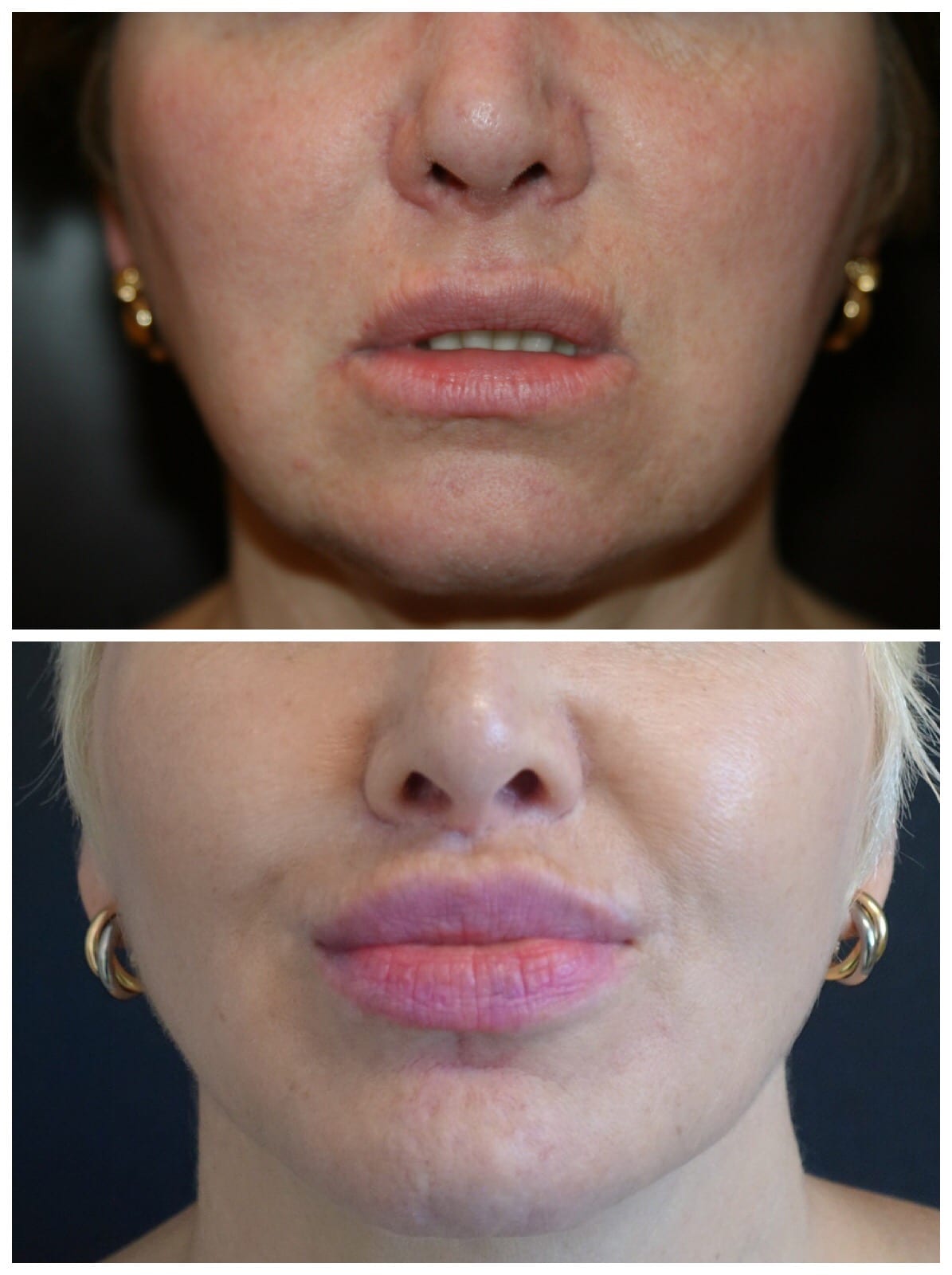
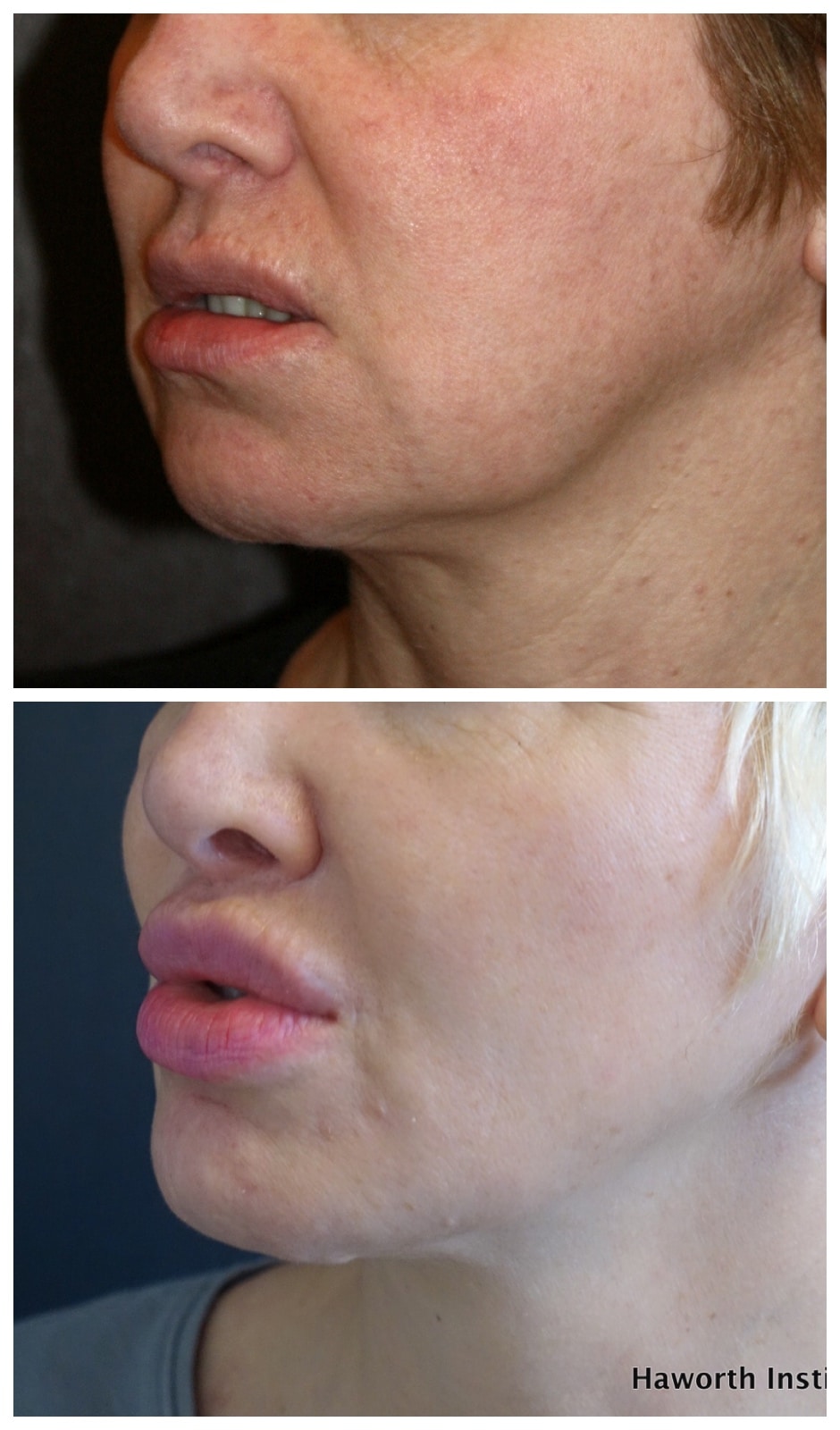
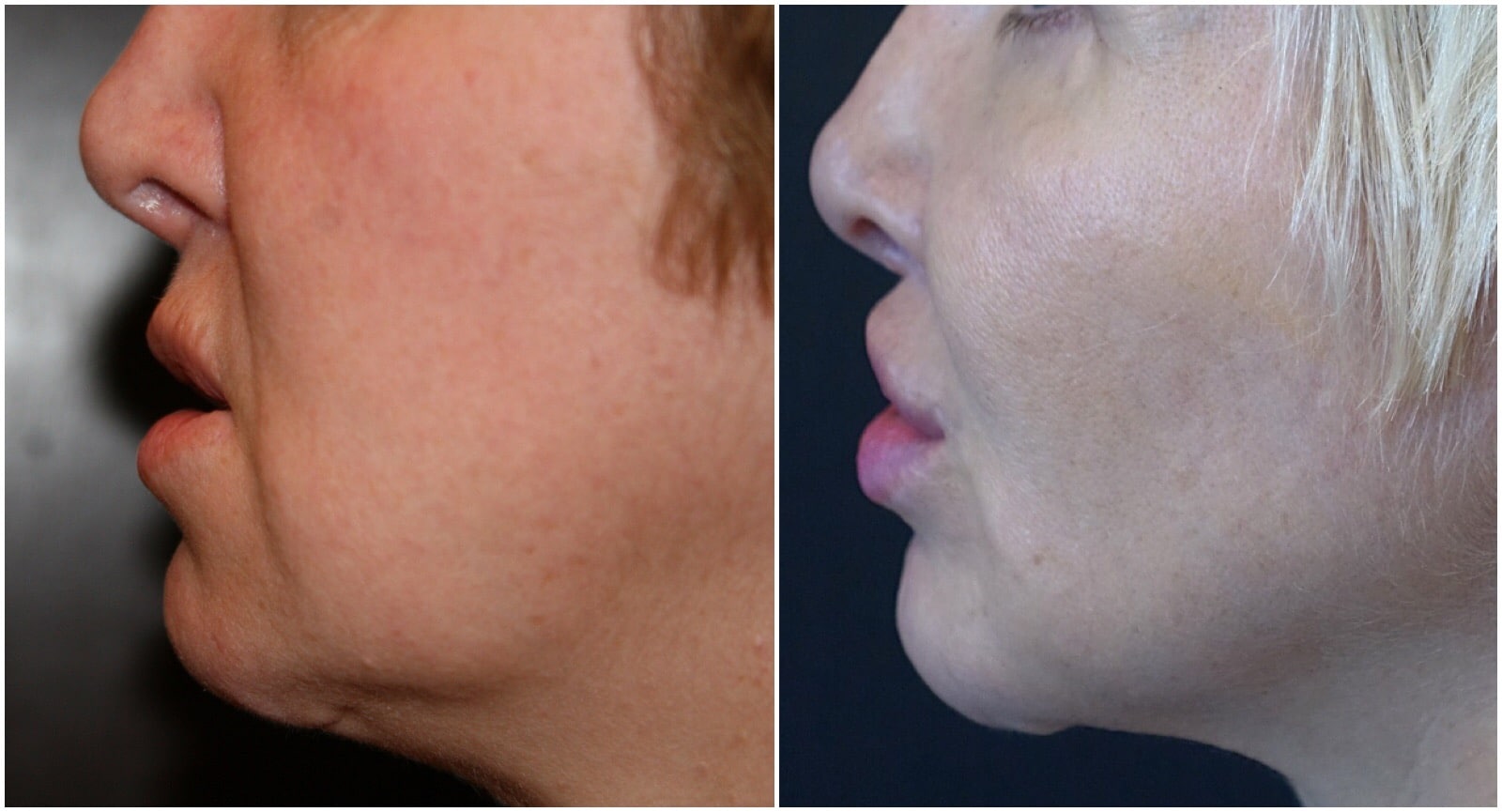
Dramatic perioral rejuvenation including improvement of the jowl and chin utilizing a combination micro liposculpture and fat transferDramatic perioral rejuvenation including improvement of the jowl and chin utilizing a combination micro liposculpture and fat transfer. Note the smoother jawline and submental (chin) region all performed with delicate no scar facial surgery without a face or neck lift.After combination micro liposculpture and fat transfer. Note the smoother jawline and submental (chin) region all performed with delicate no scar facial surgery without a face or neck lift.
So you had a nose job and you don’t like the result.
Now what are you going to do?
You can always do nothing and live with the result. That’s OK. That’s your decision.
You can go back to the original surgeon or to a new one (of course, one who is board certified by the American Board of Plastic Surgery).
This plastic surgeon may feel you’re a good candidate and give you two options: surgery (secondary or revision rhinoplasty) or non-surgery. In essence, the knife or the needle.
Before your meeting with the plastic surgeon, you may think your only option at this point is a revision rhinoplasty with its attendant cost and recovery. However, this plastic surgeon rhinoplasty expert whom you chose to get a secondary opinion with, surprised you with his honesty, suggesting an altogether different approach to your nagging problem. He offered you a solution that involves less recovery, costs a good deal less and fixes your main concern…
…and it doesn’t involve surgery.
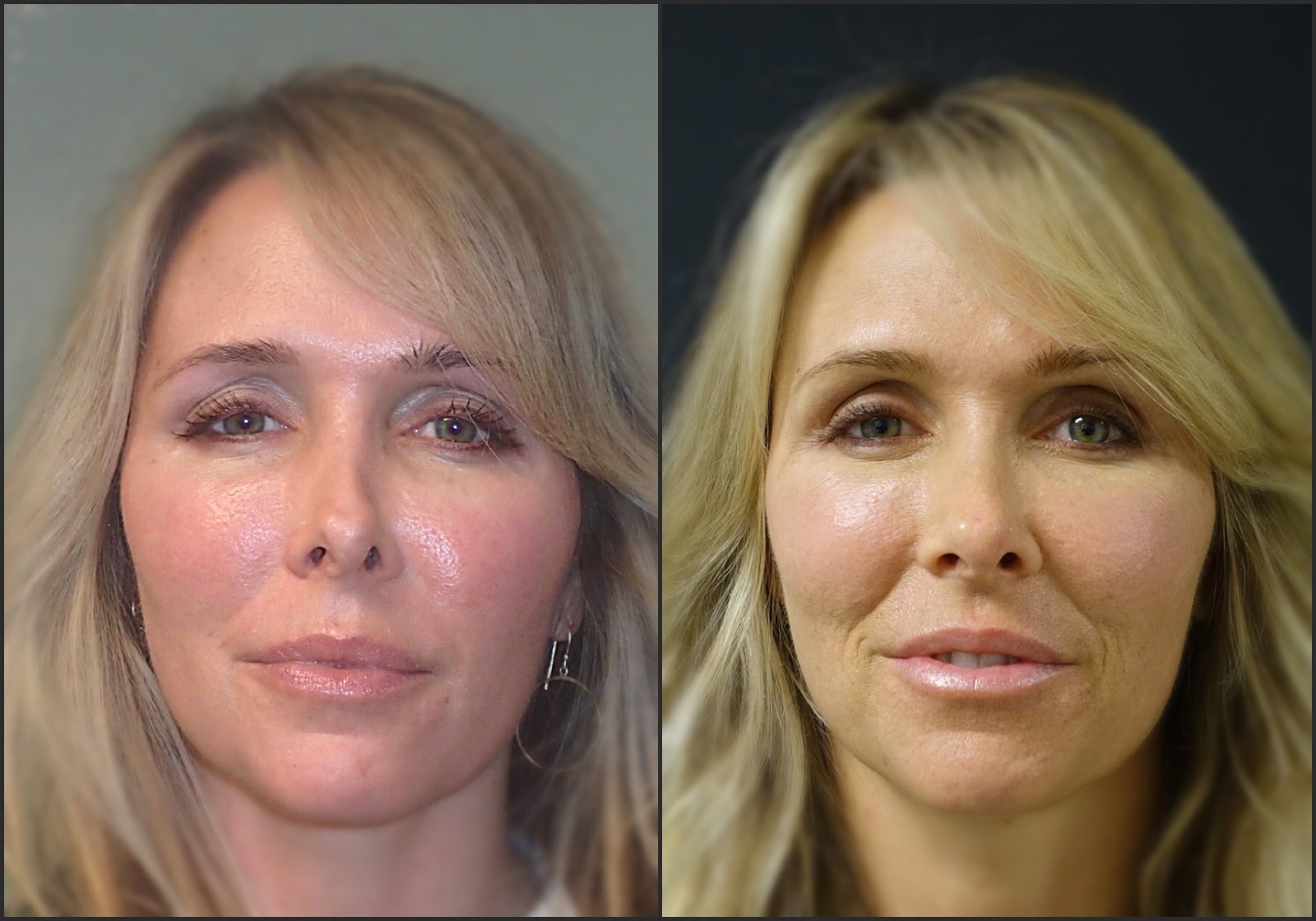
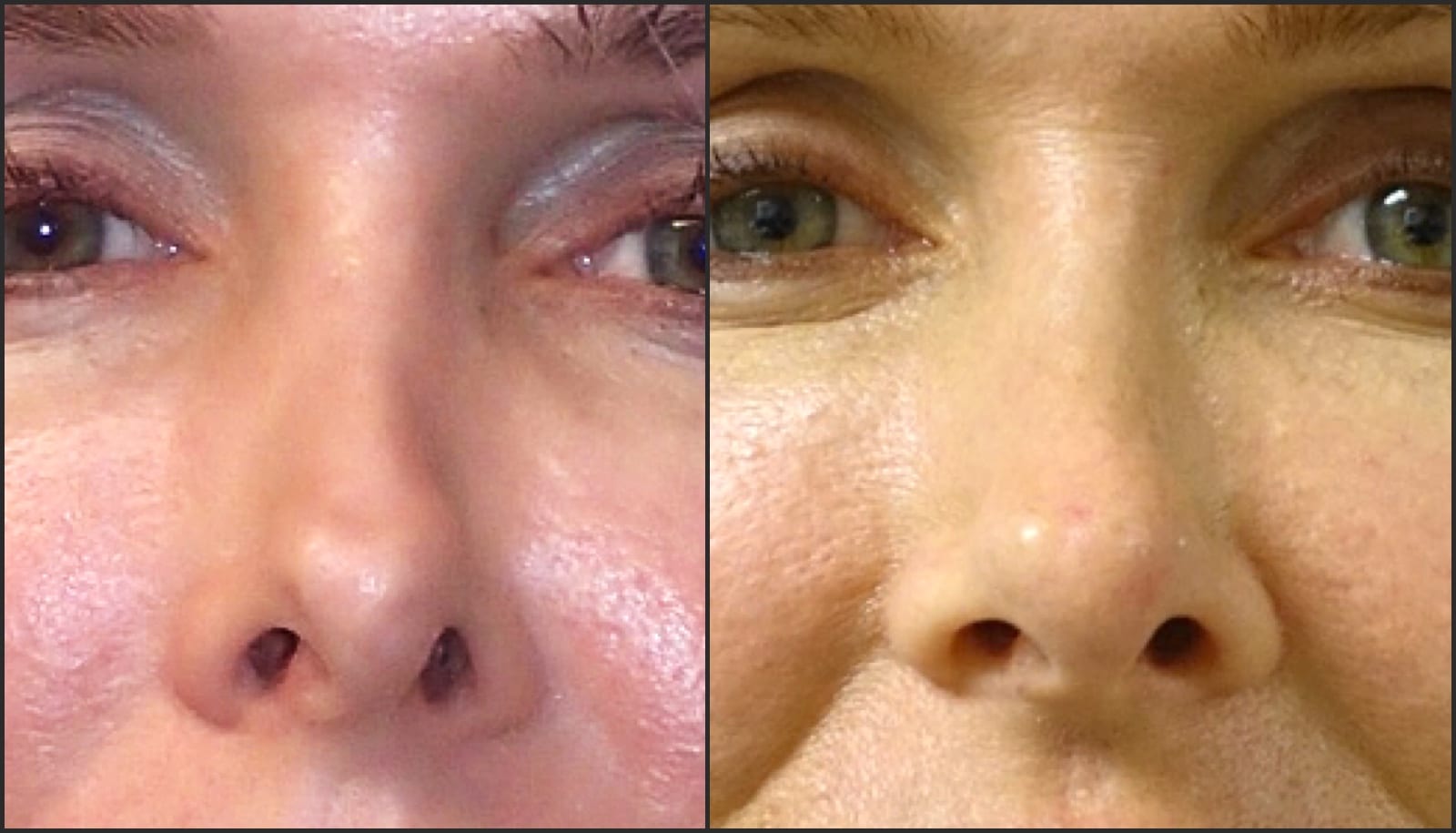
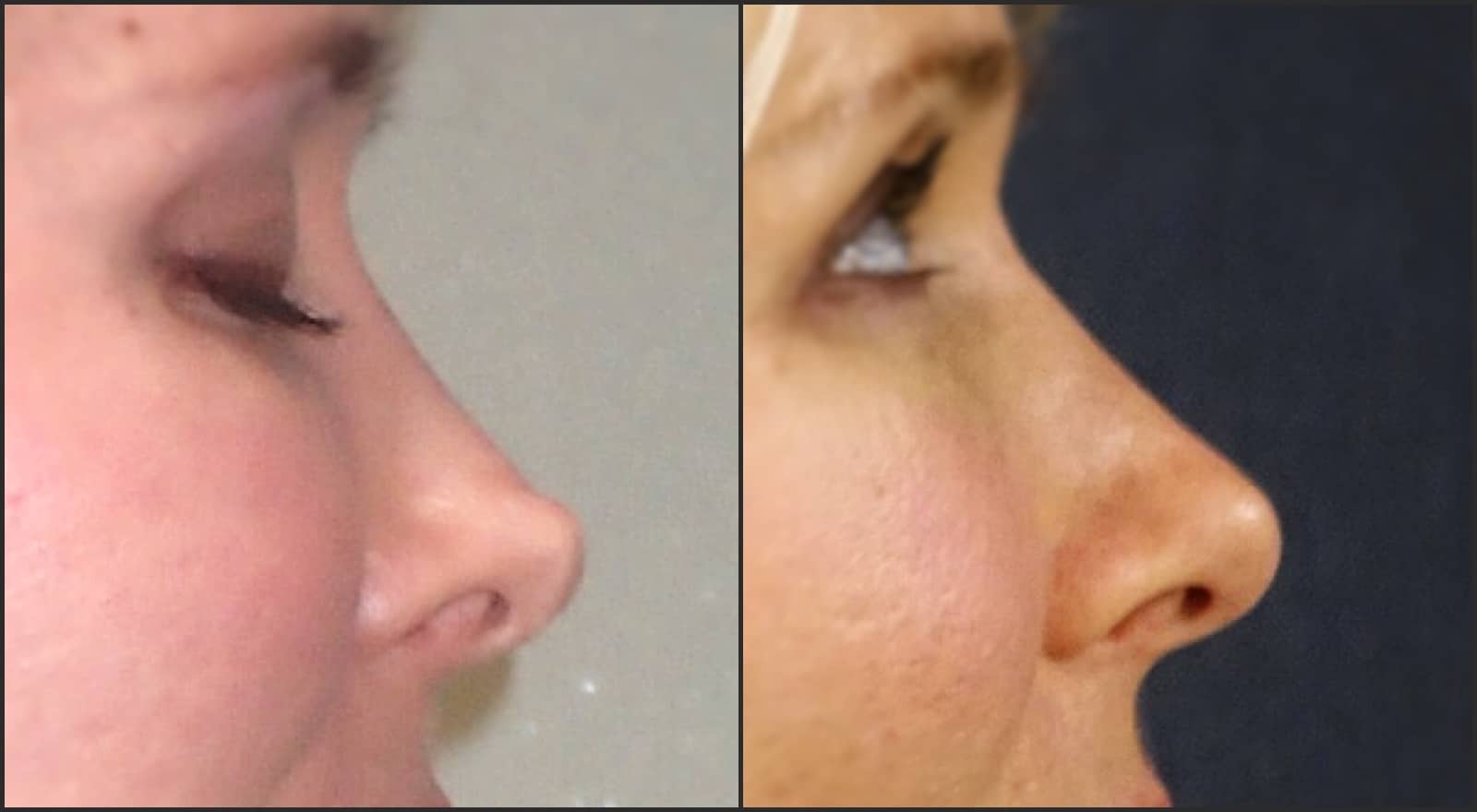
Your new plastic surgeon offered to inject filler into your nose to camouflage the irregularities, smooth and even out your bridge and even give you more of a chic tip. From the front view, by strategically injecting the filler to alter the light reflex and control shadows your deviated nose can even be made to appear straight.
He/she offers you a temporary or permanent filler. The temporary ones can serve as a dress rehearsal, so to speak, if you are unsure as to whether this is a good idea or not. Temporary ones such as hyaluronic acid (e.g., Juvederm ®, Restylane ®, Voluma ®) or calcium hydroxyapatite (Radiesse ®)are good choices. Permanent ones such as Bellafill ®, Aquamid ® (not FDA approved) or fat transfer (a living transplant from your own body) are all excellent fillers in my opinion.
You decide to go for it but you must be counseled to have realistic expectations. Fillers definitely cost less and involve less recovery (a few days of swelling and perhaps minor bruising at worst).
However, the filler solution will:
1. Neither help breathing problems
2. Nor will they treat all forms of aesthetic deformities such as this:
Significantly distorted medial crura of the alar cartilages
So the next time you’re considering altering the shape of your nose with a rhinoplasty of some sort, you may ask your plastic surgeon (hopefully, board certified by the American Board of Plastic Surgery) about the filler option. Albeit, it cannot match the power of an actual surgical rhinoplasty, the non-surgical, filler rhinoplasty can be an excellent alternative to actual scalpel- based surgery in many select circumstances.
In these cases, the needle can be more powerful than the knife as one can see below:
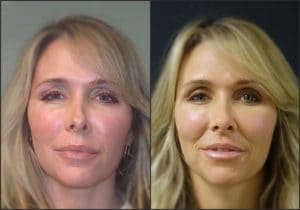
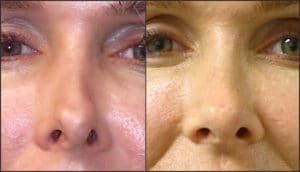
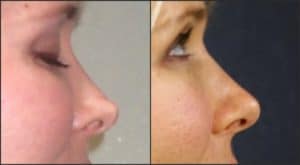
This lady had a distorted nose after a previous rhinoplasty. Her cartilages were visible through her extremely thin skin and were twisted. After Bellafill ® Treatment.Note the improvement of her inverted V deformity and how the nose appears straighterNote how her nasal rims have been dramatically lowered with the off-the-shelf filler. Of course, individual results may vary.
I recently came across this article by Jonathan Kaplan, and it struck a chord with me. The Yelp review is something that doctors have become accustomed to in recent years, but not always by choice. While Yelp can be a great way for patients to find new doctors, it also poses a lot of problems for the medical community.
The care of a doctor is very different from the service you might get at a restaurant, so why would you review the two using the same system? It is much more difficult for patients to review their health care objectively. Their opinions are often based on their emotions and the pain they are feeling.
In his article, Kaplan suggests that Yelp reviews might be contributing the opioid crisis in America. A patient in a great deal of discomfort may ask for more pain killers. Their doctor is trained to know the proper dosage to give them, and will often deny them anything more than what is necessary. However, more recently, patients who do not feel their pain has been sufficiently addressed have taken to Yelp to voice their anger. A bad Yelp review can really make things difficult on a practice, so more and more often, doctors find themselves giving in to these requests in order to avoid the negative reviews. I can’t count how many doctors, not just plastic surgeons, who been held hostage by their misguided patients threatening to post misleading if not blatantly false reviews if they do not get what they want. Consequently, these online reviews can be inherently biased, arising from personal agendas and not from impartial reporting of facts. It’s not hard to imagine how this can also harm the unsuspecting public who, prompted by a malevolent post, may seek alternative treatment from a less qualified professional. This was unfortunately the case when my friends daughter was booked for a liver transplant for a congenital condition to be performed by one of the worlds preeminent liver transplant surgeons here in Los Angeles. After reading a negative online review, she canceled her surgery and ended up getting surgery elsewhere. Tragically her operation was bungled because of a negligent mismatch which resulted in her ultimate death. This could’ve been avoided if she did not read the deliberately misleading online review by the disgruntled patient (who I later came to find out was denied further Vicodin pain medication for her own good since it contains acetaminophen, a known tocsin to the liver).
Like in any profession, doctors have patients that are wonderful and compliant, but they can also come across others that can be difficult to work with. The review of one difficult person should not affect an entire medical practice. Furthermore, the fear of negative reviews can not and should not lead doctors to over prescribe medication and put the health of their patients at risk.
The latest in treatments, fillers and procedures help keep you beautifully radiant-at any age. Here’s the inside track on what to do, and who to go to, to put your best self forward. Among those esteem practitioners interviewed by Angelina, Dr. Randal Haworth MD was honored to be included among them. Anti-aging treatments“Botox plays in important role in keeping fine lines at bay”, says plastic surgeon Dr. Randal Haworth MD renowned for achieving naturally beautiful results. Haworth suggests conservative use of Botox (from $500, the Haworth Institute) in the 30s to diminish fine lines and crows feet.
Beverly Hills plastic surgeon Dr. Randal Haworth MD Bellafill ($1200, The Haworth Institute) to permanently diminish deep folds and fill out eyelid hollows.

 I recently came across this article by Jonathan Kaplan, and it struck a chord with me. The Yelp review is something that doctors have become accustomed to in recent years, but not always by choice. While Yelp can be a great way for patients to find new doctors, it also poses a lot of problems for the medical community.
The care of a doctor is very different from the service you might get at a restaurant, so why would you review the two using the same system? It is much more difficult for patients to review their health care objectively. Their opinions are often based on their emotions and the pain they are feeling.
In his article, Kaplan suggests that Yelp reviews might be contributing the opioid crisis in America. A patient in a great deal of discomfort may ask for more pain killers. Their doctor is trained to know the proper dosage to give them, and will often deny them anything more than what is necessary. However, more recently, patients who do not feel their pain has been sufficiently addressed have taken to Yelp to voice their anger. A bad Yelp review can really make things difficult on a practice, so more and more often, doctors find themselves giving in to these requests in order to avoid the negative reviews. I can’t count how many doctors, not just plastic surgeons, who been held hostage by their misguided patients threatening to post misleading if not blatantly false reviews if they do not get what they want. Consequently, these online reviews can be inherently biased, arising from personal agendas and not from impartial reporting of facts. It’s not hard to imagine how this can also harm the unsuspecting public who, prompted by a malevolent post, may seek alternative treatment from a less qualified professional. This was unfortunately the case when my friends daughter was booked for a liver transplant for a congenital condition to be performed by one of the worlds preeminent liver transplant surgeons here in Los Angeles. After reading a negative online review, she canceled her surgery and ended up getting surgery elsewhere. Tragically her operation was bungled because of a negligent mismatch which resulted in her ultimate death. This could’ve been avoided if she did not read the deliberately misleading online review by the disgruntled patient (who I later came to find out was denied further Vicodin pain medication for her own good since it contains acetaminophen, a known tocsin to the liver).
Like in any profession, doctors have patients that are wonderful and compliant, but they can also come across others that can be difficult to work with. The review of one difficult person should not affect an entire medical practice. Furthermore, the fear of negative reviews can not and should not lead doctors to over prescribe medication and put the health of their patients at risk.
I recently came across this article by Jonathan Kaplan, and it struck a chord with me. The Yelp review is something that doctors have become accustomed to in recent years, but not always by choice. While Yelp can be a great way for patients to find new doctors, it also poses a lot of problems for the medical community.
The care of a doctor is very different from the service you might get at a restaurant, so why would you review the two using the same system? It is much more difficult for patients to review their health care objectively. Their opinions are often based on their emotions and the pain they are feeling.
In his article, Kaplan suggests that Yelp reviews might be contributing the opioid crisis in America. A patient in a great deal of discomfort may ask for more pain killers. Their doctor is trained to know the proper dosage to give them, and will often deny them anything more than what is necessary. However, more recently, patients who do not feel their pain has been sufficiently addressed have taken to Yelp to voice their anger. A bad Yelp review can really make things difficult on a practice, so more and more often, doctors find themselves giving in to these requests in order to avoid the negative reviews. I can’t count how many doctors, not just plastic surgeons, who been held hostage by their misguided patients threatening to post misleading if not blatantly false reviews if they do not get what they want. Consequently, these online reviews can be inherently biased, arising from personal agendas and not from impartial reporting of facts. It’s not hard to imagine how this can also harm the unsuspecting public who, prompted by a malevolent post, may seek alternative treatment from a less qualified professional. This was unfortunately the case when my friends daughter was booked for a liver transplant for a congenital condition to be performed by one of the worlds preeminent liver transplant surgeons here in Los Angeles. After reading a negative online review, she canceled her surgery and ended up getting surgery elsewhere. Tragically her operation was bungled because of a negligent mismatch which resulted in her ultimate death. This could’ve been avoided if she did not read the deliberately misleading online review by the disgruntled patient (who I later came to find out was denied further Vicodin pain medication for her own good since it contains acetaminophen, a known tocsin to the liver).
Like in any profession, doctors have patients that are wonderful and compliant, but they can also come across others that can be difficult to work with. The review of one difficult person should not affect an entire medical practice. Furthermore, the fear of negative reviews can not and should not lead doctors to over prescribe medication and put the health of their patients at risk.
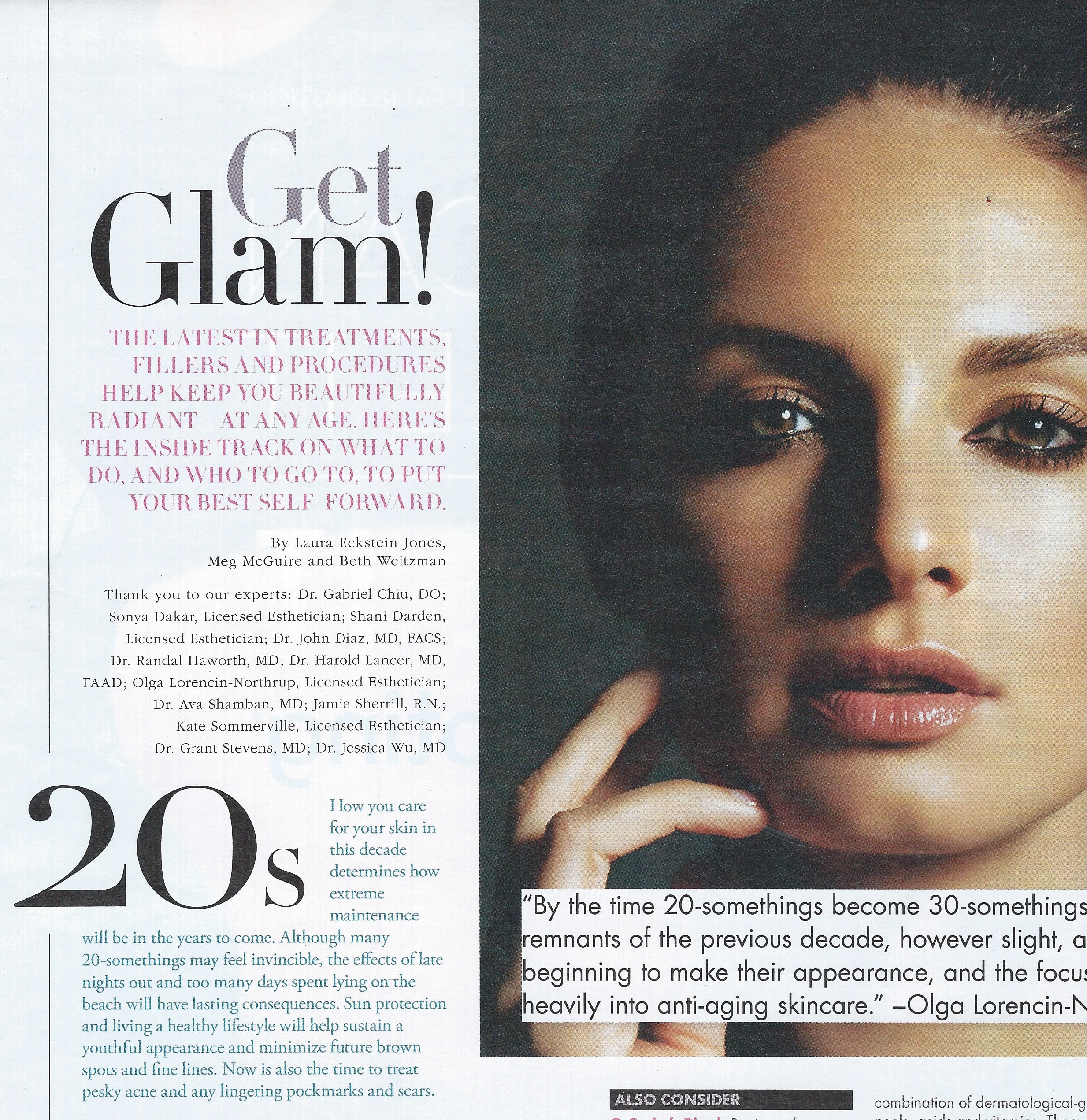
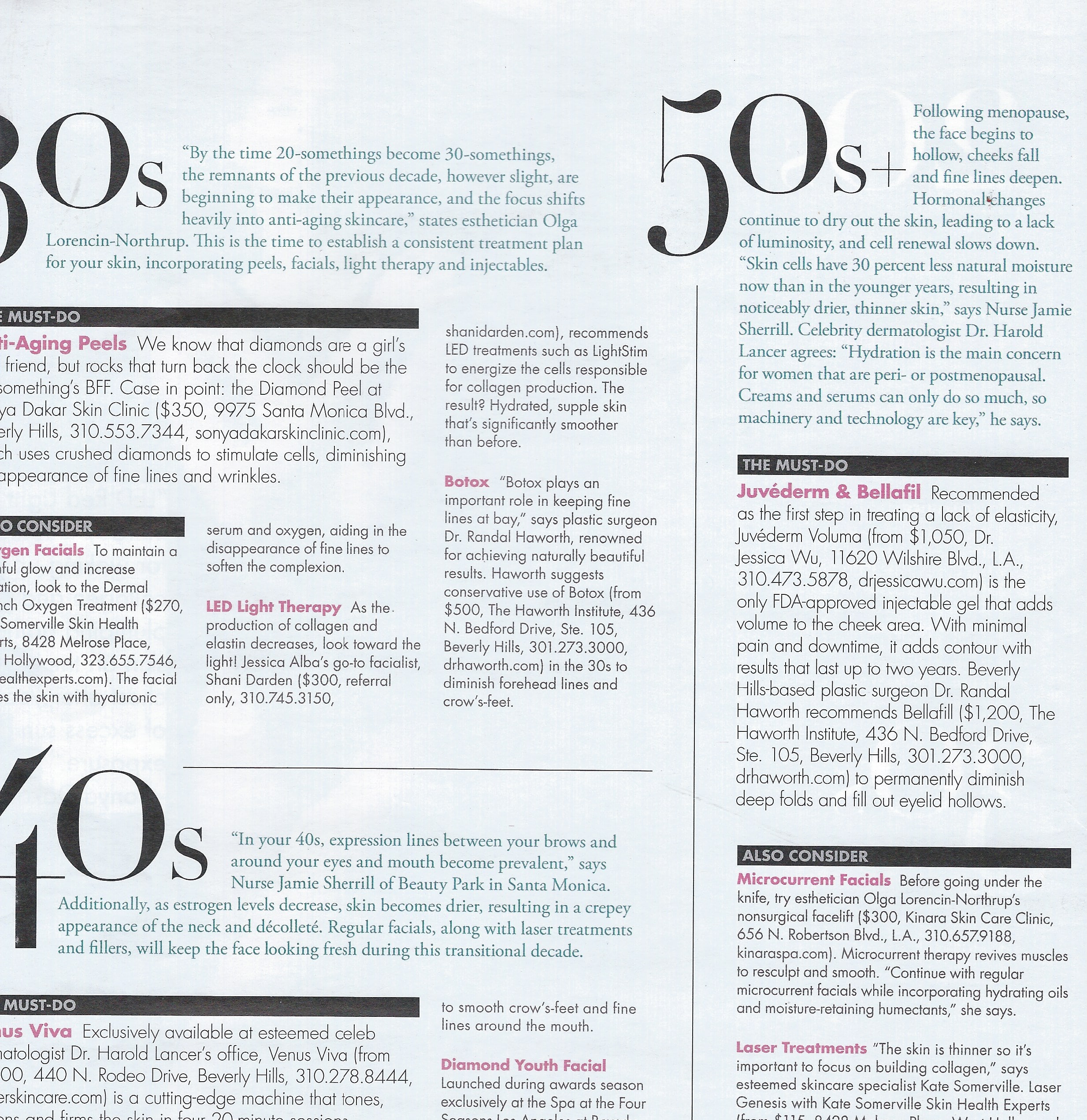 “Botox plays in important role in keeping fine lines at bay”, says plastic surgeon Dr. Randal Haworth MD renowned for achieving naturally beautiful results. Haworth suggests conservative use of Botox (from $500, the Haworth Institute) in the 30s to diminish fine lines and crows feet.
Beverly Hills plastic surgeon Dr. Randal Haworth MD Bellafill ($1200, The Haworth Institute) to permanently diminish deep folds and fill out eyelid hollows.
“Botox plays in important role in keeping fine lines at bay”, says plastic surgeon Dr. Randal Haworth MD renowned for achieving naturally beautiful results. Haworth suggests conservative use of Botox (from $500, the Haworth Institute) in the 30s to diminish fine lines and crows feet.
Beverly Hills plastic surgeon Dr. Randal Haworth MD Bellafill ($1200, The Haworth Institute) to permanently diminish deep folds and fill out eyelid hollows.