What is Natural?
The Challenging Question in Modern Plastic Surgery
“I am fearful about plastic surgery. “Whenever I am in , Beverly Hills, LA or New York, I see people with bad work looking so fake. Their lips are and breasts are so out of proportion!”
I , as a Board Certified plastic surgeon in Beverly Hills, hear this time and time again in conversation at dinner or in my clinic. “I don’t want to look like Michael Jackson!” is another common proclamation of patients during nasal surgery consultations. Instead of getting frustrated with these opinions, I agree with them. It is because I understand their source. It is simple; “good” plastic surgery is invisible, while so called “bad” plastic surgery is not.
Bad plastic surgery (whether it be a rhinoplasty, facelift or breast augmentation) can result from any of the following three scenarios. The first is poor performance of a procedure. Fortunately, this is a rare occurrence when a properly trained surgeon certified by the American Board of Plastic Surgery performs the surgery. The second is poor healing by the patient, perhaps complicated by infection. Again, this is infrequent especially in healthy, well-selected patients. Finally, the third issue is the question of aesthetic taste. No amount of plastic surgical training will guarantee appreciation of balanced facial form and pulchritude. By way of analogy, not all self-professed artists who attend the same art school will emerge as equally talented artists.
What makes for good plastic surgery then? It is the fruit of a surgeon who’s not only technically proficient, but also possessive of a keen eye and aesthetic sense. A beautiful and youthful face reflects visual harmony between facial structures. With age, harmony turns into visual dissonance as youth cues disappear. As a surgeon, it’s my job to serve as a conductor to bring these diverging aging elements together again. Youth cues are lost as wrinkles, folds and sagging facial features arise. Most plastic surgical training emphasizes the re-establishment of major youth cues while overlooking the minor ones. In order to re create the major youth cues, I eradicate jowls; I soften the nasolabial folds, (the fatty accumulation that runs from the bottom corner of the nostril to the corner of the mouth,) contouring a strong jaw line and a firm neck and rejuvenating the eyelids through a combination of endoscopic brow lifting and blepharoplasty (eyelid tucks.)
In order to paint a convincing portrait of somebody in their youth, the surgeon should not only recreate the major youth cues, but also the minor ones. To do so, the surgeon must address the hollows underneath the eyes, the drooping corners of the mouth, the elongated upper lip (hiding the upper teeth), the sagging lower lip (exposing the lower teeth) and the elongated ear lobes. True visual choreography is required.
I’m excited by the array of minor youth cue procedures now developed. Most are relatively minimal in scope. Among these are the Endotine ST and B mid-face lift, the first vertical and reliable mid-face lift that not only addresses the hollows under the eyes, but also softens the nasolabial folds. All in all, it provides a more natural and subtle rejuvenation, avoiding that “pulled back” look. The procedure takes forty minutes when combined with a blepharoplasty (“eyelift” ). This technique is made possible by the development of a new absorbable device placed via the eyelid to elevate the cheek fat pad back to it’s position of youth.
There are other minor youth cues and I address them as well – by performing upper lip lifts with a hidden incision inside and around the nose, as well as corner lip lifts and earlobe reductions as necessary. The upper lip lift shortens the distance between the nose and the lip, allowing the upper teeth to be seen. One only has to peruse the fashion magazines to see how this look is indicative of a fresh and youthful lip region.
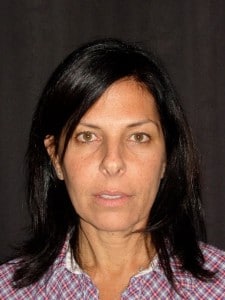
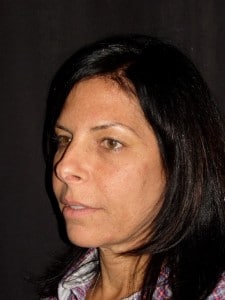
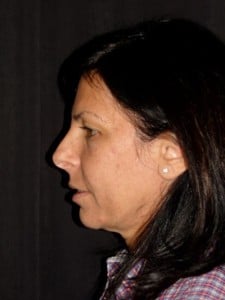
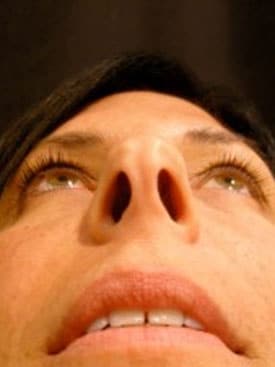
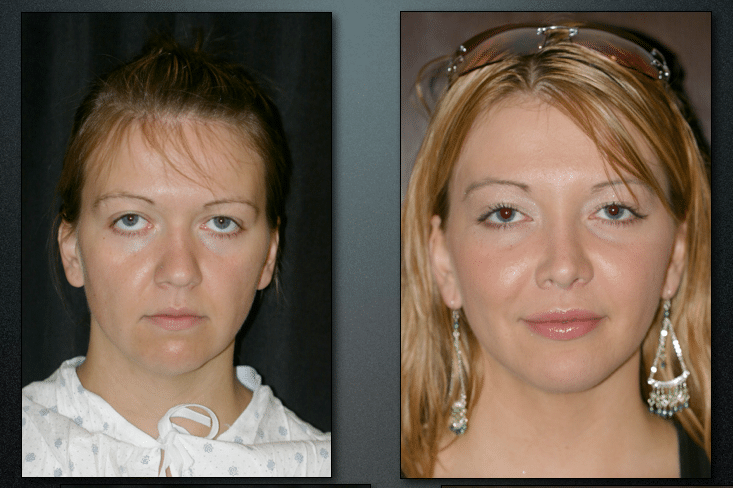
The before and after photos included below, are good examples of the above principals put to use. This 28-year-old girl has premature signs of aging from massive weight loss. Both major and minor youth cues need to be established to achieve harmonious balance. Consequently, I performed an endoscopic brow lift, lower blepharoplasties with fat transfer, an Endotine mid face-lift, liposuction of the neck, upper lip lift and fat transfer.
There are artists who have become doctors and doctors who have become artists. Since I have started painting as a little child and have graduated to exhibit my later work in respected galleries, I consider myself as one of the former. I am fortunate that my background has imbued me with an artist’s eye, which translates into my work. Regardless of Beverly Hills, New York or other urban center, Plastic surgeons should always strive to deliver to their patients not only the best technological advances in plastic surgery, but also in a way that reflects passion and inspiration with an aesthetic sensibility.