Schapelle Corby is on the campaign trail promoting Channel Seven’s military-style reality show SAS Australia.
But viewers would be forgiven for not recognising the convicted drug smuggler as she did the breakfast TV rounds on Monday.
The 43-year-old looked very different compared to her days locked up in Bali’s Kerobokan Prison as she was interviewed on Sunrise shortly before 8am.
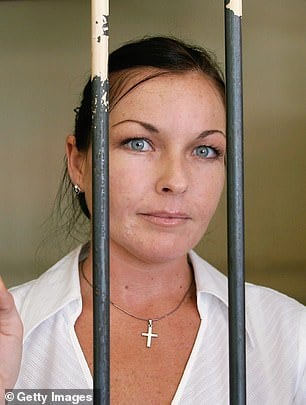
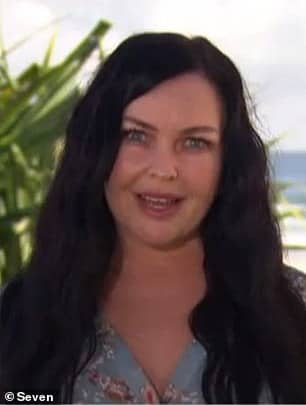
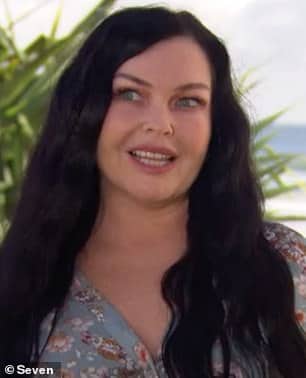
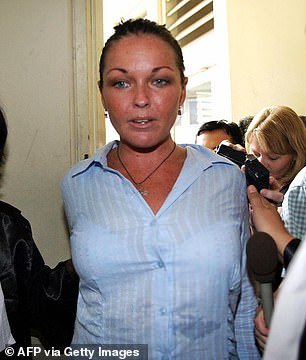
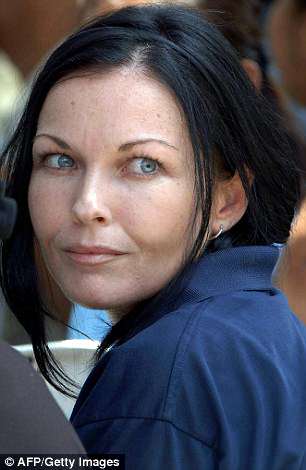
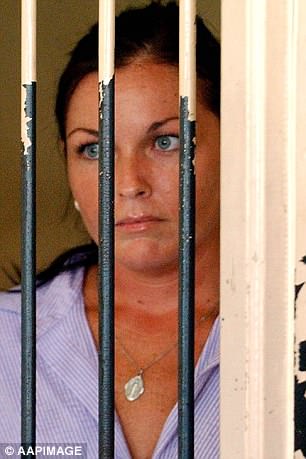
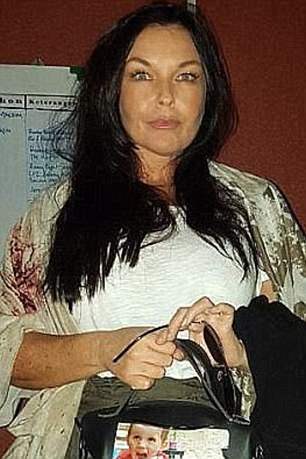
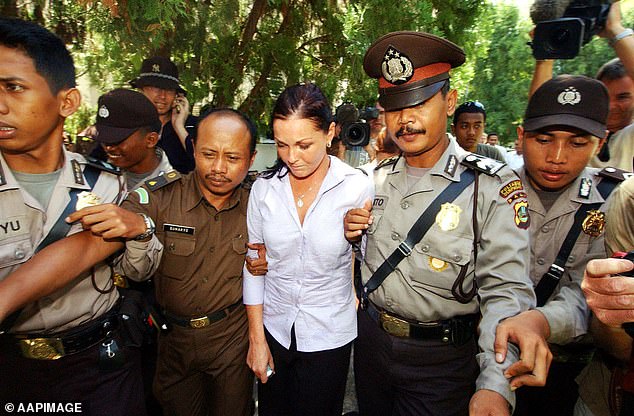
My, how you’ve changed! Convicted drug smuggler Schapelle Corby, 43, looked almost unrecognisable as she unveiled a very glamorous new look this week. Pictured left: behind bars in 2006; and right: on Channel Seven’s Sunrise on Monday
Her eyebrows appeared noticeably fluffier than they were in the early 2000s, while her hair was more voluminous thanks to a set of perfectly curled extensions.
Schapelle, who has denied rumours of cosmetic work such as Botox and fillers, also showed off her age-defying complexion, smooth forehead and plump lips.
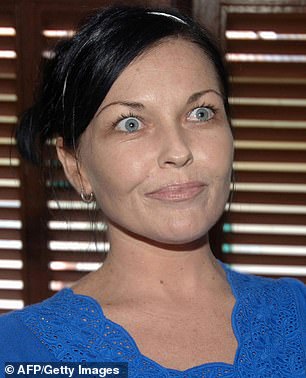
Primped: Looking every inch the budding reality star, Schapelle sported a full face of makeup, including dewy pink blush, rose-coloured lipstick and false lashes. Pictured left: in 2008
The former drug mule later appeared on The Morning Show, wearing a striking red frock that offered a glimpse of her cleavage.
The interview also highlighted the impressive length of Schapelle’s hair extensions, which tumble well past her shoulders.
Beverly Hills surgeon Dr. Randal Haworth previously told Daily Mail Australia that Schapelle may have invested in ‘non-invasive work’ to achieve her youthful looks.
Va-va-voom! The former drug mule later appeared on The Morning Show, wearing a striking red frock that offered a glimpse of her cleavage. Pictured left: Schapelle in 2005; and right: on The Morning Show on Monday
‘It is not hard to imagine that a stint in an Indonesian prison would be a less than welcome holiday, so it is understandable that anyone would want a fresh start after that,’ he said in June 2018. ‘It seems as if Ms Corby is no exception to that rule.’
Dr. Haworth was of the opinion Schapelle had ‘undergone subtle facial rejuvenation’.
‘I don’t believe she underwent any plastic surgery per se,’ he claimed. ‘But she most likely had non-invasive work to achieve her current look.’
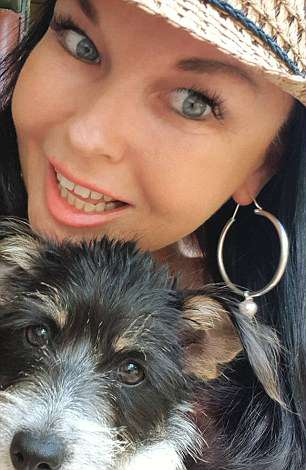
New look: Beverly Hills surgeon Dr. Randal Haworth previously told Daily Mail Australia that Schapelle may have invested in some ‘non-invasive work’ to achieve her youthful looks. Pictured left in 2008, and right in 2018
Changes: ‘The most obvious changes are to her lips and cheeks,’ Dr. Haworth observed, adding that ‘both have seemingly been well augmented, most likely with injectable fillers such as Juvéderm or equivalent.’ Pictured left in 2005; right in 2017 Jailed: Schapelle served her sentence at Kerobokan Prison, alongside several other Australian drug criminals including members of the Bali Nine. Pictured at Denpasar District Court in 2005
They are one of Australia’s most glamorous power couples, presiding over a business empire that includes property, a tequila brand and a tanning range.
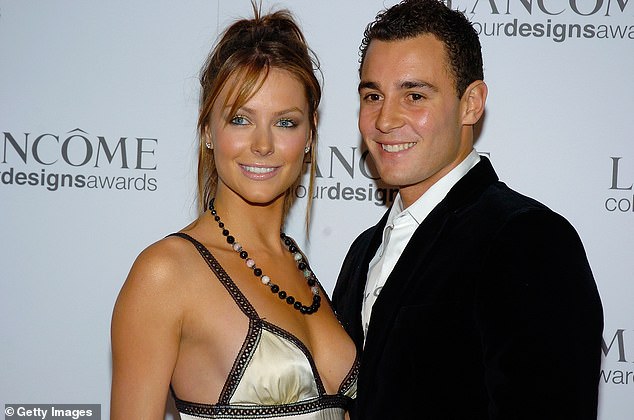
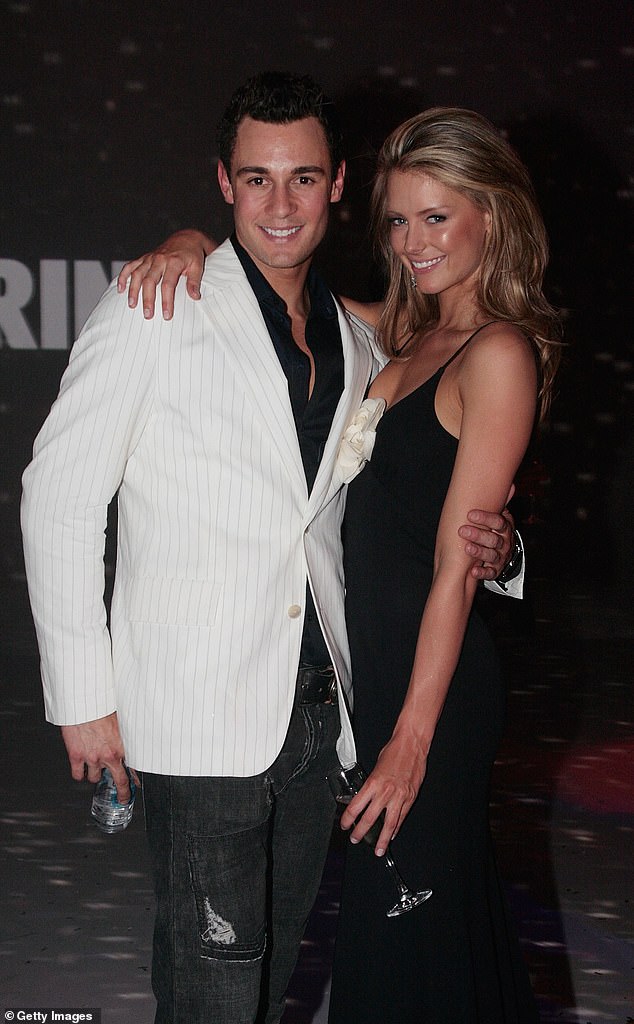
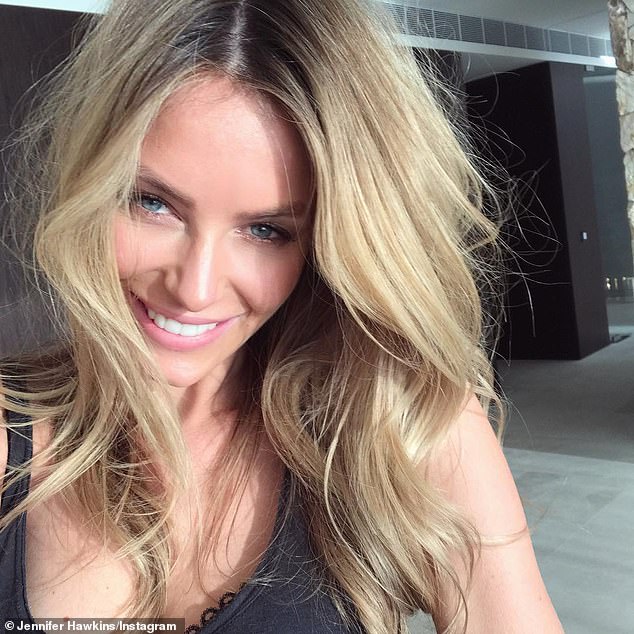
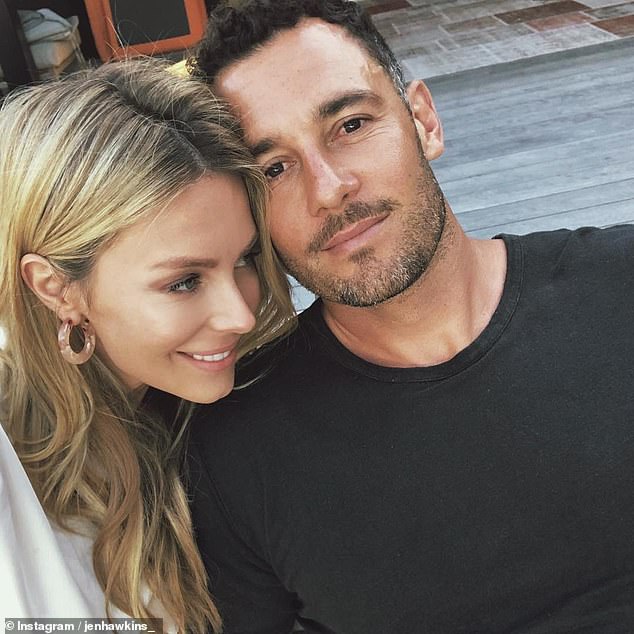
And it seems that Jennifer Hawkins and Jake Wall, who married in Bali in 2013 after dating for almost a decade, have had quite the transformation over the years.
These days, the pair look remarkably different compared to when they burst onto the celebrity scene as fresh-faced lovebirds in the mid-2000s.
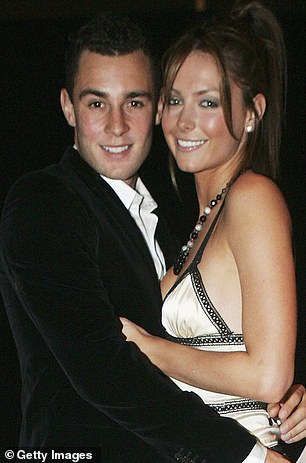
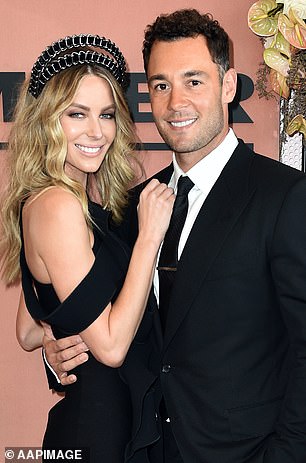
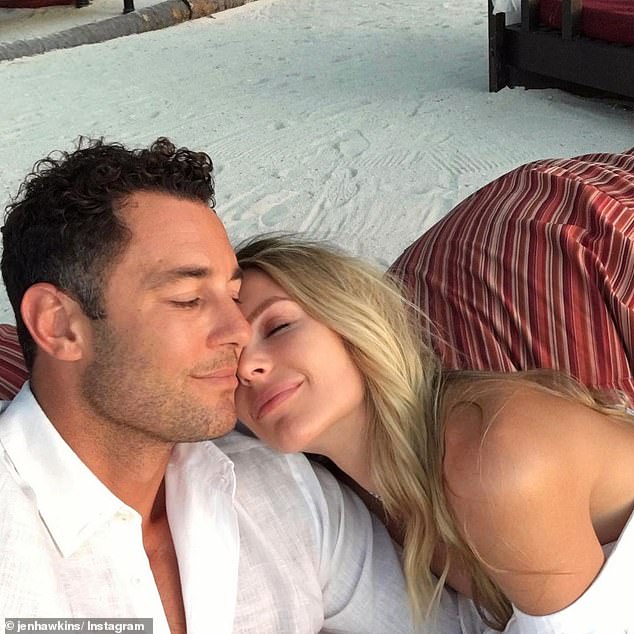
Jen Hawkins and Jake Wall’s incredible ‘glow up’: How they transformed from young lovebirds to a glamorous power couple. Pictured left: in June 2005, and right: in October 2016
The entrepreneurs have certainly refined their fashion sense in the 16 years since Jennifer, a former Newcastle Knights cheerleader, won Miss Universe in 2004.
In red carpet photos from Jennifer’s modelling heyday, the now-36-year-old sports pencil-thin eyebrows – which were fashionable at the time – and even dark hair.
Property developer Jake, 37, has changed a lot too, having embraced a more rugged look while also bulking up significantly.
My, how you’ve changed! These days, Jennifer and Jake look remarkably different compared to when they burst onto the celebrity scene in the mid-2000s. Pictured in June 2005Throwback! They have certainly refined their fashion sense in the 16 years since Jennifer, a former Newcastle Knights cheerleader, won Miss Universe in 2004. Pictured in August 2006
In 2018, Beverly Hills plastic surgeon Dr. Randal Haworth offered his expert opinion on whether Jennifer had gone under the knife.
He told Daily Mail Australia at the time: ‘I often see pretty girls like Jennifer wanting to fine-tune their features to enter “supermodel” territory.’
According to Dr. Haworth, who has not treated Jennifer himself, she has invested in some minor improvements to ‘improve facial balance as a whole’.
‘Most people would scratch their heads as to how a former Miss Universe could possibly improve upon her already-idolised face,’ he said.
‘Her new and more glamorous appearance has been helped by a rhinoplasty to refine and elevate her nasal tip while narrowing her asymmetrical nasal bones.’
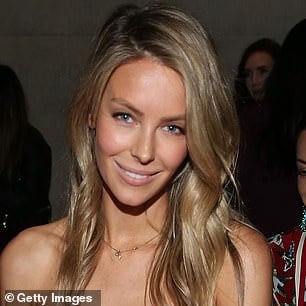
‘She has a new and more glamorous appearance’: In 2018, Beverly Hills plastic surgeon Dr. Randal Haworth offered his expert opinion on whether Jennifer had gone under the knife. Pictured left: Jennifer as a teenager, and right: in May 2018
Despite being a household name for more than 15 years, Jennifer has hardly aged a day and is arguably more beautiful now than she was in her early twenties.
Dr. Haworth believes that the former Myer ambassador has indulged in ‘fillers to her cheeks and other areas of her face’, as well as Botox.
‘I strongly suspect she also underwent lip augmentation for added sensuality and improved facial balance as a whole,’ he added.
Claims: Dr. Haworth believes that the former Myer ambassador has indulged in ‘fillers to her cheeks and other areas of her face’, as well as Botox
In 2010, Jennifer attributed her drastic change in appearance to healthy eating, exercise and makeup.
‘Women get better with age, because they are more confident with themselves. It’s all about makeup and health,’ she said on The Kyle and Jackie O Show.
While old photos of Jennifer reveal a noticeably thinner pout and fuller face, she has previously brushed off surgery speculation.
‘Women get better with age’: In 2010, Jennifer attributed her drastic change in appearance to healthy eating, exercise and makeup
Jennifer once told The Australian Women’s Weekly that it’s the nature of the fashion industry to be accused of having cosmetic surgery.
‘When someone says “under the knife” I don’t have a reaction,’ she said.
‘Everyone in the industry gets that. That’s fine. I’m cool with that. I’m cool with people having an opinion, but as I said, I am happy with who I am as a person and really just want to live my life.’
In 2016, the former Australia’s Next Top Model judge claimed it was a personal choice if people wanted to invest in plastic surgery.
She told The Daily Telegraph: ‘Each to their own!’
Fair point! In 2016, the former Australia’s Next Top Model judge said it was a personal choice if people wanted to invest in plastic surgery, telling The Daily Telegraph: ‘Each to their own’
Meanwhile, Jennifer and Jake have reached a number of relationship milestones in recent years.
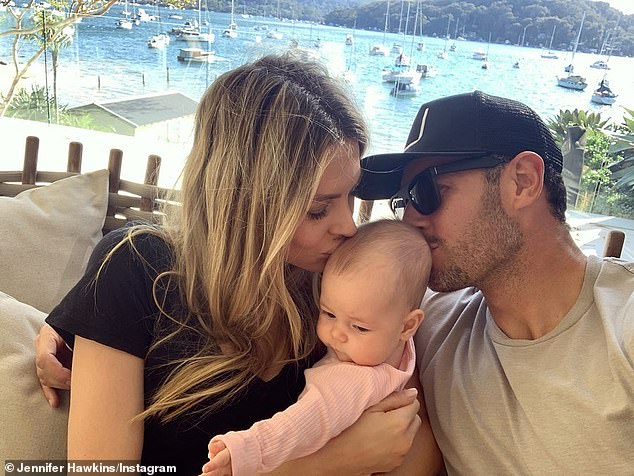
They welcomed their first child together, daughter Frankie Violet, in October.
And in June, the pair found a buyer for their spectacular home in Newport, Sydney, which they sold for more than $20million.
Starting a family! Jennifer and Jake have reached a number of relationship milestones in recent years. They welcomed their first child together, daughter Frankie Violet, in October
The couple, who met at a nightclub in Newcastle when Jennifer was just 20, first entered the property market in 2006, two years after she was crowned Miss Universe.
They spent $469,000 on a double-storey house in Merewether, a suburb located 3km from Newcastle’s central business district.
Jennifer and Jake are also entrepreneurs: they own Sesión Tequila and building company J Group Projects, as well as the tanning range JBronze.
Couple goals! In June, the pair found a buyer for their spectacular home in Newport, Sydney, which they sold for more than $20millionSuccess story! Jennifer and Jake are also entrepreneurs: they own Sesión Tequila and building company J Group Projects, as well as the tanning range JBronze
It takes more than just talent to become a celebrity coach on The Voice Australia.
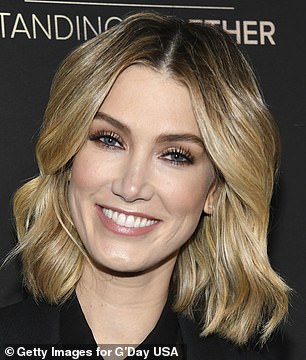
While Delta Goodrem, Kelly Rowland, Guy Sebastian and Boy George are all very different performers, they have all undergone some physical changes to become the stars they are today.
Here, we take a look at the dramatic cosmetic transformations of The Voice Australia’s glamorous coaching panel.
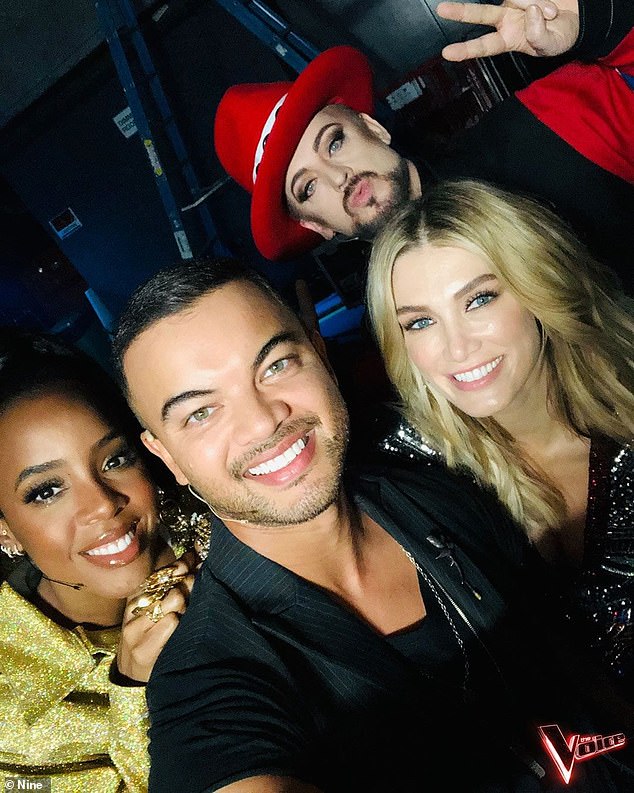
Inside The Voice Australia coaches’ incredible transformations: Delta Goodrem, Kelly Rowland, Guy Sebastian and Boy George (all pictured) have all undergone some physical changes to become the stars they are today
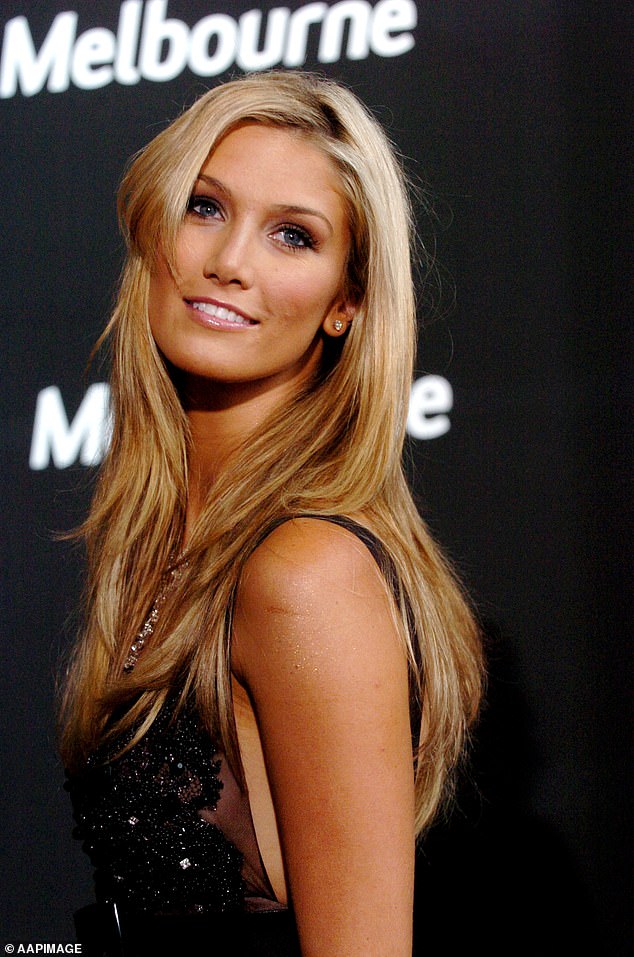
Delta has come a long way since her days playing Nina Tucker on Neighbours.
While the 35-year-old’s fashion and hair cuts have changed over the years, many fans have speculated that the Born To Try singer has also tweaked her look with cosmetic procedures.
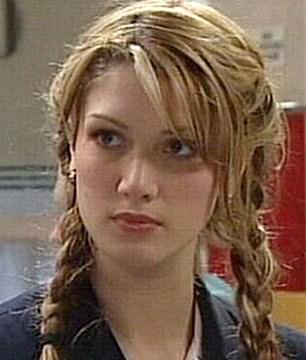
My, how you’ve changed! Delta has come a long way since her days playing Nina Tucker on Neighbours. Pictured left in 2002, right in 2020Back in the day: Delta’s love for spray tans appears to be a thing of the past. Pictured in 2007
While Delta has refused to comment on plastic surgery rumours over the years, top plastic surgeon Dr. Randal Haworth believes she may have had a nose job and fillers.
Speaking to Daily Mail Australia in 2018, Dr Haworth said he had a ‘strong hunch’ that Delta may have undergone a rhinoplasty, and may have also had filler injected into her cheeks and lips.
‘Certain angles may be more revealing than others, but I have a strong hunch she has undergone a rhinoplasty because the shape of her tip is more demarcated from the rest of her nose while her bridge is noticeably narrowed,’ he said at the time.
‘Certain angles may be more revealing than others’: While Delta has refused to comment on plastic surgery rumours over the years, top plastic surgeon Dr. Randal Haworth believes she may have had a nose job and fillers. Pictured in 2020
‘These are the types of characteristics that would make any plastic surgeon suspicious,’ he added.
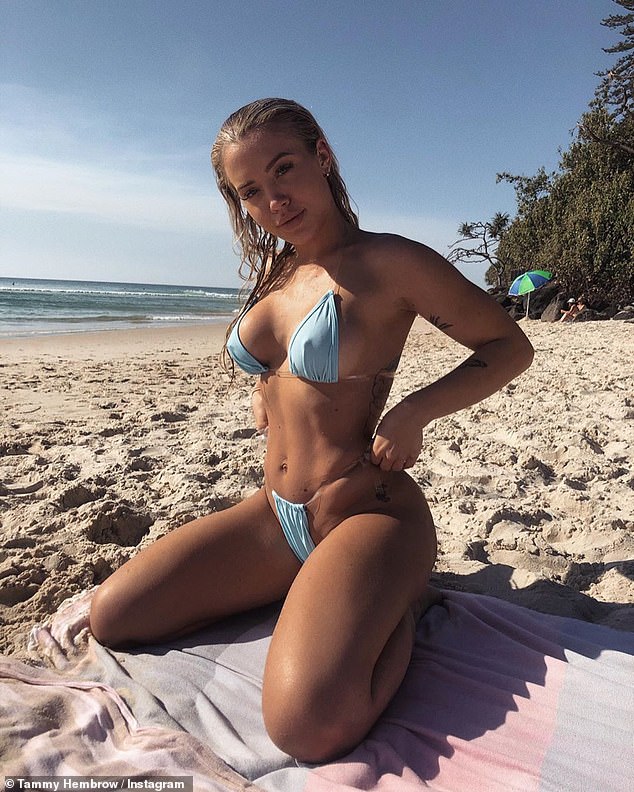
She’s a self-made millionaire who proudly calls the Gold Coast home.
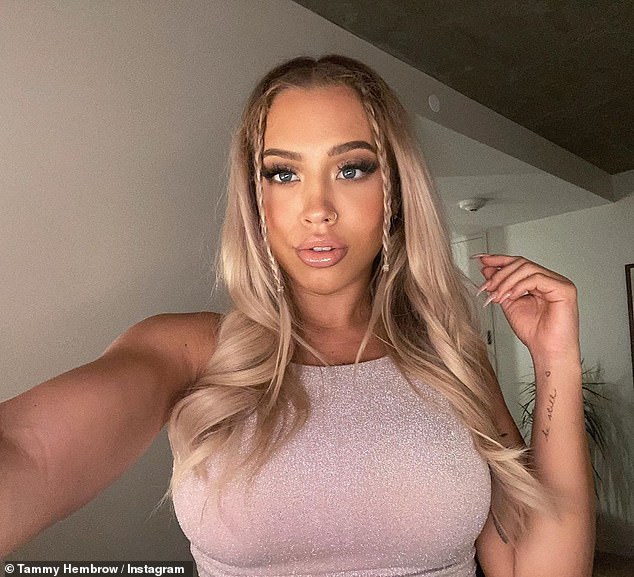
And thanks to her fitness journey and risqué selfies, this 25-year-old mother-of-two now boasts more than 10 million followers on Instagram.
But would you recognise her in this rare, unfiltered picture from her teenage years?
Guess who! She’s a tabloid figure who has made millions from Instagram – but would you recognise her as a teenager in this rare throwback photo?
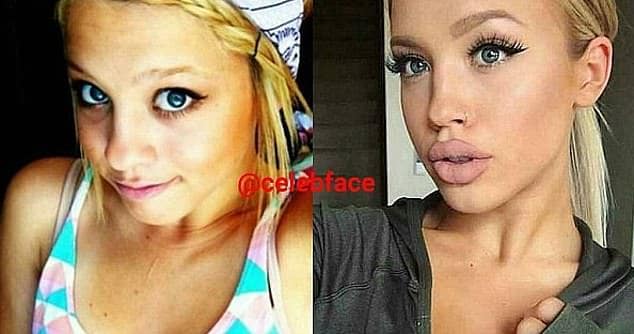
The smiling teenager in the throwback photo is none other than Tammy Hembrow.
In the resurfaced snap, which was shared to the Lipstick Alley gossip forum, Tammy looks almost like a completely different person.
The selfie was taken around 10 years ago, before Tammy transformed her look and embraced a more ‘Kardashian’ aesthetic.
Surprise! The smiling teenager in the throwback photo is none other than Tammy Hembrow My, how you’ve changed! In the resurfaced snap, which was shared to the Lipstick Alley gossip forum, Tammy looks almost like a completely different person
Earlier this year, rare footage emerged of Tammy partying in the music video for hip hop group Mr Hill & Rahjconkas’ 2014 single, Non Stop.
She displayed a more natural appearance in the video, with her lips, nose and cheeks looking noticeably different.
Speaking to Daily Mail Australia in August 2018, Beverly Hills plastic surgeon Dr Randal Haworth claimed that Tammy may have undergone a nose job, liposuction and dermal fillers to achieve her bombshell look.
Who’s that girl? Earlier this year, rare footage emerged of Tammy partying in the music video for hip hop group Mr Hill & Rahjconkas’ 2014 single, Non StopUnrecognisable: She displayed a more natural appearance in the video, with her lips, nose and cheeks looking noticeably different
‘Based on what I presume to be filtered photos, she has undergone a striking transformation of not only her facial features but also of her facial shape,’ Dr Haworth said at the time.
‘Specifically, her jawline is more defined into a “V-line”. I would even venture to say her chin has been shortened and narrowed compared to her teenage years.’
This may have been achieved through ‘liposuction or bony chin modification’.
Speculation: Beverly Hills plastic surgeon Dr Randal Haworth previously claimed that Tammy may have undergone a nose job, liposuction and dermal fillers to achieve her bombshell look
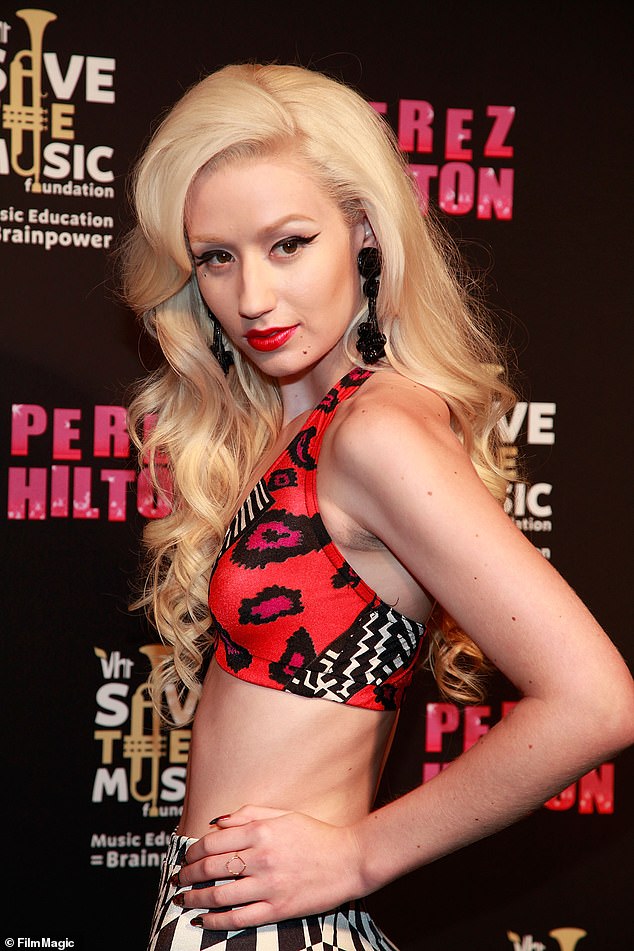
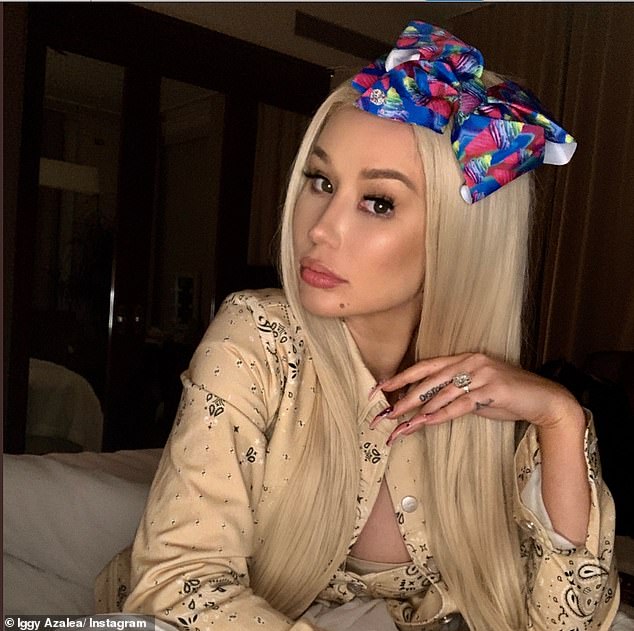
Iggy Azalea has released the artwork for her new single, Lola.
The cover art shows a sleek-looking Iggy pouting in a plunging green dress with pop star Alice Chater resting in her lap.
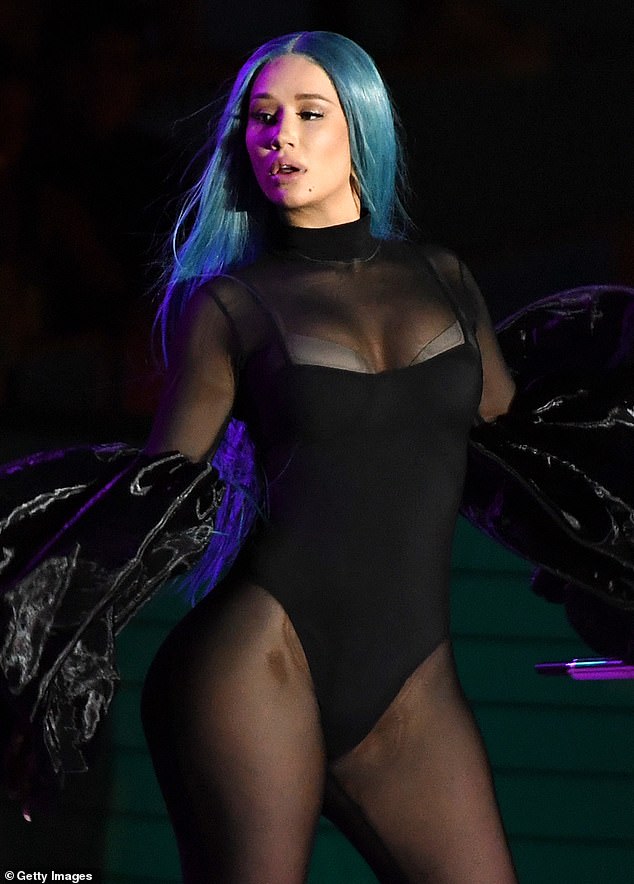
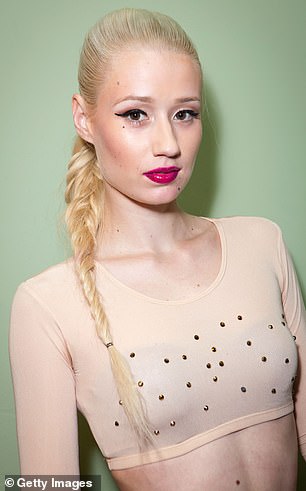
With her plump lips and slender nose, the 29-year-old rapper is almost unrecognisable compared to when she first arrived on the celebrity scene in 2012.
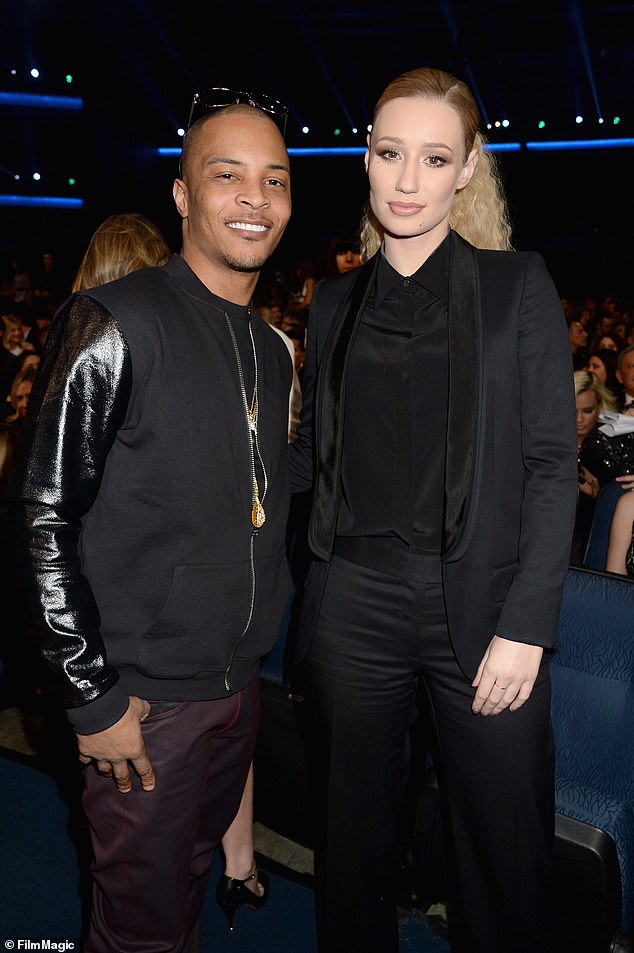
She’s back! Iggy Azalea looks like a perfect mannequin on the cover of her new single, Lola. Pictured with pop star Alice Chatter
In photos taken when the Australian-born star was just 23, she sports noticeably thinner lips, a larger nose and a flatter chest.
Iggy has admitted to undergoing some procedures, including rhinoplasty and a breast augmentation.
However, she has always maintained that her famous derrière is all natural.
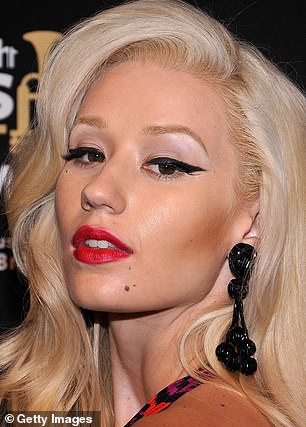
Remember me? In photos taken when the Australian-born star was just 23, she sports noticeably thinner lips, a larger nose and a flatter chest. Pictured on September 6, 2012 in LA
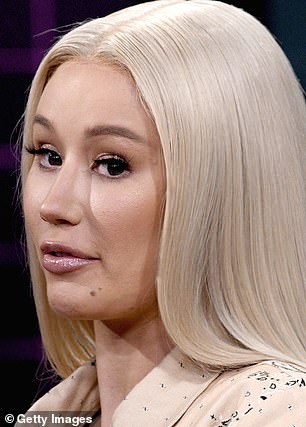
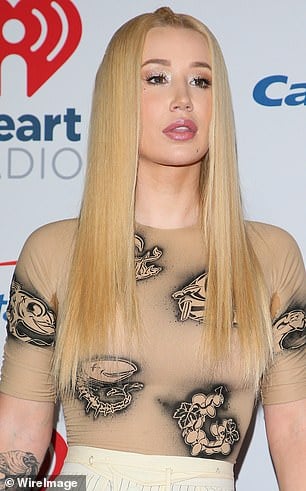
What a transformation! The 29-year-old rapper has completely changed her appearance between 2012 (left) and 2019 (right)
Last year, Beverly Hills plastic surgeon Dr. Randal Haworth told Daily Mail Australia that he believes the rapper may have made additional changes to her facial shape.
According to Dr. Haworth, who has not treated Iggy himself, she appears to have invested in some ‘subtle’ and ‘beautiful’ refinements.
‘Iggy is what I would describe as an excellent “canvas” on which a plastic surgeon can reveal his work,’ he observed.
‘When done right, results can be sublime and indiscernible to a layman’s eye.’
Stunning: Iggy has admitted to a nose job and breast augmentation, but has always maintained that her famous derrière is natural. Pictured on July 26, 2019 in Las Vegas
In addition to Iggy’s rhinoplasty, which ‘straightened and narrowed her nose’, Dr. Haworth believes she may have undergone ‘a chin augmentation as well as mandibular angle enhancement to give her a more refined, “modelesque” jawline.’
‘This can be done either with solid silicone implants or off-the-shelf injectable fillers, but either way, her results are spectacularly non-obvious,’ he said.
Iggy, who hails from Mullumbimby, NSW and moved to the U.S. aged 16, has never concealed the fact she has undergone a breast enlargement.
Before and after: Iggy’s face has completely transformed over the years. Pictured left: in September 2012, and right: in September 2019
‘Four months ago, I got bigger boobs! I’d thought about it my entire life,’ she told fashion bible Vogue in 2015.
She later spoke about her new look with E! and explained why she decided to go public with the news.
‘I love them so much I had to talk about them,’ she revealed. ‘Everybody did say, “I don’t think you need to say it because no one will ever know because they’re so small”. I said, “I know but I’m just going to say it [because] I’m a blabber mouth!”
Quite the difference! Iggy’s face looked remarkably different in this photo taken in late 2014
‘I’d feel better not to have some secret. It’s much freer to say it and then you don’t have to worry someone will dig it up,’ she added.
However, despite her candid attitude to surgery, bootylicious Iggy steadfastly denies rumours she has undergone ‘butt implants’.
She told Australian radio program Stav, Abby & Matt in 2017: ‘No, I don’t have bum implants! They’re not my real boobs, but it is my real butt.’
Barbie girl! The blonde beauty often shows off her flawless features on social media
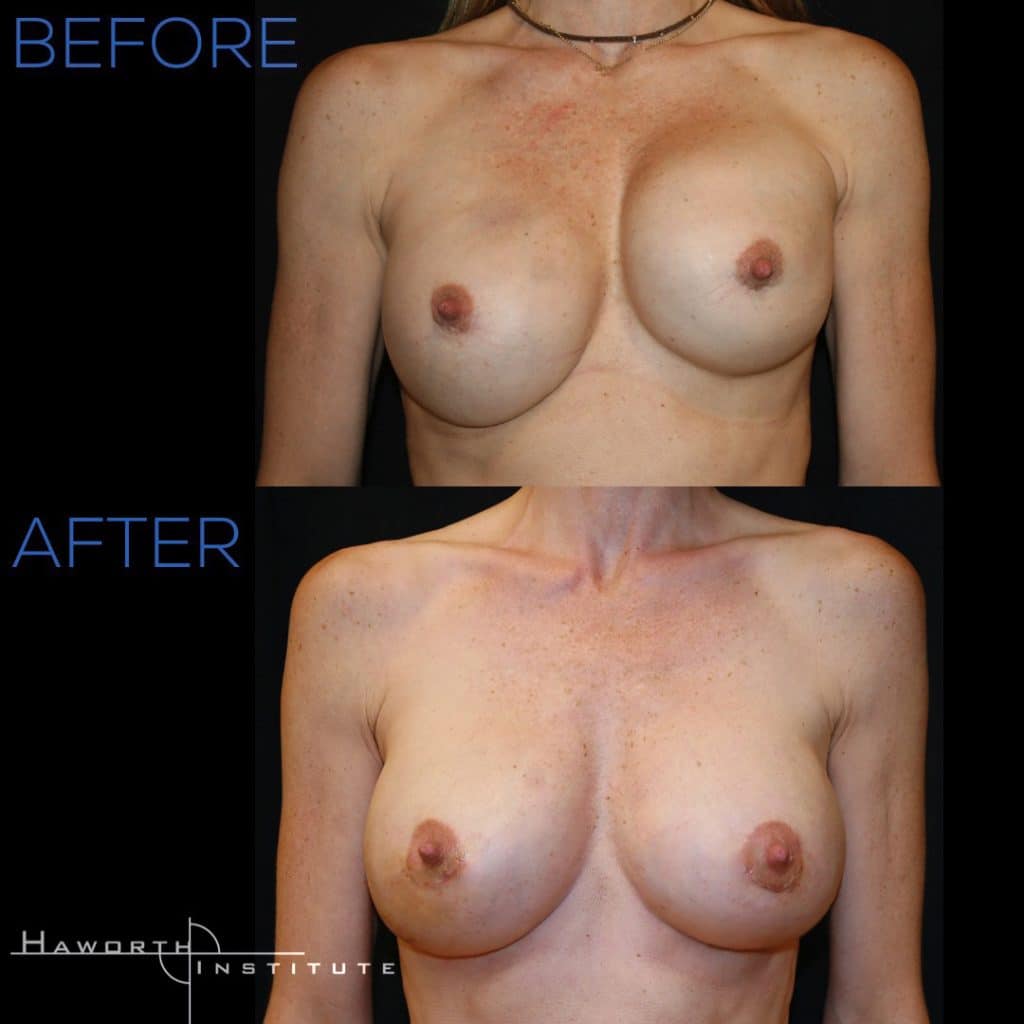
As a plastic surgeon treating breast implant associated deformities and illnesses for over 25 years, I have seen many patients such as Dolly Parton who now complain of pain associated with the breast augmentation. For example, I treated award winning actress Sally Kirkland back in the late 90s for breast implant related pain. I removed her implants and their associated encasing collagen capsules and corrected her resultant “empty breast” via a mastopexy or breast lift in common parlance.
Actual breast pain tends to be more frequent in patients with very large (i.e. heavy) implants. especially in conjunction with thin, stretched-out overlying breast tissue. Indeed, the implant itself becomes the main culprit responsible for the thinning; essentially, a vicious cycle develops taking the patient down a one-way street of pain.
Heavy implants especially in delicately framed women can also contribute to cervical, deltoid and upper back pain. Again, this could simply be represent the long term effects of heavy implants upon the upper body. The only way to alleviate this painful ball-and-chain effect is to either reduce the implant size or just remove them completely. A breast lift is often done in conjunction with implant removal to tighten the excess loose skin left behind.
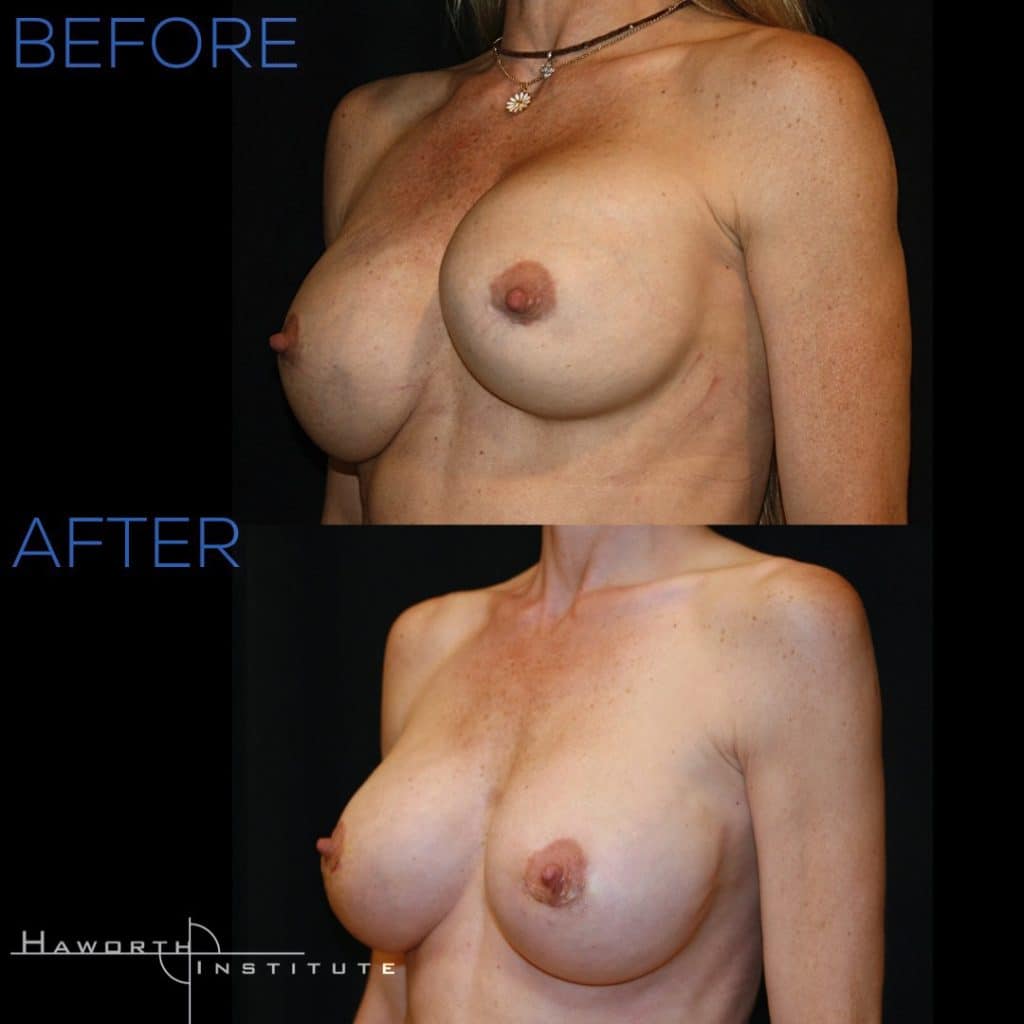
Capsular contracture is another reason for breast pain extending to the shoulder like a vice, limiting one’s range of motion . When implants are placed in a pocket under the breast a capsule composed of your body‘s natural collagen develops to line the pocket. This capsule can have a mind of its own and decide to shrink down tightly around the implant causing distortion and in some cases significant pain. This can be torturous and removal of the scar tissue is the only way to effectively treat the problem.
Left Baker’s Grade IV breast implant associated capsular contracture Right mild Baker’s III encapsulation (Grade I -Normal Grade II- Hard & stiff, but fairly normal appearance Grade III- Hard & distorted Grade IV- Hard, distorted with pain)Postoperative results after Dr Haworth, a foremost breast implant revision specialist, performed a bilateral total capsulectomy and implant exchange “under the muscle”
Finally, many patients suffering from breast implant-related pain have attributed their problems to auto immune disease caused by the very implants themselves. Often times, these patients may complain of other systemic painful symptoms includingfibromyalgia and fatigue. Though few doctors question their pain, there has been little scientific proof that there’s a link between painful auto immune disease such as fibromyalgia and breast implants.
Most women end up loving their breast augmentation and even accept mild discomfort in order to maintain their new cleavage. However, for the unfortunate minority who experience severe pain, parting ways with their breast implants may be their only solution.
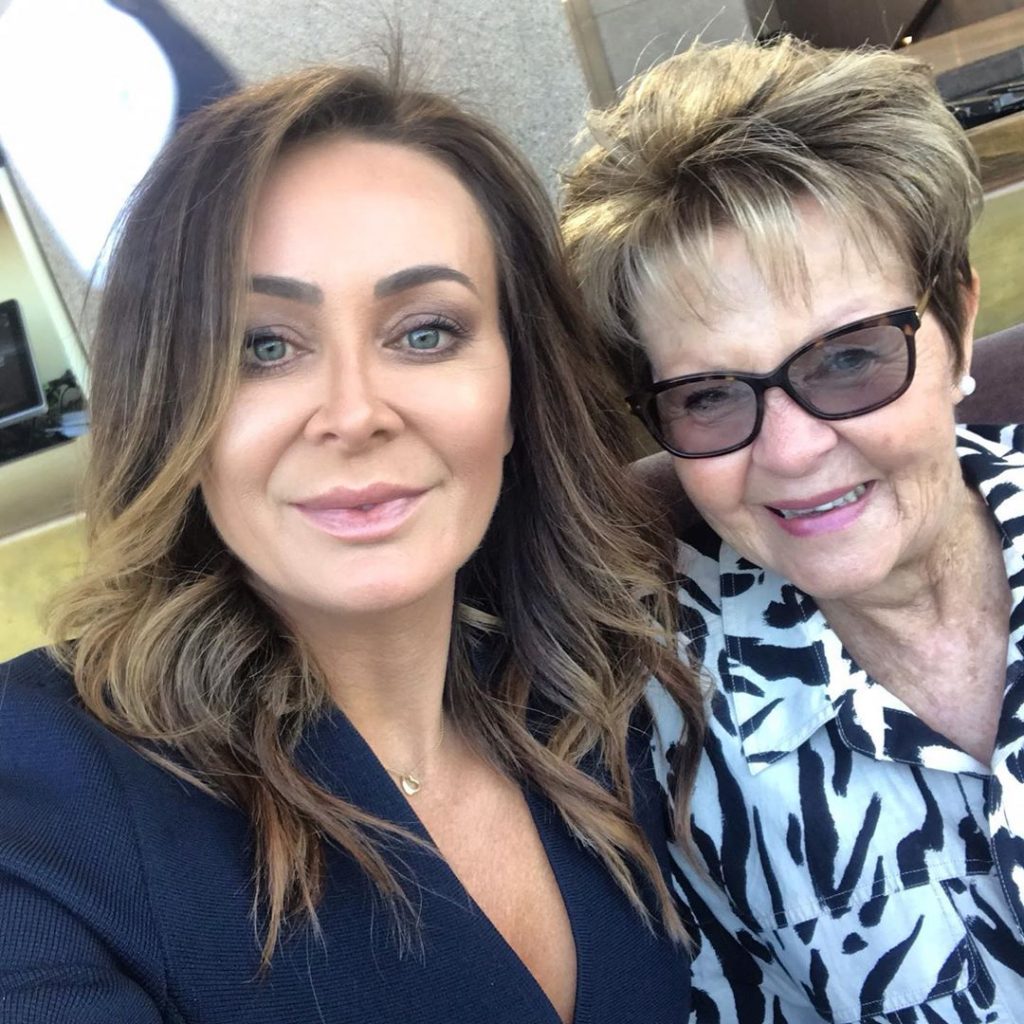
The ex Biggest Loser icon reveals her secrets Fitness guru and former Biggest Loser star Michelle Bridges has posted a photo with her mum, proudly labelled ‘no filter’ – eliciting a strong reaction from her legion of followers. The star took to Instagram to share an outing with her mother Maureen, captioning it, ‘Out with my mum! No filter but plenty of Love ❤️❤️❤️❤️ #gratitude.’
Michelle’s fans took to the comment section to rave about the photo, with one gushing, ‘I hope you know how beautiful you are without any photoshopping etc.
‘So many people look up to you – you’re naturally beautiful and we love the real you!’
Another raved, ‘You look so pretty 😊’, while yet another wrote, ‘I have unfollowed many with filters. Fake. Thanks for keeping it real.’
4,275 likes – View Post on Instagram Out with my mum! No filter but plenty of Love ❤️❤️❤️❤️ #gratitude
Indeed, the star’s seemingly completely line-free visage was a sight to behold. .
Last year, Hollywood cosmetic surgeon Dr Randal Haworth claimed that Michelle could be an ‘enthusiastic user’ of both ‘fillers and Botox’, Daily Mail Australia reported.
Dr Haworth speculated the Aussie fitness star has plumped her lips and filled her under-eye area with Juvéderm.
‘A tell-tale sign that filler was used to treat under-eye hollows is bulging below her lower eyes next to the nose. I can see Michelle has those when she is smiling in recent photographs,’ the surgeon told the publication.
1,898 likes – View Post on Instagram These photos were taken by my gorgeous, talented friend @nica.photography for @escapesouthernhighlands magazine Spring 2019 edition 📸🙏🏻 Would you just LOOK at me and my little man (with his long hair out of the bun too 😉) In the article I talk all about my home in the Highlands away from the rat-race city, a few of my favourite things (no spoilers 😘) and why my @12wbt is still going strong after 10 whole years 🎉🙌🏻 Nica, this photoshoot has to be one of my faves EVER! And to the Escape team, thank you for the feature 💛escapesouthernhighlands.com.au/category/in-the-current-issue/ #escapesouthernhighlands #nicaphotography
On the subject of Botox, Michelle has said: ‘I am a fan of anything that makes a person feel good about themselves and more confident’.
For the last eight years or so, I, as one of the foremost cosmetic injection experts in Beverly Hills, have noticed an increasing number of men seeking aesthetic improvement outside of diet and exercise. However, I see this growth as less a trend and more of a real shift in the industry.
This growth is spurred on by society’s reliance on visual rather than written communication and its unabashed obsession with youth and beauty over old-fashioned wisdom and experience. The eruption of social media, including Instagram and the like, has only heightened the problem. It has awakened our once dormant narcissism into the self-perpetuating collective contagion that it is today.
Consequently, there is less social stigma for men to seek out ways to better their appearance in this highly competitive world. In 2018, more aesthetic technologies are finally delivering on their promises to reduce wrinkles, firm faces, reverse atrophy and sculpt bodies without hair. The armamentarium used includes Botox, Jeuveau( or #Newtox), Juvederm, Vollure, Restylane, Radiesse,Voluma, Bellafill, IP, laser hair removal and other lasers to treat brown discoloration, and red patches. Men are not only seeking out ways to keep themselves looking young and competitive but also non-surgical ways to actually enhance their features; these include filler/liquid nosejobs (rhinoplasties), cheek and chin augmentations and jawline defining and even laser induced fat burning with SculpSure..
All done with the expert hands of a board certified plastic surgeon or his personally trained expert nurse injectors (such as Katherine Braun, R.N. helming The Haworth Institute’s own medispa, Self-Centered Aesthetics™), results which are both significant and, most importantly, natural. This is ideal for men wanting their appearance to be on point in order to compliment their skill set at work.
No cutting, no stitches, less recovery, less expense- what’s there not to like for those men who simply want to look good with minimal expense and time?
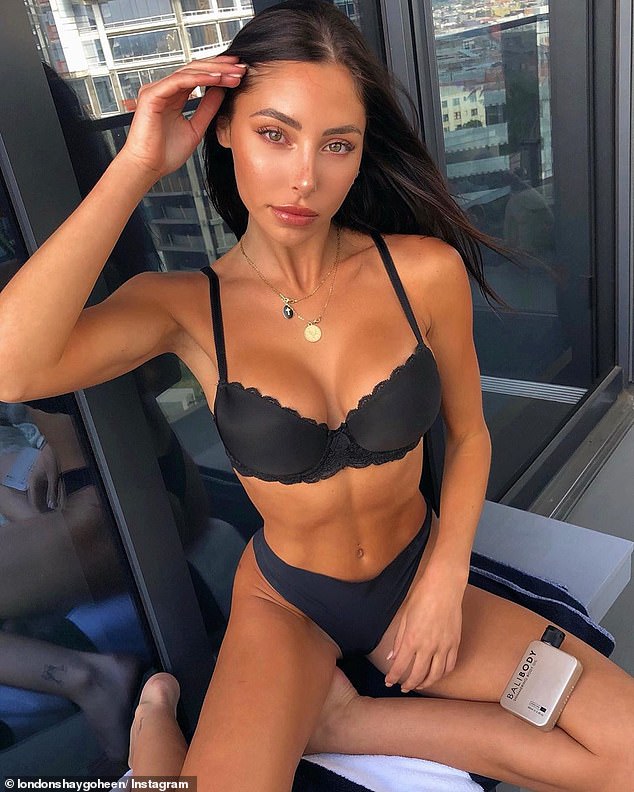
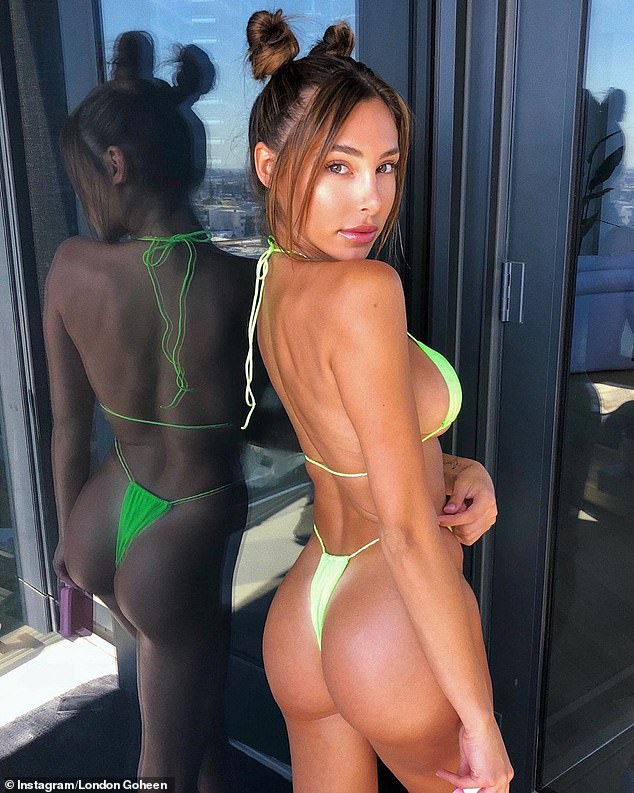
American model London Goheen, 21, didn’t achieve her pert derrière and perfectly toned legs overnight.
And on Saturday, the brunette beauty went extra hard at the gym after eating an epic cheat meal the night before.
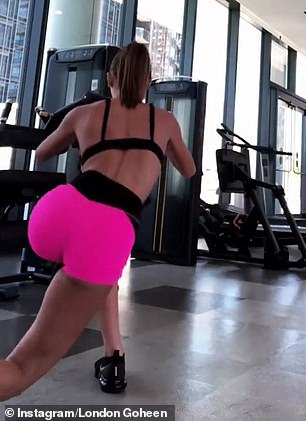
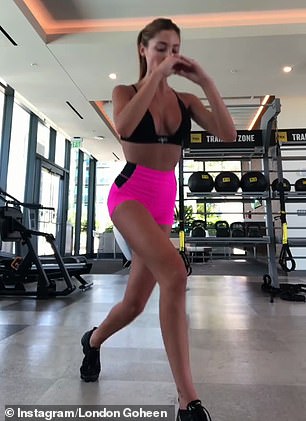
Taking to Instagram, London shared an intense workout video of herself in a barely-there gym outfit that revealed her exercise secrets.
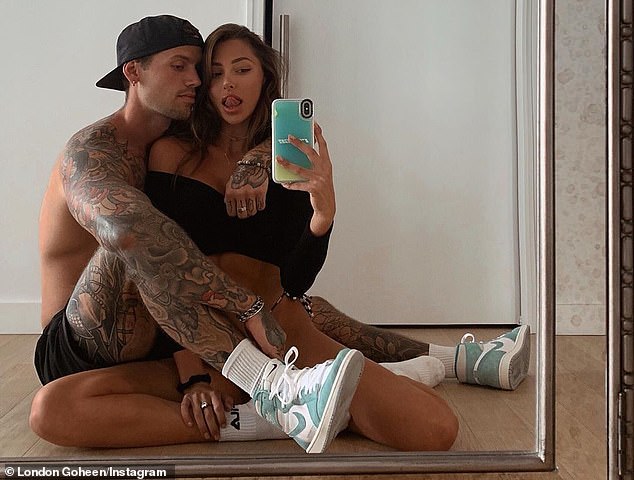
Get the London Goheen look! American model (pictured), 21, reveals how she keeps her derrière and glutes toned in barely-there workout outfit
The model wore skin-tight pink exercise shorts and a skimpy bralette that could barely hold her assets.
Lunge enthusiast: London performed two lunge exercises, curtsy lunges (left) and normal lunges (right), saying she always uses a 10-pound weight, which is roughly 4.5 kilograms
For the third exercise, London did weighted curtsy lunges with a 10-pound weight, which is roughly 4.5 kilograms.
The 21-year-old then finishes of the workout with normal weighted lunges and leg extensions on a workout machine.
With a focused look on her face, London appeared to get extra hard at the gym on Saturday morning after a huge cheat meal on Friday night.
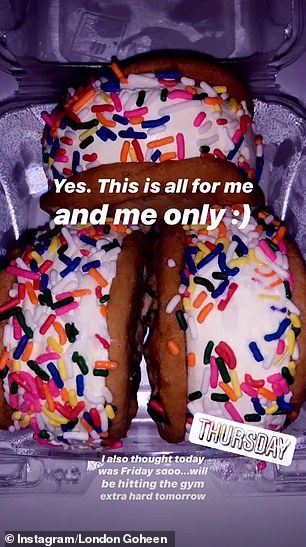
Taking to Instagram, the model revealed she ate a pepperoni pizza, chicken wings and three ice-cream sandwiches with the caption: ‘Yes, this is all for me and me only.’
Hard work pays off! London shows off the fruits of her labour in the gym with sizzling Instagram posts in barely-there bikinis
Treat yourself! The night before her morning workout, London ate a pepperoni pizza, chicken wings and three ice-cream sandwiches with the caption: ‘Yes, this is all for me and me only.’
Last year, photos emerged of the stunner showing the extent of the extraordinary transformation she’s managed to achieve since her days as an ordinary high school student in the US.
‘Specifically, her slightly bulbous tip has been narrowed to form a perfect streamline with her thin nasal bridge. All in all, it’s good work,’ he added.
Dr. Haworth further speculated that London has augmented her lips with filler to create a more ‘sensual’ look.
‘Her lips have been obviously augmented, most likely with a hyaluronic acid filler such as Juvéderm, Volbella or Restylane,’ he said.
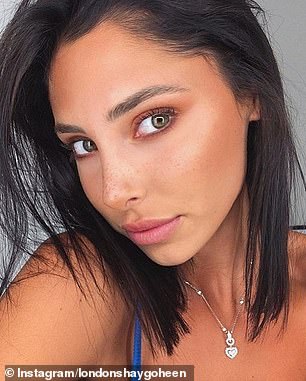
Refinements: Dr Randal Haworth told Daily Mail Australia in December that he believes the Texan has undergone rhinoplasty in addition to having non-surgical lip fillers. Pictured left: In her teenage years, and right: in 2018
In January, an eagle-eyed fan noticed London had previously admitted to breast implants on her Instagram account.
‘Where did you get your breast augmentation you look amazing,’ one fan asked, to which London replied, ‘Houston’.
London first made headlines in September when Reece Hawkins, 24, publicly confirmed they were dating.
Are they engaged? In June, London sent fans into a frenzy with a not-so-subtle set of emojis on a loved-up Instagram post with her beau. It was captioned with a ring, love-heart and baby icon
The new relationship, which began just a few months after Reece ended his engagement to fitness model Tammy Hembrow, left millions of fans devastated.
In June, London sent fans into a frenzy with a not-so-subtle set of emojis on a loved-up Instagram post with her beau.
Captioning a photo with a ring, love-heart and baby icon, the 21-year-old’s social media upload was flooded with comments congratulating the couple.
End of an era: It’s been over a year since Tammy announced her split from her ex-fiancé and the father of her two children, Reece Hawkins (left)
How do I chose local, regional, sedation or general?
General generally means endotracheal tubes
Essentially there are three types of anesthesia:
1. Local anesthesia-the type a dentist gives you while you’re totally awake
2. IV sedation or “twilight sleep“. A sedative is administered intravenously to induce a deep state of sedation.
3. General anesthesia-Sedative agents are administered both intravenously as well as through endotracheal breathing tube into the lungs.
Though the most consider IV anesthesia as being safer, ironically it can be more dangerous. Unlike general anesthesia, IV sedation does not use a breathing tube to prevent a patient’s airway from closing if sedation gets too deep. Actually, this can happen many times during an operation and that is why the anesthesia provider must stay hypervigilant to deliver enough sedation to maintain a patient’s unconscious state but not enough to stop them breathing on their own.
There are two types of patients when it comes to anesthesia-those who are very wary of any anesthesia, let alone general and those who want full general anesthesia without hesitation. Obviously, the choice as to what type of anesthesia is used during plastic surgery is a collaboration between the patient and the surgeon.
As a Beverly Hills plastic surgeon, creating human artwork involves deep concentration, precise technique, a painstaking attention to detail and unlimited patience. Therefore I want my patient to be perfectly still, comfortable and safe so I can do my very best without being distracted, even if the surgery is only “skin deep”. This is why I, as a facelift expert in Beverly Hills, perform my facelifts and detailed hyperaesthetic facial surgery under general anesthesia. I feel I can deliver the best results I can while the patient is comfortable and safe.
I utilize general anesthesia for most of my high-definition body-sculpting, abdominoplasties and breast enhancements to enable me to go that “extra mile”. It’s all too often I hear patients complain about their underwhelming results from surgery performed under IV twilight sleep. This is because surgeons are constrained in what they can fully achieve by a moving, uncomfortable patient. In Beverly Hills, standards are high and patients expect the best and this is why they come to my clinic from across the world for their results and not for the type of anesthesia they receive.
However, there are many situations in which I feel IV sedation is better for the patient. Those requiring modest amounts of work where pain control can be easily supplemented by injected local anesthesia are best served with twilight sleep. Generally, shorter surgeries of the skin and subcutaneous tissue but above muscle fall into this category.
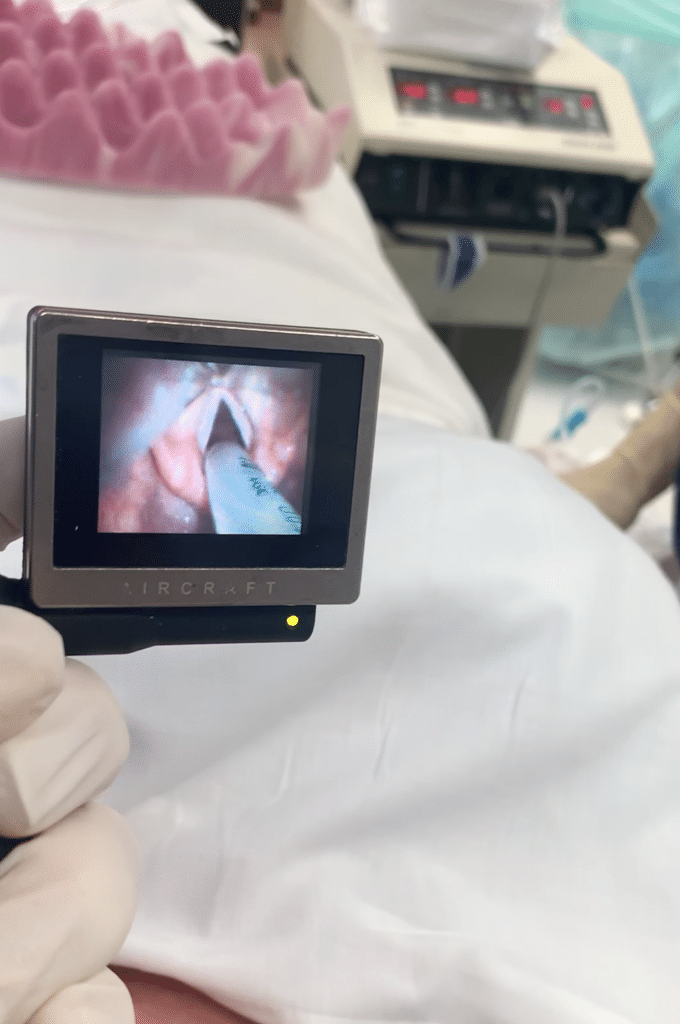
An image of the endotracheal tube passing through a patient’s vocal cords
In the end, it all boils down to the concerns and expectations of the patient and how best the surgeon is able to fulfill them. However, most honest surgeons, whether in Beverly Hills or anywhere else for that matter, would agree that their most detailed and precise work was performed under general anesthesia