

RHINOPLASTY TERMINOLOGY NOTES
Video
To perform your rhinoplasty, Dr. Haworth begins by making the necessary incisions in and around the nose. Dr. Randal Haworth, a specialist in rhinoplasty in Beverly Hills has the skills and eye for detail that can effectively enhance the appearance and/or the functionality of the nose. Usually, Dr. Haworth employs the patients’ own nasal cartilage for support to the nose that has previously been weakened by surgery and/or to enhance the aesthetic appearance and/or improve breathing.
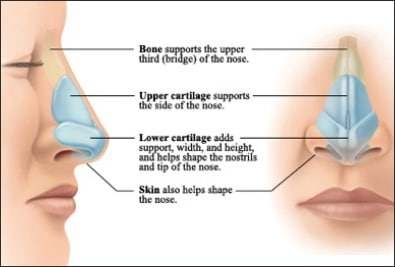
Most often cartilage is obtained from the patient’s septum because of its strength, availability and generally ample supply. When that is not available ear cartilage is a second choice but it is often not ideal for many uses in the nose because of its inherent curvature. Rib cartilage may also be used, but this too is not ideal because of the need to operate on the chest.
Dr. Randal Haworth goes on to say,
“Since every patient is unique, rhinoplasty has to be strategically and precisely tailored to each individual. In certain circumstances, when septal or ear cartilage are unavailable and the patient does not want to have an operation on their chest to harvest rib, I have no hesitation to use a synthetic implant with a long history of use and safety in medicine. My preferred synthetic implant is Gore-Tex® and I’ve been using it for over 15 years in rhinoplasty. When used in the appropriate circumstances, contrary to some reports, it has an excellent safety profile with a very low complication rate, including infections.”
Gore-Tex® Synthetic MaterialGore-Tex® is a synthetic material that has been used in plastic, general and cardiac surgery for many years. It now allows the rhinoplasty surgeon to reconstruct a nose without the need to harvest cartilage from the ear or rib, thereby decreasing surgical time and lessening the morbidity of the procedure. Gore-Tex® integrates with the surrounding tissue and has no potential for human rejection (not including infection).
Even though harvesting ear or rib cartilage is well tolerated by patients, any opportunity to avoid creating extra incisions and performing extra dissections on the body, the patient benefits. Therefore, Gore-Tex® provides an excellent synthetic material for rhinoplasty when septal cartilage is unavailable. Fortunately, it is becoming more widely accepted as a grafting material as its safety profile is being discovered.
OPEN VS. CLOSED RHINOPLASTY
Dr. Haworth used to perform 80% of his rhinoplasties closed to avoid the theoretical scar across the columella (the narrow strip of tissue that separates the nostrils) as well as prolonged swelling. However, he found that these supposed advantages to the closed method were not always true. The closed method tended to result in less accurate suture placement, shifted cartilage grafts and less consistent results; therefore, Dr Haworth has shifted his approach to an open one in over 85% of rhinoplasty procedures based upon practicality, reliability, safety and ultimately, patient satisfaction.
MEDICAL DEFINITIONS
To achieve the ideal nose, Dr. Haworth employs many different techniques. As you browse Dr. Haworth’s image gallery of before and after results, note the different techniques applied to each individual’s rhinoplasty procedure.
Any rhinoplasty procedure is uniquely composed of one or more of the following:
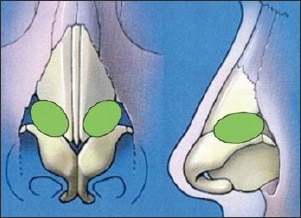
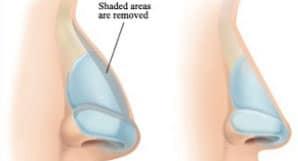 Hump reduction of either cartilage and/or bone, osteotomies to reduce the size both in profile and frontal view. This image describes the region typically reduced using this technique
- Modified techniques to correct a birth defect
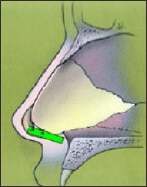 Rib, ear or cranial bone grafts to reconstruct after an accident or a previous rhinoplasty
- Cartilage, bone and fascia grafts to build up a nose
- Cartilage grafts and suture techniques to modify the shape of the nasal tip (e.g., to improve a bulbous,boxy, drooping, hooked or upturned tip)
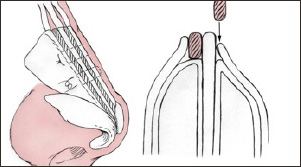
 Cartilage strut grafts and suture techniques to change the angle between the nose and upper lip
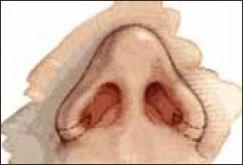
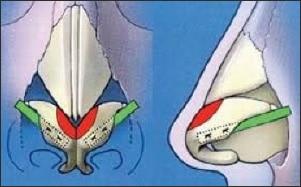
- Weir excisions to narrow the nostril span. The image to the right displays regions typically reduced or removed using this technique
- Septoplasty, turbinectomies, spreader and batten cartilage grafts to correct breathing problems
Depending on the individual’s case, Dr. Haworth may apply a few or many of these surgical concepts during the same surgery.
 View Gallery
 Contact Us
RHINOPLASTY CANDIDATES
Dr. Haworth makes a point of serving each individual patient’s needs and defining overall expectations from any plastic surgery procedure. As Dr. Haworth states in his blog, “Plastic surgery will not make you happy, but it can make you happier. In simple terms, this allows me to assess whether a patient is fundamentally happy and balanced prior to operating on them.”
The best candidates for rhinoplasty are:
- At least 14 years old for young women, 16 for young men
- Older patients with a nose that has started to hang or with an increasingly drooping tip
- Patients who have a congenitally crooked nose or one that has been deviated because of trauma
- Those who suffer from nasal obstruction from a anatomical problem of the nose
- Those who need to correct a cleft lip-nasal deformity
- Patients with realistic expectations about how they want their nose to be changed in shape and size to compliment their other facial features
- Those with nasal skin which is neither too thick or too thin
- Those with unsatisfactory, unnatural-looking results from a previous rhinoplasty that may include (but are not necessarily restricted to) a pinched tip, irregular profile, collapsed sidewalls (“Inverted V Deformity”), “Saddle Nose deformity”, crooked appearance, asymmetrical retracted nostril shape, etc.
- Those with unsatisfactory functional results in breathing or nasal airflow due to tissue damage or undesirable healing
- Those needing to get the results of a previous rhinoplasty improved while having realistic expectations of the results
Rhinoplasty cannot:
- Create an exact replica of another person’s nose, celebrity or otherwise, from your preexisting nose
- Completely correct severe deformities of the nose from either trauma or past surgery 100% of the time.
- Narrow a nose to an unrealistic or unattractive degree
- Alleviate personal problems (social or psychological) in your life
CRITICAL PRE-OP CAUTIONARY NOTE
It is absolutely essential that that you avoid all aspirin, aspirin-related, ibuprofen or blood-thinning medications for 2 full weeks prior to your surgery. In your pre-op consultation, we will give you a complete list of these drugs. For our patients, we also provide a password-protected link allowing you to download the list onto your computer. If in doubt about a specific medication, do not take it, call the office first and ask if it is on the forbidden list.
PRE-OPERATIVE CONSULTATION
Your successful rhinoplasty surgery will require a number of appointments to ensure maximum health and safety.
1. Pre-Op Consultation
The pre-operative consultation is where you meet with Dr. Haworth and our staff to review your health, finalize the details of your procedures, order appropriate tests, prescribe medications, discuss your aftercare and answer any questions you may have.
2. Medical Records
- Any appropriate health records related to the list of conditions noted above
- Any radiological test results including regular Xrays and CAT scans that may have
- For patients over 45, we may also require that you provide the following:
- Full medical clearance
- EKG
If you haven’t got these records or haven’t been tested lately, the rhinoplasty consultants in our office can coordinate these appointments for you.
3. Prescriptions
You will want to fill any and all prescriptions well in advance of your rhinoplasty surgery, particularly since some of them need to be taken for several days before the procedure.
4. Day of Surgery
Your rhinoplasty surgery will be performed at our surgical center in Beverly Hills. You will come in at the appointed time. Be sure to wear loose clothing that buttons or zips and does not need to be pulled over your head. Your ride will be instructed when to pick you up or can call in to find out when you’ll be ready. We cannot release you without a responsible adult to drive you home and spend the first post-op night with you.
If you are going to an aftercare facility, we can coordinate the transportation for you.
5. First Night Post-Op
Dr. Haworth is a rhinoplasty specialist that wants to make sure you feel safe and secure every step of the way. That evening after your surgery, he will call you to check in. You’ll want to make sure that you sleep with your head slightly elevated and only on your back, NOT on your side or face.
6. 1st Day Post-Op
Dr. Haworth will remove the small nasal pack at which time you will feel immediately better in terms of the slight pressure experienced immediately after surgery.
7. 7th Day Post-Op
Dr. Haworth and his assistants will remove the cast and stitches. 80% of his patients are impressed with their rhinoplasty results by the seventh to eighth day. However, the results will only improve time!
8. 10-14 Days Post-Op
Dr. Haworth may inject a dilute kenalog solution into the nasal tip to “turbocharge” the resolution of swelling. 95% of his patients already love their results by the end of the third week.
OPERATION AND RECOVERY LOGISTICS
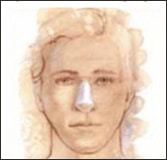
Surgery duration: 1.5 – 4 hours. Rhinoplasty may take longer than anticipated due to the deformity encountered and the complexity of surgery needed to correct it.
Anesthesia: Sedated.
Sutures and cast removed: 5-7 days
As you wake up from surgery, you will feel mild pressure in your nose similar to what you feel when you have a cold but without the total body symptoms which normally accompany it. However, prescription painkillers will easily control the discomfort. You will most likely have a cast or tape over your nose to control bruising and swelling, while stabilizing the new shape of your nose in the immediate postoperative period.
By the end of the second week, you’ll look and feel much better. Most patients are back at work about one to two weeks after surgery. If you need it, special camouflage makeup can mask most bruising that remains.
Gradually, you will be able to resume to your normal activities:
- 1-3 days read or watch television
- 7 days resume wearing makeup (most bruising will be gone). However, you will most likely still be swollen.
- 7-14 days be out in public, back to work and take long strolls
- 2-3 weeks begin moderate and work up to vigorous exercise.
Minimizing Scars
As a top Beverly Hills rhinoplasty surgeon, Dr. Haworth keeps up to date on optimal, scar-free healing. Scars resulting from a rhinoplasty are minor and generally hidden. Where there is a trace of a hairline scar across the columella, Scar Gard, Kelocote or similar silicone gel treatments can be somewhat effective in decreasing scar visibility faster. Or, if the patient wishes about six months after nasal surgery, Dr. Haworth can use resurfacing lasers to render an already light scar virtually undetectable.
POST-OPERATIVE CARE
You will need to keep your activities to a minimum for at least 7 days.
In person and in your post-op information packet, we shall explain everything you need to know for your aftercare at home that will include:
- Medications (prescription and homeopathic)
- Cleaning incision sites
- Utilizing a humidifier in your room while you sleep.
- Employing nasal saline rinses (Neil Med) to accelerate the healing process while minimizing complications.
Expect to tire easily for awhile. To aid your recovery you’ll want to rest as much as possible and:
- Avoid wearing eyeglasses and sunglasses for 6 to 8 weeks. The pressure and weight of the frames on your nose could distort your final results and interfere with your healing if you wear your glasses too soon after surgery. If you absolutely must wear prescription eyeglasses to function, tape them securely to your forehead with surgical tape.
- Treat your face and hair gently, since your skin will be both tender and numb
- Keep your head elevated above the level of your heart – even while sleeping – for about 2-3 weeks after surgery
- Avoid strenuous activity – including exercise, sex and heavy housework – for at least 2-3 weeks.
- Avoid steam baths, and saunas for at least 6 weeks or until the doctor gives you the OK
- Avoid alcohol and aspirin products for 2 weeks after surgery
- If you don’t feel dizzy, slow walking and mild stretching are fine as long as you keep your head above your knees
To optimize and accelerate healing, we also recommend coming into the office for hyperbaric oxygen treatments and Bioptron™ polarized light therapy. Both of these modalites can reduce swelling and bruising by up to 5-7 days. Addtionally, these exhibit signicant healing properties upon slow-healing incisions and injured skin.
RISKS & CHALLENGES
Conditions that make nose surgery of a challenge and may require additional consent/consultation include:
- Thick, sebaceous or very thin skin
- Past nasal surgery
- Severely crooked nose
- Presence of a septal perforation
- Preexisting scars or a tendency to form excessive scars
- Active sinus infections
- Cocaine abuse
- Uncontrolled high blood pressure
- Blood clotting problems
- Smoking
No surgery is entirely risk-free. However, both our staff and facilities have the highest possible qualifications to produce a happy outcome.
While complications are rare in experienced hands, be aware that those for nose surgery include:
- Missed aesthetic expectations
- Worsening of nasal breathing
- Persistent septal deviation
- Altered sense of smell (uncommon)
- Prolonged pain (very rare)
- Numbness or stiffness despite a great aesthetic outcome
- Infection (rare)
Additional treatment of either a surgical or non-surgical nature may be required to alleviate these problems and additional costs may apply.
FAQs
View frequently asked questions from patients considering Rhinosplasty & Revision Rhinoplasty facial procedures.
1. IS NOSE SURGERY PAINFUL?
No. It is uncomfortable at times because you will not be able to breathe through your nose for a couple of weeks after the surgery.
2. DO YOU NEED TO BREAK MY BONES DOCTOR?
Only if aesthetically advisable. Remember, “breaking the bones” doesn’t add any pain to the procedure postoperatively and only augments the result. “Breaking the bones” is, in fact, a very controlled maneuver using delicate instruments; indeed, “controlled infracture” is a more accurate term.
3. DO I NEED A CAST AND IF SO, FOR HOW LONG?
Most rhinoplasty patients will require casting for up to 1 week postoperatively to allow the bones to set. After 1 week the cast is removed.
4. WHEN CAN I GO BACK TO WORK AND SEE MY FRIENDS?
Most patients feel confident to see other people at 7-10 days after surgery. 80% of swelling takes 2-3 weeks to resolve while the remaining 10-20% takes 6 months to a year to go away. Bruising takes about 7-10 days to fade away. At 2 weeks postop, I administer a minute shot of cortisone that “turbo-charges” the disappearance of the swelling, so that most feel really great about their result at 3-4 weeks. It is only the very rare patient who experiences prolonged postoperative inflammatory swelling lasting many months.
5. MY NOSE FEELS HARD AND STIFF AND NUMB. IS THIS NORMAL?
Yes. These sensations last about 3 months and are par for the course.
6. WHEN CAN I PLAY SPORTS?
Your nose will be quite fragile for up to 8 weeks after surgery, so it is important to avoid all contact sports for this time. This also includes free bicycle riding (you can fall off), tennis water sports, etc. Murphy’s Law dictates that if something bad can happen, it will. Be forewarned.
7. MY NOSE IS STUFFY. WHEN WILL I NOTICE AN IMPROVEMENT IN BREATHING?
This depends on the individual, the extent of the surgery and how bad your breathing was in the first place. It will take several weeks to notice improvement in nasal inspiration, so before that time, you will be breathing mainly through your mouth. Consequently your mouth can get very dry especially while sleeping. Therefore, it is advisable to utilize a humidifier while sleeping to help alleviate the discomfort associated with a dry mouth. Nasal stuffiness after rhinoplasty results from normal postoperative swelling and obstructing crusts. Occasionally, I will prescribe a nasally inhaled steroid to help reduce the postoperative inflammation and associated blockage. Avoid vasoconstrictors such as Afrin™ after surgery since this may have a deleterious effect upon healing and long term breathing. Nasal saline sprays, such as Ayr™ and Ocean™ are very useful to clean out the nasal passages of crusts as well as the careful use of Q-Tips soaked in hydrogen peroxide. Honey dissolved in a small amount of warm water is quite effective in dissolving crusts, by either carefully sniffing the mixture through the nose or through applying it with Q-Tips. Honey also possesses some antibacterial activity.
8. IF I NEED A MINOR REVISION, WHEN CAN I GET IT DONE?
This is infrequent (under 4% with my patients), but if necessary, it is advisable to wait a minimum of 6 months after the original surgery. Very minor asymmetries can be corrected under local anesthesia (like the dentist) utilizing a permanent fat transfer technique, before 6 months.
9. WHY DO YOU PLASTIC SURGEONS RECOMMEND CHIN IMPLANTS AT THE SAME TIME AS RHINOPLASTIES?
We only do if the chin is small in relation to the other facial features. Both the nose and chin are the most prominent features when the face is viewed in profile. Consequently, they should be aesthetically balanced. However, the patient will be the ultimate judge of this.
10. HOW DIFFICULT ARE CHIN IMPLANTS? WHAT IS THE RECOVERY TIME?
Chin implant surgery is relatively easy surgery to perform for the surgeon and to recover from for the patient. Swelling is minimal and once the surgical tape is removed after a few days, patients feel comfortable going in public-even making television appearances! The implant will feel like your regular bony chin and should not move or shift. Infection is exceedingly rare. Liposuction under the chin and of the neck to highlight the jawline can be performed at the same time through the small small incision (about 1 cm long).